

As we enter the 2020s, here’s a look back at Ubuntu’s most defining moments from the 2010s.
And what a rollercoaster the past ten years have been.
As the world’s leading desktop Linux distribution squares up to new challenges and opportunities, taking a look back to see how far Ubuntu’s come in past decades feels appropriate.
It’s seen successes that helped Ubuntu’s popularity balloon and controversies that have punctured its standing within the open-surce community
Wherever you are and whichever distro you’re now running, open a can of Ubuntu cola as you scroll on to revise Ubuntu’s defining moments in the 2010s.
Ubuntu’s Decade in Review
1. A Brand New Brand
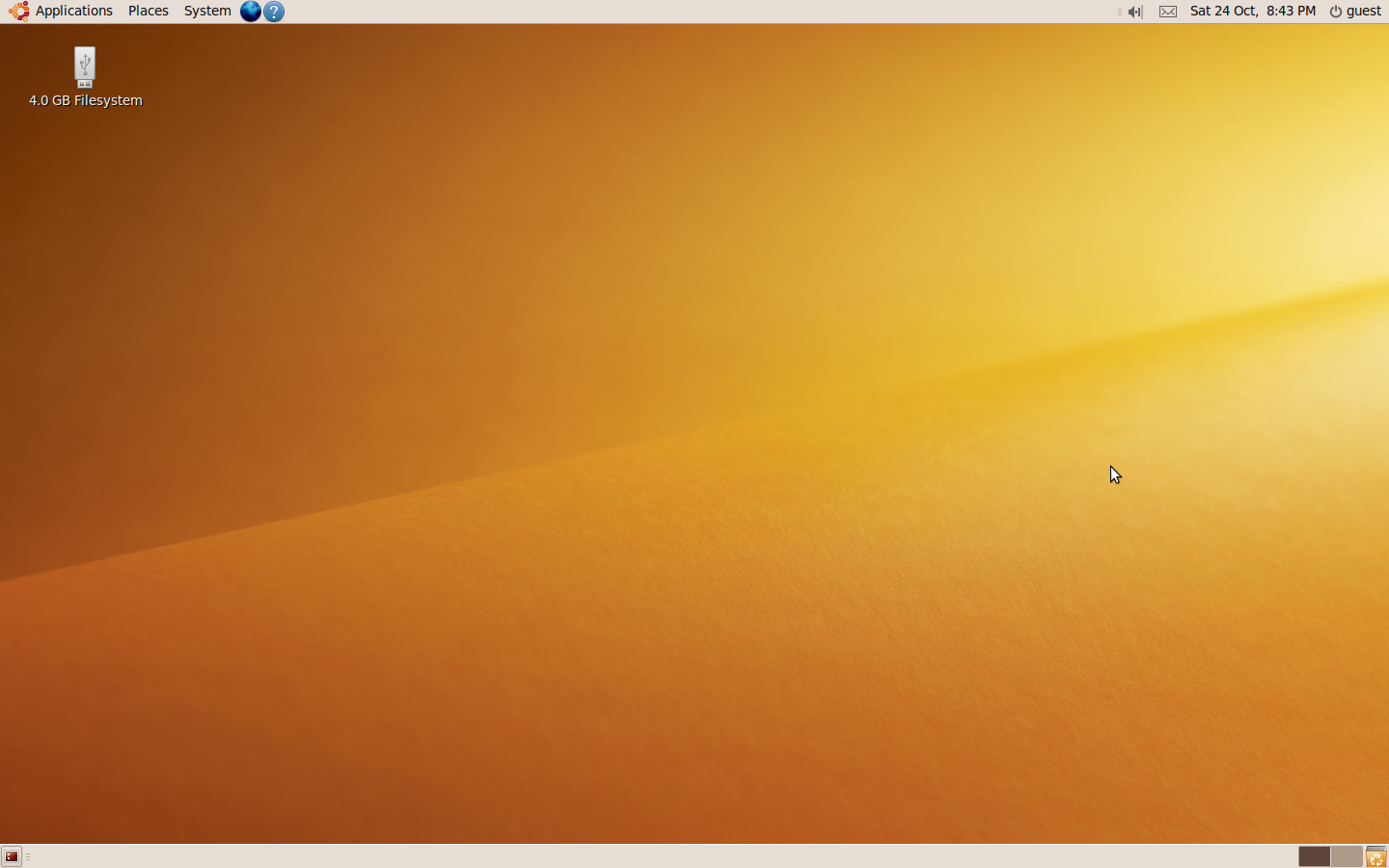
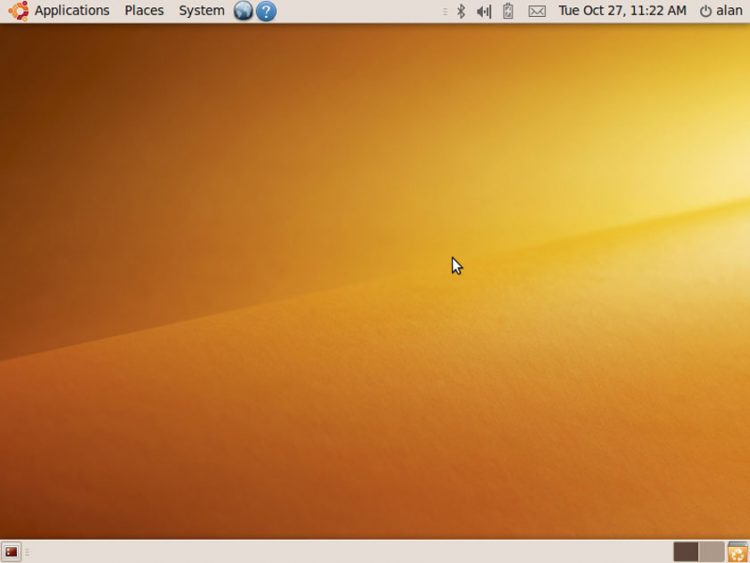
If you used Ubuntu at the start of this decade then it will have looked something like this:
And the Ubuntu logo and typeface used to convey the brand and its ethos was this curvaceous and colourful combo:
Ubuntu’s branding at the start of the 2010s used a lot of orange, a lot of brown, and a lot of roundness that increasingly felt a bit detached from the increasingly professional platform it was becoming.
As much as I pains me to say, even its memorable marketing strap-line of being “Linux for Human Beings” did start to sound awfully twee circa 2010.
But change was afoot.
March 2010 saw a major brand overhaul for Ubuntu and its makers, Canonical ahead of the then-upcoming Ubuntu 10.04 LTS release.
Every inch of the user-facing brand was revamped, renewed, and refreshed. A classy new Ubuntu logo was introduced, a professionally designed typeface debuted, a pair of new GTK themes (light and dark), an modern-looking icon set, and plenty more.
In giving the Ubuntu project a top-down, comprehensive rebrand Canonical was finally able to curate a consistent identity for the distro, rooted in its (then) present and evolved from its past. Ubuntu no longer had to state it was ‘for human beings’ because it now looked like it was for human beings!
Nowhere was this strident visual identify more noticeable than on the Ubuntu desktop. The new ‘Ambiance’ theme lived up to its name, imbuing the distribution with a (then) classy new vibe.

Not everything was perfect, mind. A few missteps were made, like junking the iconic mascot wallpapers in favour of a series of respective background images (which one omg! ubuntu! reader aptly described as resembling “purple vomit”).
In fact, the wallpaper of Ubuntu 10.10 was so poorly received it was redesigned prior to release!
Still, on the whole the rebranding proven good enough to stand the test of time, as the fact that most of it is still in use today proves!
2. Far Left, Man
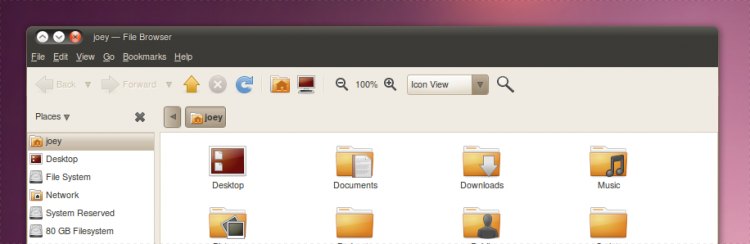
We’ll park “Amazon-gate” to one side for now (it’s coming up, don’t worry) to focus on one of the biggest furores in Ubuntu’s history. Hyperbole? No – in all the time that I’ve been covering the distro little else exploded like the window button controversy in Ubuntu 10.10.
Long before Unity, systemd, Snaps, et al arrived to agitate and consternate a more basic concerned rankled the masses: the location of window buttons in title bars.
Ubuntu decided, somewhat abruptly, to shift window controls from the right-hand side of window frames (where they’d always been) to the left-hand side of window frames (akin to on macOS) starting with the Ubuntu 10.10 release.
And to say there was outrage is an understatement.
Bug reports were opened. Petitions were signed. An avalanche of blog posts decrying the effort were hammered out in quick succession, each adding to a defensive wall around the fragile minds of people who simply could not countenance …window buttons being on the wrong side!
The reaction was so intense that a poll we ran at the time asking readers to vote for their preferred window button position got over 20,000 votes — the issue heat was that insane!
Ferocity of opinions directed at Ubuntu (and Mark Shuttleworth in particular) couldn’t seen the distro back down.
But it didn’t at the
Ubuntu’s design team were resolute, and that reaction was, in many ways, our first taste of a sort of headstrong attitude within Ubuntu that, in years to come, prove more evident in decision taking.
As for window controls? A few months after buttons switched to the right the whole issue was …Pretty much forgotten. The world kept turning after all — who’d have thunk it?!
3. The (dis)Unity Desktop

The creation and introduction of the Unity desktop is for many the most defining “moment” in Ubuntu’s history. It was the point at which the distro went from simply curating a user experience atop a desktop it didn’t (directly) control, to building its own.
Introduced in 2010, Unity was initially intended as a replacement for the Ubuntu Netbook launcher UI.
But to much surprise – and controversy – Unity became the default desktop in Ubuntu 11.04 for the main edition too.
People were thrilled. Jubilant, even. Street parties were thrown. Celebratory coins minted. A good time was had by all…
Alright, none of that happened.
Instead, the wider Linux and open source community — a distinction worth pointing out — were aghast at this decision.
Variously seen as a snub to existing open source desktops, furthering fragmentation, or an effort designed to create a two-tier Linux ecosystem with apps likely to favour Unity’s homegrown tech over cross-desktop standards.
Chances are those of you reading this may even still have opinions on Unity. I dare say you’d be hard pressed to find a long-time Linux user who doesn’t!
Which presents a dichotomy: on one hand Unity was arguably the most successful and widely used Linux desktop environment created. On the other, it was one of most divisive and controversial Linux desktop environments ever created.
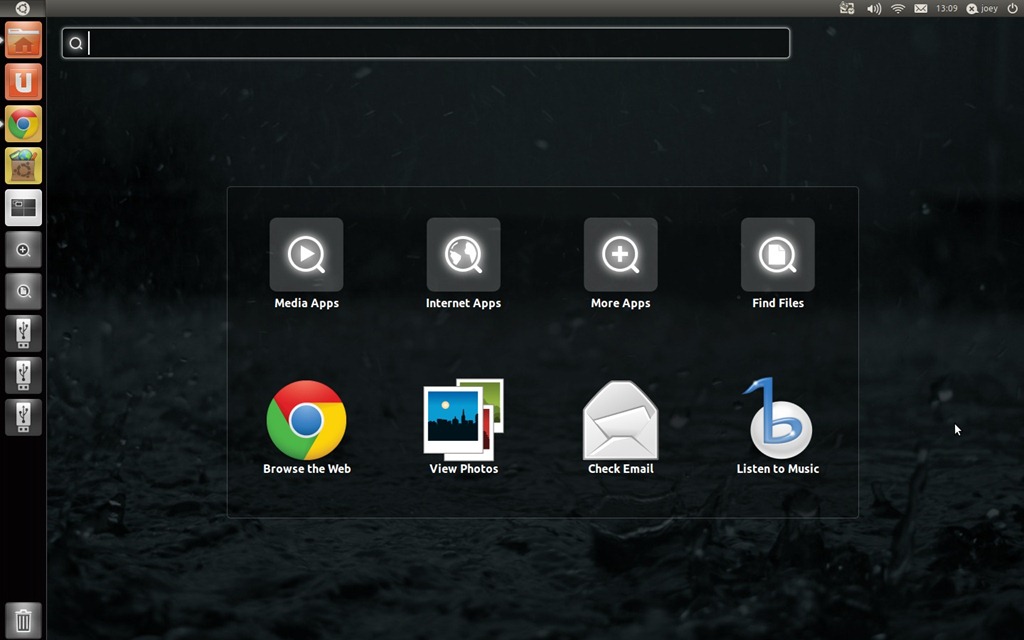
Early versions of Unity were “problematic”. Critical features were missing. There were noticeable performance issues. At times it felt like Ubuntu’s design and engineering teams were pulling in distinctly different directions.
This didn’t lead to a flawless end-user experience.
First impressions count, and for many the one Unity made was memorable for the wrong reasons.
Yet once those early (contentious) kinks got ironed out, what emerged was a polished, slick, and fast desktop UI: a fit and functional rival to anything Microsoft or Apple were putting out at the time.
A cymbal crash heralding maturity: Unity was arguably the moment that Ubuntu stopped being ‘just’ a Linux distribution and started to become an proper bona-fide operating system.
4. On the Edge of Success
Canonical started 2013 in a memorable way by announcing a brand new project to bring Ubuntu to smartphones.
But it was only when they launched a hugely ambitious crowdfunding campaign later that year that the industry began to take the effort seriously.

The goal? To raise a jaw-dropping $32 million. The money would fund the development and manufacture of a ‘next generation’ smartphone able to double-up as a desktop PC when connected to a spaghetti heap of wires and peripherals.
Despite raising a shed load of cash — $2 million in 12 hours, and $12.8 million in a single month — the Ubuntu Edge crowdfunding campaign failed (and some remarked by design: the goal was never realistically achievable).
Although Ubuntu Edge was never born, the effort wasn’t a total dead-end as it led to the era of Unity 8, Ubuntu Touch, and a continued dream of “convergence”.
Canonical’s stalled Edge campaign did, in many ways, reflects the fate of its subsequent 3rd-party Ubuntu Phone push: successful offshoots, but as a product simply too removed from the industry zeitgeist to have any lasting impact.
5. Ubuntu (d)One

Ubuntu’s halcyon era saw a seemingly endless series of innovations, apps, services, and ideas.
From Unity, HUD, and Scopes to efforts like the Sound Menu, MeMenu, web app integration, and more — Ubuntu was firing on all cylinders, and nothing felt unachievable.
Amidst the optimistic churn sat Ubuntu One.
Ubuntu One was a suite of cloud services that offered free and paid online storage, a branded music store, music streaming, cross-platform sync apps for Windows, macOS, Linux, Android and iOS, support for paid app purchases, and more.
It could’ve been the glue in Ubuntu’s burgeoning multi-device play — but got axed in 2014.
Despite being available to tens of millions of users around the world (and accessible on Windows and macOS desktops too) Canonical couldn’t find a way to make Ubuntu One profitable – with Dropbox, Google Drive, and rival services outgunning it at every turn.
Ubuntu One’s demise was, in hindsight, awfully timed. It ended just as the (achievable) Ubuntu Phone era (an OS built heavily around “cloud” data and web apps) got going.
6. Shopping for Controversy

And now we come to the biggest blot on Ubuntu’s copy book, the Shopping Lens.
On paper the idea of the “Shopping Lens” — which ended up being labelled spyware — was neat: you search in the Unity dash using a term related to “shopping” and a handful of “relevant” shopping results show up alongside matching content from other configured sources.
The first (of the many) problems was that this ‘Smart Scope’ (as the feature was later re-named) simply wasn’t smart. The “relevance” of shopping results was loose at best, and bordering on spam at worst!
Bu it was the privacy implications of ferrying off search terms users made on their desktop to a big tech giant that many in the open source and wider tech community could not overlook.
“Anonymised Data”
In order to determine whether a search query made a user typed into the Unity Dash could be relevant to shopping, the desktop would send each and every word typed off to a remote server.
The remote server would parse the search term and, in most cases, pass it on to Amazon to fetch a (theoretically relevant) set of product results from their online store. Those results would then appear to the users in the Dash.
Canonical insisted that all data ferried to and from Amazon was totally stripped of any identifying personal information, but the problem was the feature was not opt-in: Amazon got everyone’s queries (and users got their shopping results) by default, out-of-the-box.
An upfront indication of what would happen when searching in the Dash did change in later releases, but Canonical declined to allow users to turn it off entirely, a move which inflicted serious repetitional damage to the Ubuntu project — damage that still lingers to this day.
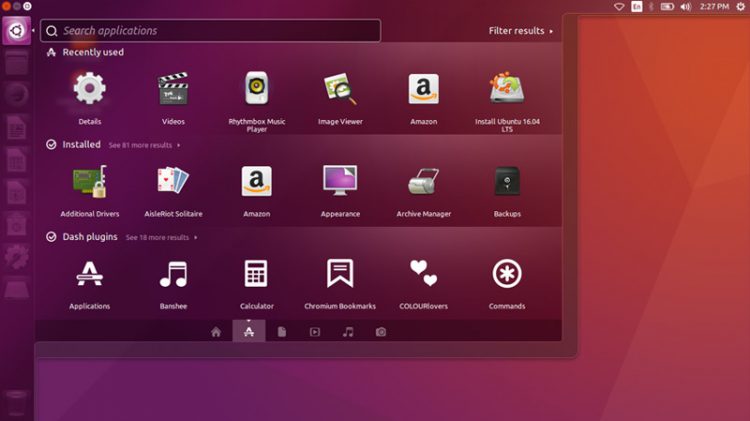
At the time it did feel like some of the anger expressed about the “feature” wasn’t actually about anonymised search terms being sent to a tech giant or the endless glut of (almost always useless) tiles that cluttered up every Dash search for an app.
It appeared be simply be an opportune vantage point to vent deeper feelings that Canonical was no longer “listening” to the voice of its users – again, given moments #2 and #3 in this list.
After all, Ubuntu is supposed to be the Linux distro made by, for and with the community. But during this period the distro felt more like it was fixated on revenue seeking, seeing its user base less as a community and more consumers.
7. The First Ubuntu Phone

After several years of development, plus countless promises that an “high-end” Ubuntu phone was “coming soon” from “household brands“, the first Ubuntu Phone sort-of went on sale in early 2015.
And it was sort of a nothing burger.
Made by a small Spanish mobile company, the Bq Aquaris E4.5 Ubuntu Edition was a €169 phone with low-end specs, no convergence capabilities, and half-baked software. Not abjectly awful, but unremarkable given the hype Ubuntu Phone had been riding on.
‘Mistakes Made’
A book could be written on the mistakes Canonical made during the Ubuntu Phone era.
But the idea to make the very first Ubuntu Phone introduced to the world following the saturated coverage the Ubuntu Edge effort had gained a low-spec rebadge of an existing Android phone the mobile industry had ignored would command a dedicated chapter.
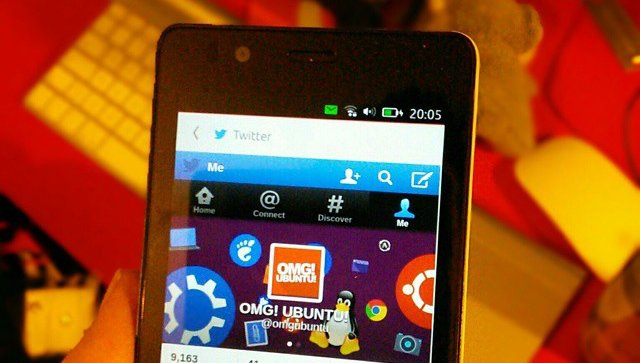
And the bizarre decision to artificially limit sales of the phone to to ensure that everyone who wanted to buy one couldn’t…
Another dedicated chapter.
And the decision to build a marketing campaign about a low-end device with a half-finished OS and few apps around non-developer user cases with expectation-inflating slogans like “life at your fingertips”…
Well, you get my point.
Ubuntu enthusiasts were (mostly) in tune with the phone’s (inevitable) shortcomings but the attentive consumer wasn’t.
In fact, the last thing people in the “mainstream” had heard about Ubuntu phone was the high-spec convergent device the failed crowdfunding campaign (see moment #4) had hyped.
People were expecting something big, something flashy, and something flagship. Instead they got the Bq Aquaris E4.5 Ubuntu Edition, a phone that was so limply received on arrival that it’s amazing anyone remembers it.
8. Snap Apps

Ubuntu Phone ultimately failed in its goal of ‘disrupting’ the trajectory the mobile industry was heading in but not all of the work developer as part of the push went unused.
Introduced in 2016, the .snap app format is an evolved version of the “sandboxed” .click package format created for Ubuntu on phones and tablets.
And it’s been a huge success.
Those who enjoy the Snap vs Flatpak debate often argue over format came first — Flatpak were borne from the xdg-app initiative circa 2015-ish, while Snappy is a continuation of click circa 2014-ish. But the answer is largely moot as the two formats differ in several major ways.
Snap is far more than just a GUI app format. Many of its core features (like transactional updates, auto-updating, app rollback, etc) cater more towards server, cloud, and IoT usage more than they do desktop.
But desktop is where Snaps are seeing the most visible success.
‘Major Success’
Canonical introduced desktop support for Snap apps in Ubuntu 16.04 LTS, with relevant support for .snap app side loading, snap://url handling, and GUI browsing via the Snapcraft store following soon after.
In a few short years Snappy managed to do what the early “Ubuntu Software Centre” hadn’t: attract ISVs en masse.
Among software now packaged and regularly updated through the Snap store you’ll find well-known names like Spotify, Skype, VLC, Slack, and VSCode, as well as open source faves like Mozilla Firefox, Chromium, GIMP, Audacity, and Kdenlive.
9. 32 Bit Saga
Ubuntu earned its reputation for being the best Linux operating system for developers of all shades, but progress marches on and difficult decisions arise.
For the bulk of Ubuntu’s existence the distro has sat at the cutting edge of innovation and technology within open source and Linux across desktop, server/cloud, and IoT.
It is a leader – and with leadership comes responsibility.
Today, we appreciate that mainstream 32-bit computing has had its day. We live in an era where 64-bit computers, be it x86_64 or ARM64, are de-facto, norm, standard.
When Ubuntu dropped support for 32-bit install images in 2017 it was the first major desktop Linux distribution to do so (and doing it on based on survey results showing few people were used it).
It did, however, commit to keeping the 32-bit archive around (meaning, in theory, users could still run the latest versions of Ubuntu on 32-bit hardware, just without a newer installer image to use).
But when it announced plans to retire wholesale 32-bit app support starting with Ubuntu 19.10 users were upset. Developers were upset. Independent software vendors were upset. People with obscure and curious niche computing needs were upset.
Initially we were treated to some of Ubuntu’s trademark bullishness (see #2, #3 and #6); it was not changing course.
‘Steam Vented’
However, their tune changed after Valve announced that Steam for Linux would no longer officially support Ubuntu if the planned move went ahead.
Many older games that folks have paid money for rely on 32-bit libraries to run on modern Linux systems. Older games are unlikely to be “ported” or updated to use 64-bit as, unlike software, games don’t tend to get continued development.
It was a big deal at the time.
Gaming is still an important selling point for Ubuntu, so the distro turned tail and announced a compromise a couple of days after Valve’s ultimatum.
Rather than maintaining an entire 32-bit archive going forward, Ubuntu would “freeze” the majority of packages on the last known working version to maintain a curated set of critical 32-bit libraries that keep apps, like Steam, working.
And all was well again…
10. Home Sweet GNOME
With the click of one “publish” button, it was all gone: Ubuntu phones, tablets, Unity 8 desktop, OTA updates, Mir, convergence, core apps, Qml developer guides, hardware launches, flash sales, fancy slogans — the dang whole lot.
Mark Shuttleworth’s blog post announcing the end of the Unity 8 era and everything tied up on it was abrupt and upsetting, sure, but it was also a chance to course correct.
Casting its lofty mobile ambitions to the side meant Canonical was free to focus on Ubuntu’s core strengths – the things that made it so successful in the first place.
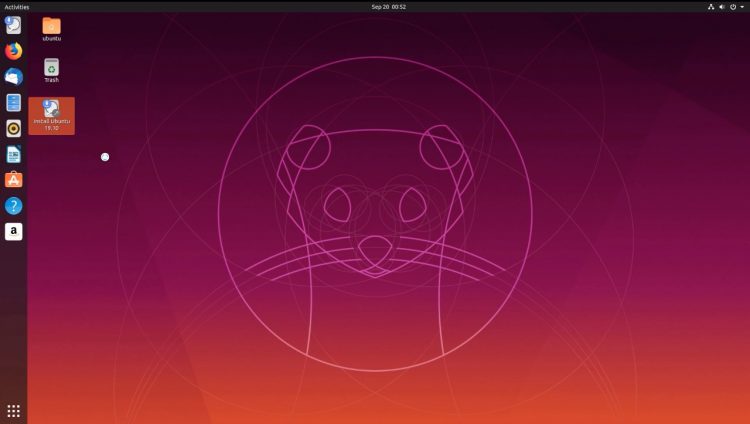
GNOME Shell was re-introduced as Ubuntu desktop, but with custom touches, like the Ubuntu Dock and system tray icons, based on user feedback – just like in the good old days!
Ubuntu’s engineering resources are being put to good use. The performance gains offered in the GNOME 3.34 release (used in Ubuntu 19.10) were driven, in part, by Canonical’s developers.
Two and a half years since the switch, and things are going great. Ubuntu 19.10 well received, which bodes well for next year’s Ubuntu 20.04 LTS release, whose features are (thankfully) being crafted with the needs of the Ubuntu community in ear.
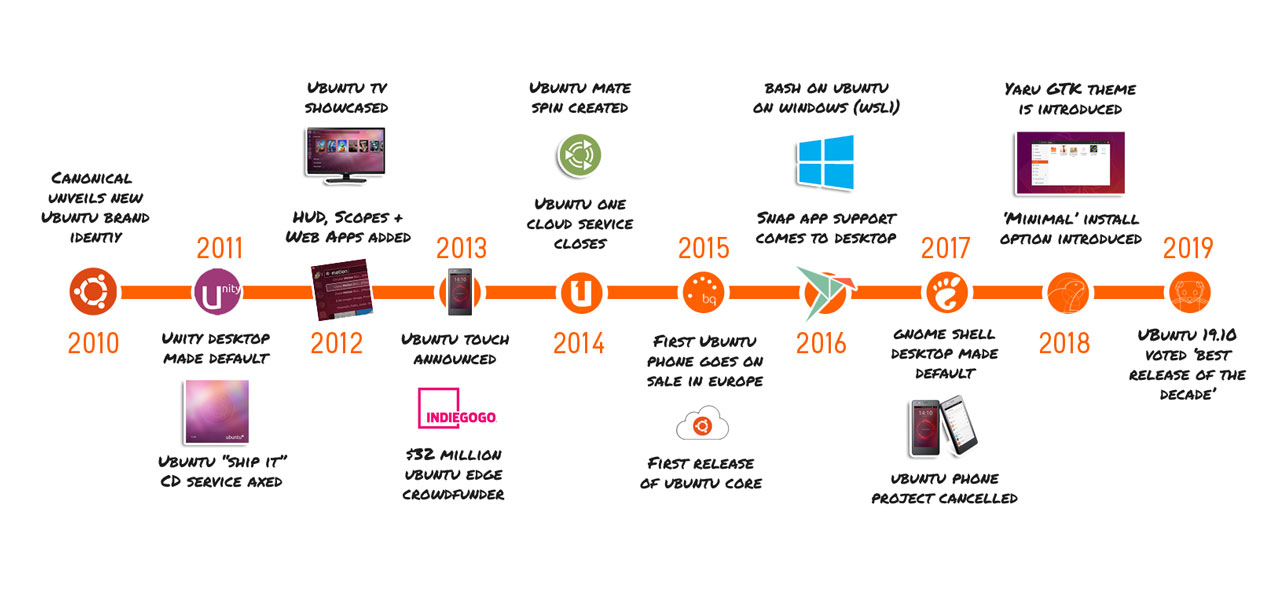
Behold a Timeline!
To illustrate the course of the past 10 years I put together a graphical timeline. It’s signposted by most of the “defining moments” mentioned above, plus a couple of additional ones:
Which moments YOU consider the most defining? Share thoughts in the comments section below!