

Linux Mint 23 will introduce an expanded set of account administration options when it debuts later this year, moving user management into a dedicated system utility.
The new new Users panel in the System Administration tool (mintsysadm), first introduced the Linux Mint 22.3 update, will allow users to edit and configure their own user account without the need for admin intervention.
But that’s not the most interesting change.
Admins creating new user accounts on a Linux Mint 23 install will have the option to enable home directory encryption when creating a new user account using ecryptfs (thanks Shiba). a feature Linux Mint’s Clement Lefebvre says was ‘previously only supported during OS installation’.
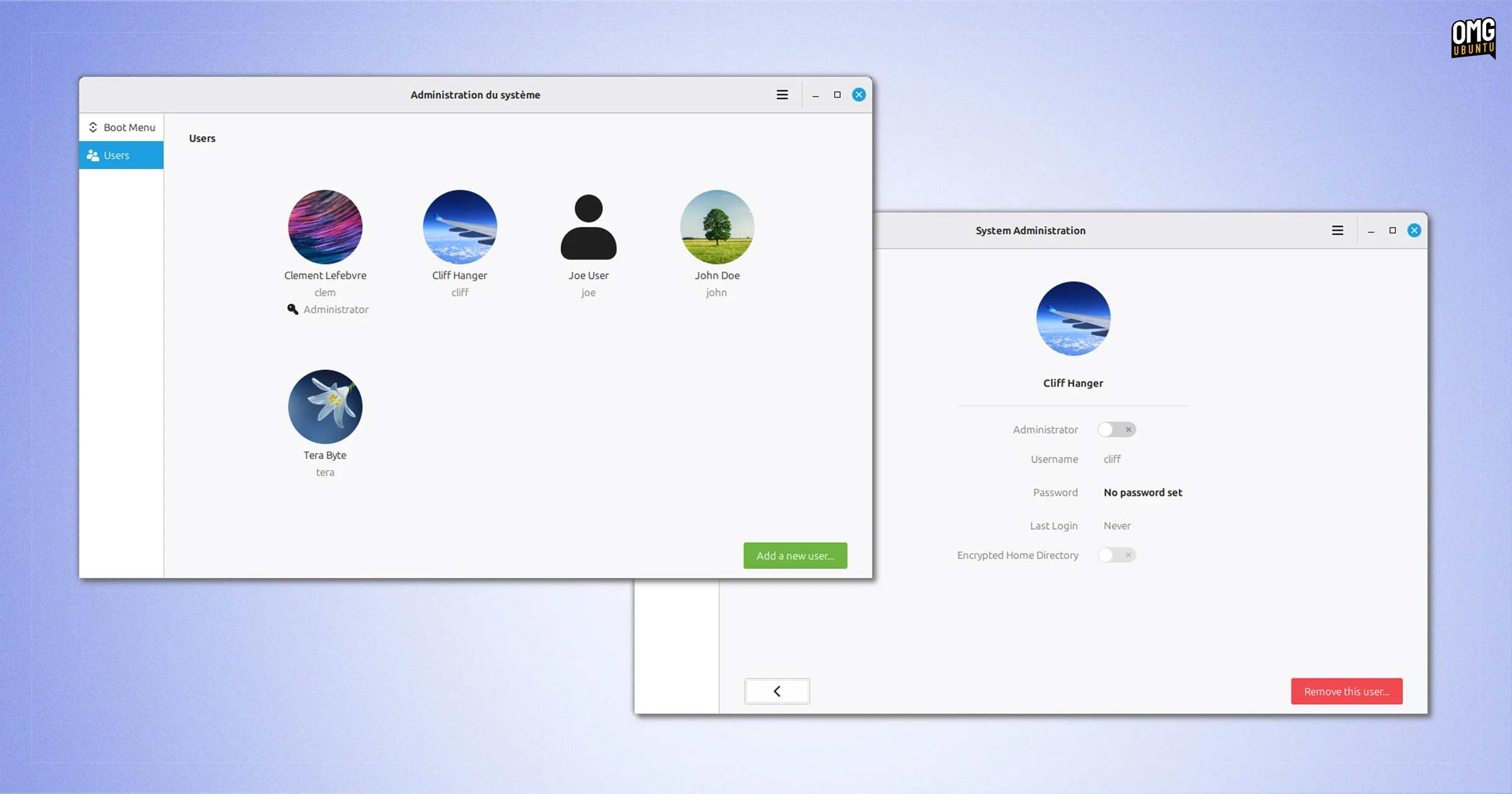
Linux Mint’s Cinnamon desktop already supports user account management via the Users and Groups tool, but Lefebvre states it is a ‘pity’ that that so many Linux desktop environments ‘have come up with their own tools’ for management.
“[T]his is typically an area which belongs to distributions and which cannot be and certainly isn’t properly handled by desktops”, he says. “As a result these tools lack support for a lot of new use cases and they’re not well maintained.”
As a result, the distro is moving controls to the main system utility. This currently provides a GUI to edit GRUB boot loader and boot menu options, so it could use some company.
In addition, the new System Administration > Users panel will also offer webcam support for user account editing, allowing you to take selfies, toggle mirroring and view preview before setting a custom account image. Default avatars will also now render in HiDPI.
Linux Mint 22.3’s redesigned Mint Menu shows your user account image, so any improvements to helping users set an image for their account.
All of these refinements are in the mix as Linux Mint 23 considers slowing its release cadence to allow for more time to be spent on developing and expanding features.
Chance are we’ll hear more about this, and other UX changes, in the coming months.