


Kiro, the ‘agentic’ AI IDE built on top of the open source VS Code codebase by a team at Amazon AWS, has announced usage restrictions for free users, and the creation of paid tiers.
I spotlighted the preview release of Kiro in mid-July. An Amazon-backed IDE being made available for Linux is newsworthy, and AI coding aids are increasingly common in development, with more employers expecting familiarity with (or mandating use of) AI-assistive tools.
So why is this update news?
When Kiro launched, its makers said it would be entirely free to use with “generous” usage limits while it was in preview. That way, early-bird testers could help test the app to provide feedback, and find out its agentic capabilities were more help than hype.
Kiro remains in preview, but the one-free-tier-for-all offering said “generous” usage rates has been retired in favour of a more restrictive gratis account and the introduction of paid plans.
- Kiro Free @ $0/m – 50 vibe requests, 0 spec requests
- Kiro Pro @ $20/m – 225 vibe requests, 125 spec requests
- Krio Pro+ @ $40/m – 450 vibe requests, 250 spec requests
- Kiro Power @ $200/m – 2,250 vibe requests, 1,250 spec requests
Users subscribing to a paid plan can enable “overage” so that interactions can continue after a rate limit has been hit. Kiro say those falling between plans may find this approach a cheaper alternative to paying for a pricier plan that offers more than they need.
Additional requests are priced at $0.04 per vibe request and $0.20 per spec request when overage is explicitly enabled (it’s off by default), and a valid payment method is active.
Anyone who registered to try the app in preview, but doesn’t want to pay for a paid plan, will be using the new, and far limited free tier, irrespective.
The good news is that the free tier will be remaining as an option, and a two-week free trial trial for paid plans are available so those on the fence about committing further can signup to test things out.
“Vibe” and “Spec” Request Usage
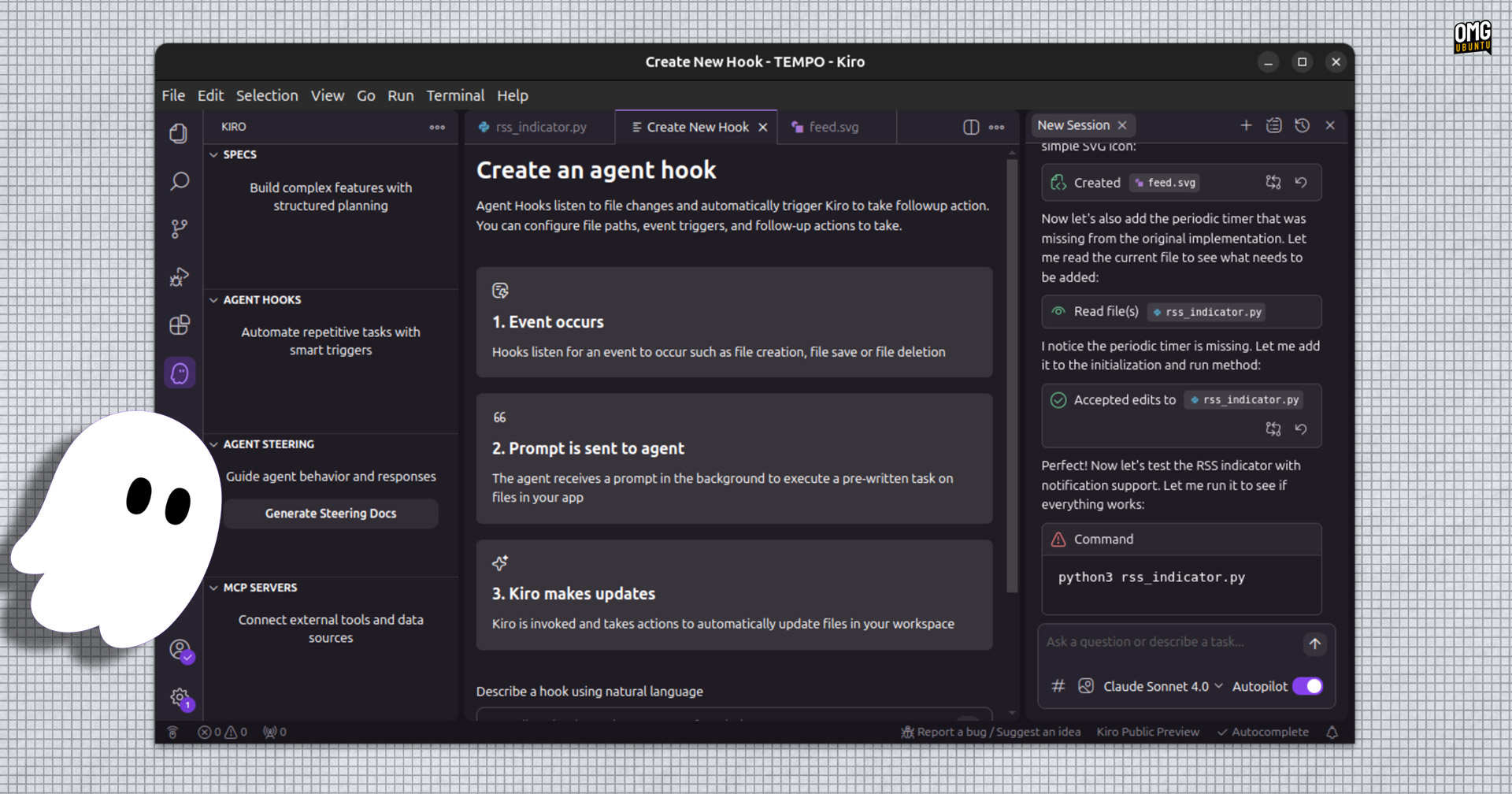
The new tiers list “spec” and “vibe” requests separately. This is a change made, the Kiro team say, to provides users with “a predictable way to understand [their] costs”.
A “vibe” request is any non-workflow-specific AI interaction, e..g., so asking “explain this code” and getting a response is 1 vibe request. Complex vibe prompts, e.g., “make me a gnome extension that makes fart sounds” may use more.
Any interaction in the ‘prompt’ area (which doubles a CLI) when AI mode is on WILL use a vibe request, even if you type a command to run locally, like cd or sudo apt update, as the AI has to first parse your intention before deciding what to do.
A “spec” request is any task-related action that takes place within a project workflow. Tasks are typically generated from ‘vibe’ planning, but can be manually specified in a markdown file too. Spec requests are more costly since, generally, their execution requires more complexity.
Overcomplicating usage limits would be a clever way to befuddle customers to the extent they need to spend more ‘vibes’ to get AI to figure it out. Helpfully, latest update to the Kiro IDE adds a usage dashboard, letting users track their limits in-app.
Other changes
The 0.2.x update also makes some other changes (app-wise).
There’s better handling of piped commands, new file system tool restrictions to prevent “accidental external modifications”, and a ‘command boundary‘ to ensure user-approval is sought before potentially dangerous commands are run.
The light theme is also improved, model fallback handling bolstered, and login error screens made a little more helpful. Kiro continues to use Claude 4 Sonnet and Claude 3.7 Sonnet as its backend model, for those seeking reassurance ChatGPT 5 isn’t involved.
Kiro downloads are now limited
The slanted-mouth emoji face gotchas continue beyond paid plans and restricted free tiers.
Anyone who wants to try Kiro will find getting it is much trickier. A waitlist has been introduced for new signups, with codes to download the app being e-mailed to users in batches in an effort to manage demand and reduce bottle necks.
Announcing they’ve had to limit access due to high demand has the whiff of “ooh, look at me” guerrilla marketing. Scarcity, FOMO, etc, all generate hype through human psychology: as people are allowed in to the club, they humble-brag about it, more people want in.
Plenty of agentic IDEs are available on Linux, free of any elite hurdles to clear. While Kiro has USPs of its own (specs, hooks, tasks), it’s not so special that unable to access should feel they’re missing out (even if it does have a rad logo that looks acec in the Ubuntu Dock).