


Linux handhelds are having a moment of late, yet few wear their geek cred as proudly as the Mecha Comet, a new open source, palm-sized computer crowdfunding on Kickstarter.
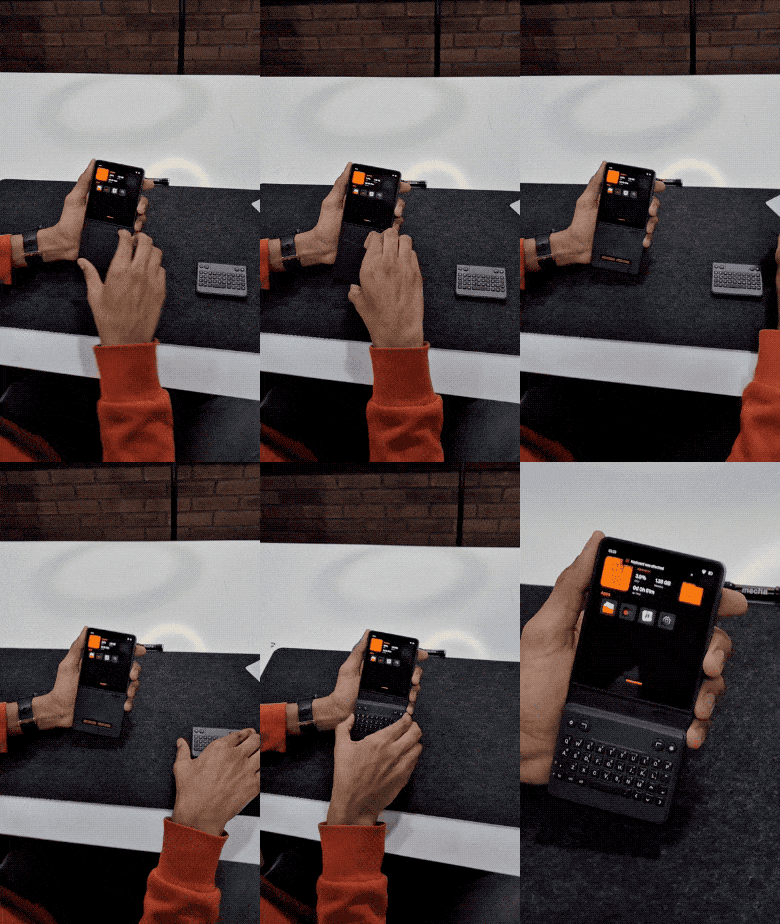
The Mecha Comet is not a phone and it isn’t aiming to replace your your laptop. Instead, it’s a modular Linux device designed to be… Well, Whatever you need it to be, when you need it to be: adaptability is the USP [that’s enough “eees” – ed].
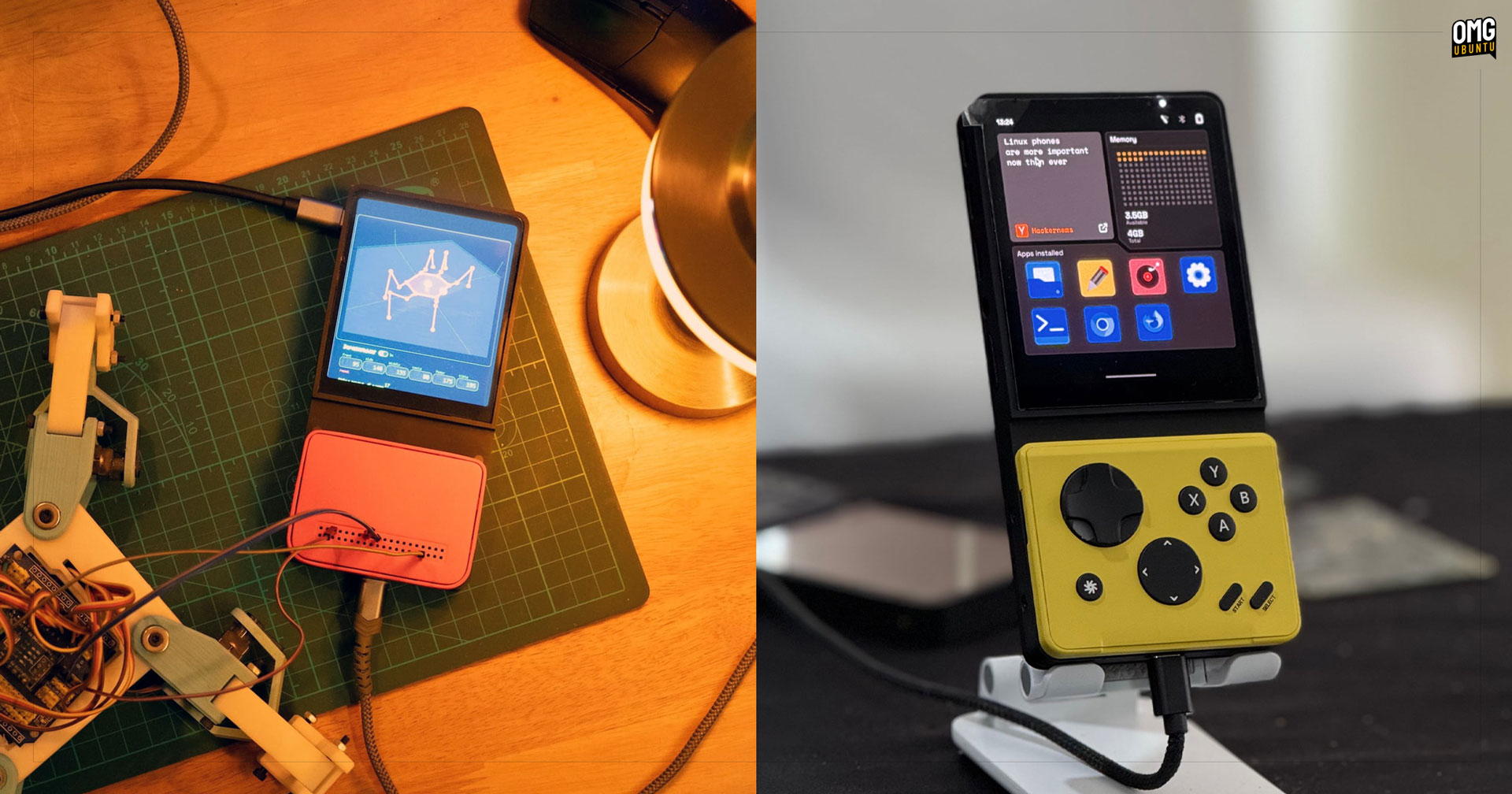
Three magnetic snap-on attachments change how the device functions:
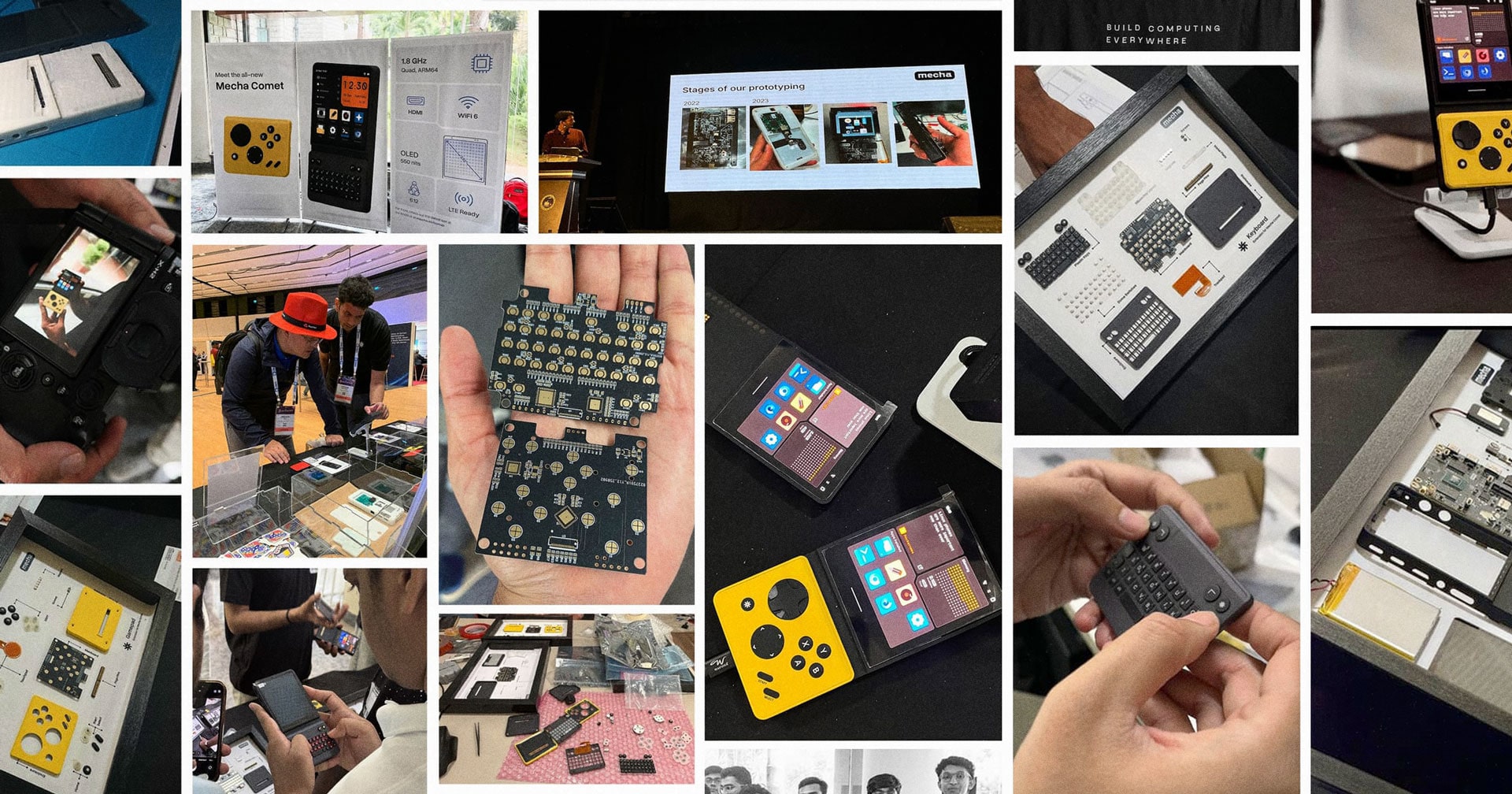
A gamepad panel equips D-Pad and buttons to mash. A GPIO header with I/O breakout and serial over USB caters to tinkerers. And a compact QWERTY keyboard with touchpad makes it possible to compute on a commute.
The Mecha Comet is open hardware as well as software (more on that further down), meaning tech tinkerers can create and share their own custom expansion modules that use the 40-pin connector.
A mainstream consumer device this isn’t, but as geek-focused tinker-tech goes few emerge as well formed as this look. Not a surprise; Mecha has been working on Comet has for many years.
This isn’t an over-ambitious 3D render and design mockup: it’s very real.
Mecha Comet Specs
The Mecha Comet is an ARM-based computer with a 3.92-inch AMOLED touch display (550 nits at a pixel-dense 441 ppi) – not roomy enough for full-blown productivity, but that isn’t the primary purpose: it’s primary purpose is to be adaptable.
The Comet comes in two configurations using NXP ARM SoCs. The base model uses a 4-core i.MX 8M Plus, and pricer model features a 6-core i.MX 95 with double the GPU performance – which reduces battery life by roughly 15%.
Per the team blog, testing on the (replaceable) 4100mAh battery sees the device rated for 7 hours in active use, or 7 days when suspended to RAM.
RAM options begin at a lowly 2GB, with options up to 8GB RAM. eMMC storage is either 64GB to 128GB, but MicroSD and M.2 SSD slots let you add your own later.
Ports and extras include a mini HDMI 2.1 port; 8MP camera (with Auto-focus); dual-mic array and integrated HD speaker; a 3.5mm audio jack; a pair of USB-C ports. Onboard sensors? Check, and there’s a Trust Anchor (CC EAL 6+) for improved security.
Finally, Wi-Fi 5, Bluetooth 5.4 and an option to add a wireless card (via the NVMe slot) to pair with a SIM to use this as a phone – plenty to cater to wireless connectivity needs, for sure.
Fedora-based OS
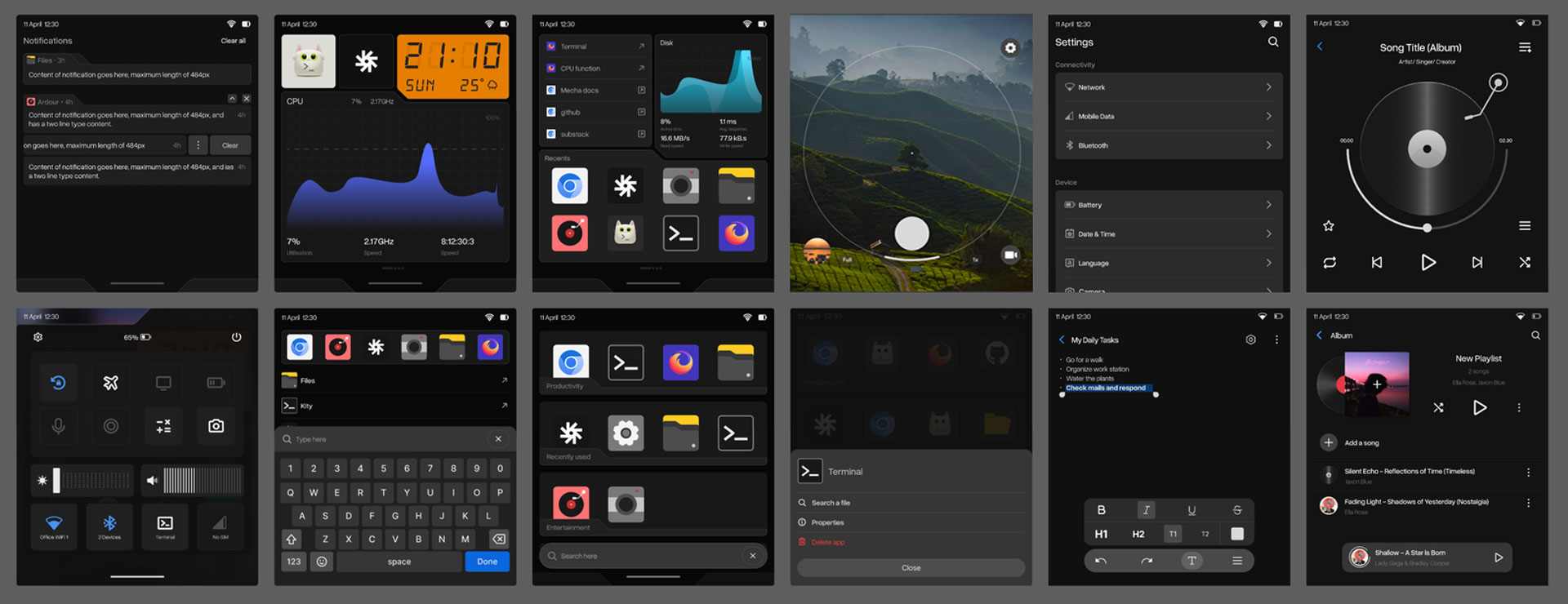
The device runs open-source software: Linux kernel 6.12, U-Boot and a Fedora-based operating system called Mechanix. The OS sports a touch-optimised GUI purpose-made for small screens (relatively rare in the Linux scene). It runs on Wayland and was built with Rust.
The shell is fully-featured with multitasking capabilities, a login/Lock Screen, app launcher, control panel and ample settings to customise the layout.
Native apps are written in a Flutter-based Dart toolkit and, since it is open source, you can write your own software. Plus, you can install any Linux app that supports ARM and is in the Fedora repos – but keep in mind the <4″ screen size.
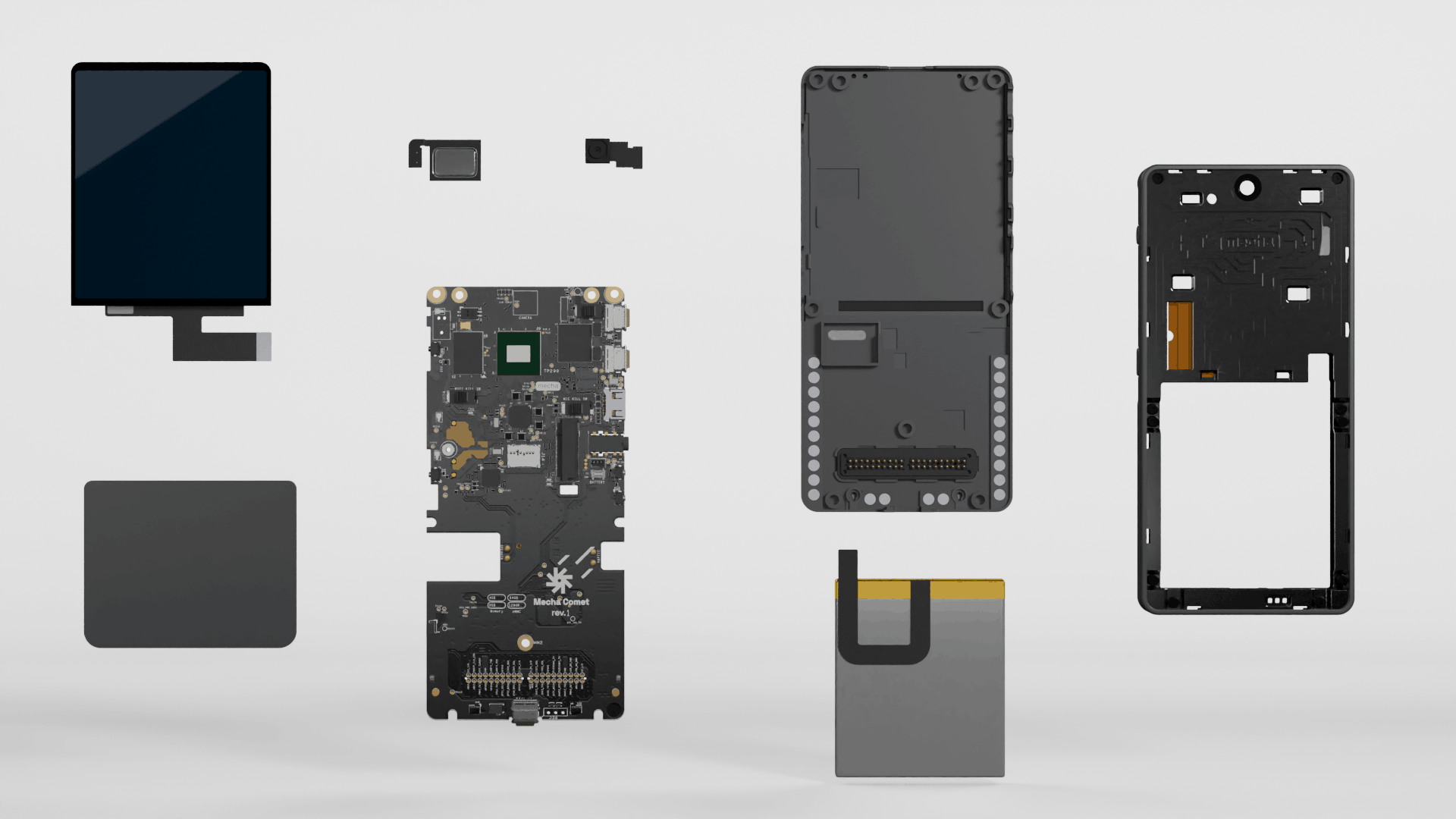
The Mecha Comet hardware is open-source under the CERN-OHL-S-2.0 license. Components, PCB schematics, 3D files, etc. Expansion modules are user-serviceable too, e.g., swap keys on the (QMK compatible) keyboard with 3D printed alternatives.
Refer to the GitHub account repos to see what’s already out there, and what’s not available, or the sift through the official documentation to learn more about what you could do if you bought one.
Which brings me to…
Pricing & Availability
Pricing starts at $189 (early bird1) for the base model with the i.MX 8M Plus, 2GB RAM and a 64GB eMMC storage, or $269 for the the i.MX 95 with 4GB RAM and a 64GB eMMC.
Modules are optional extras: GPIO module costs $15, the gamepad $20 and the keyboard $25, but you can get all 3 for $50. The 8GB RAM upgrade is available for the i.MX 95 model (only) for an additional $60. The base 2GB model can be upgraded to 4GB RAM for +$30.
Shipping adds $18 to $40 on top.
This isn’t cheap as chips, despite the chips themselves cheap. But then, niche, small-run hardware rarely is; you’re paying towards the team, the software and the repairable, open and upgradeable ethos as much as you are the cost-price for each individual component.
Devices with the i.MX 8M Plus processor are scheduled to ship in May/June 2026, and the i.MX 95 models will follow in September 2026.
Fancy backing it? It has already raised over $500,000 in just a few days – and climbing.
You can find more information on both the device and the 15-strong team who’ve been beavering away to make it a reality for the past few years by visiting the Mecha Comet Kickstarter page.
- The first early bird tier was $159 for the same base model but has sold out. ↩︎