


Everything receives a sequel eventually, and so it is so for the GPD MicroPC.
A souped-up, second-gen successor to the small, serial-port-packing original goes on sale this summer. It boasts a bigger, brighter screen that rotates, a beefier Intel-based processor, faster storage and a slew of more capable ports – but will it still appeal to Linux users?
The original GPD MicroPC released in 2021 certainly tried to.
The MicroPC’s micro-ness (form factor, size, weight, ruggedness) was its USP: a 6-inch display, compact Blackberry-style keyboard, modest low-power Celeron processor, 109 HRR rating, and serial port (yes, an RS323 serial port).
The marketing positioned it as a computing companion for systems engineers, server admins and IT bods, something they could throw in in their backpacks to pull out on-site when needing to to configure, manage or run diagnostics on servers, switches, etc.
Ubuntu MATE offered a custom image for the GPD MicroPC. While it was not the preinstalled OS (that was Windows 10, with an upgrade to Windows 11 available), the fact that an optimised Linux build was available for it helped informed the marketing push.
If you’re curious about the original, here’s my video review of the GPD MicroPC from 2021:
There is no serial port on the new GPD MicroPC 2, and I’m yet to hear about any Linux-specific image being primed ahead of its launch.
It likely won’t need one (the original microPC didn’t, either), and a product image for the MicroPC 2 running Ubuntu 24.04 LTS. Linux remains a marketing angle for the new model, at least.
To learn what sets the new model apart from the original, read on.
The GPD MicroPC 2
GPD MicroPC 2 Specs
| Display: |
7″ FHD (1920×1080) @ 60Hz |
|---|---|
| CPU: | Intel Processor N250 |
| GPU: | Intel UHD |
| RAM: | 16 GB LPDDR5 |
| Storage: |
512 GB M.2 SSD (up to 4TB) |
| Network: |
Wi-Fi 6 Bluetooth 5.2 RJ45 Ethernet |
| Ports: |
2x USB C 3.2 2x USB-A 3.2 HDMI 2.1 UHS-I microSD Fingerprint reader |
| Battery: | 27.5 Wh |
| Weight: | 490g |
| Price: | From $699* |
| *retail; from $499 during crowdfunding campaign |
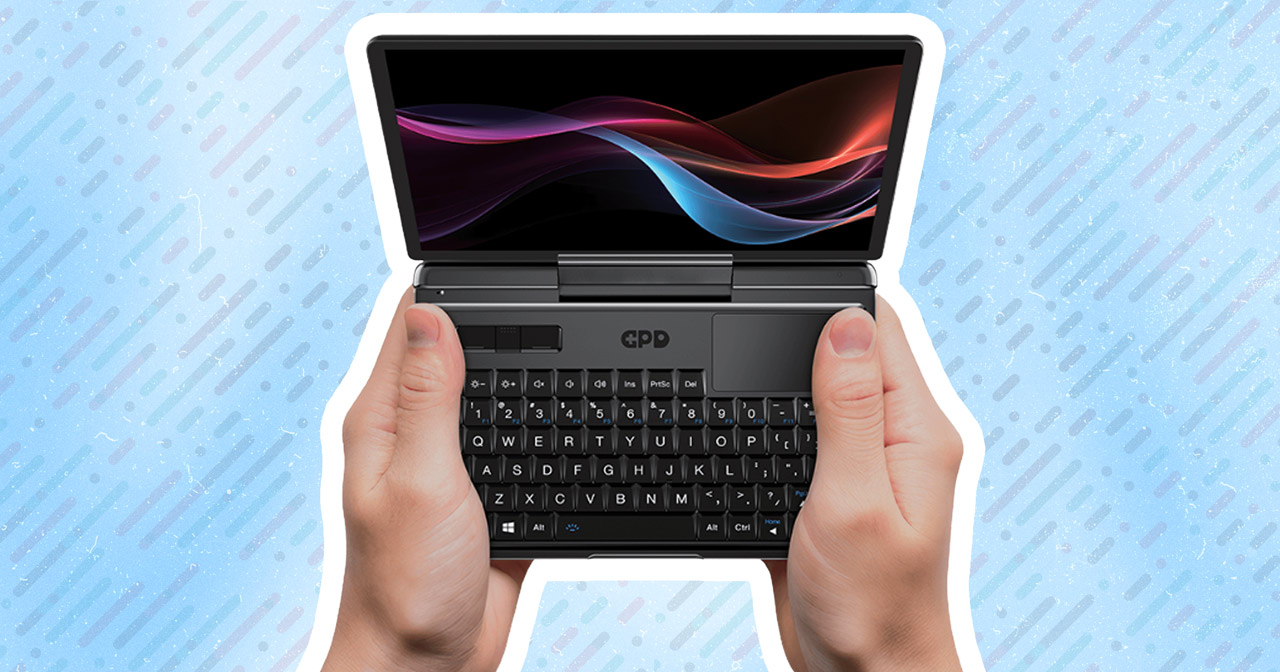
The spec sheet and product images for the MicroPC 2 suggest the device is pivoting from industrious use-cases in favour of more prosumer appeal.
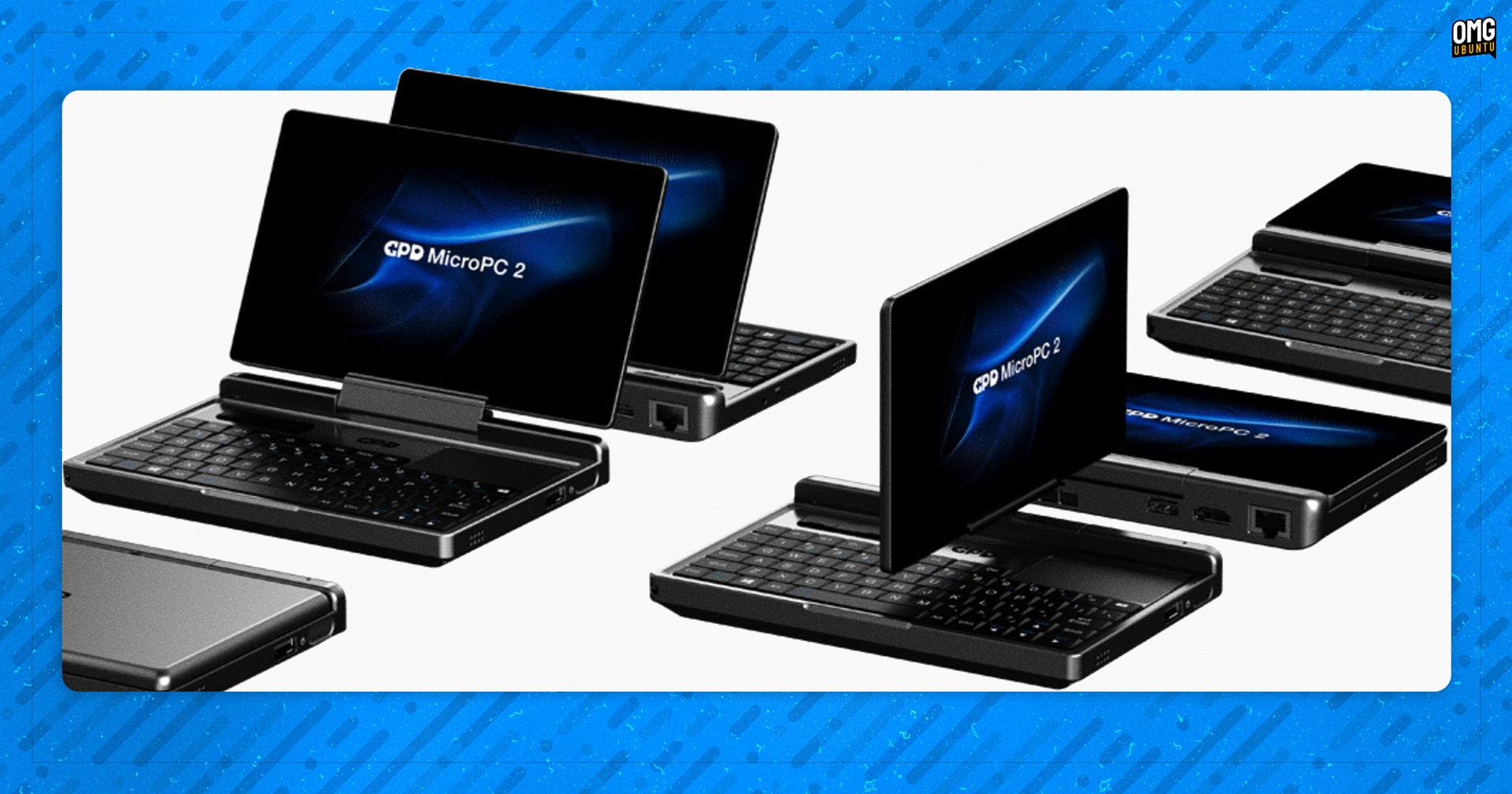
The serial port is gone, the chassis looks more modern than utilitarian, and the keyboard (though still Blackberry-esque) fixes the layout issues afflicting the original.
The original had a fixed 6-inch HD (1280×720) display, while the new one has a 180º rotating 7-inch FHD (1920×1080) touch display with ‘Retina’ PPI.
An Intel N250 powers this, paired with 16GB of DDR5 RAM and a more capable (but not for gaming) iGPD — HUGE upgrades on the weak, Celeron-powered first-gen.
Though just as “rugged” as before, the new one is less of a chonky boi. The new chassis reminds me of the Hercules eCafe Slim HD (an early ARM-powered Ubuntu netbook).
It’s also marginally bigger. This allows the keyboard to ‘flow’ better, and add extra buttons. A split-row number keys marred the original considerably, as did the the lack of a dedicated delete key.
Finally, ports: there is a pair of fully-featured USB Type-C 3.2 Gen2 ports with DisplayPort (4K@60Hz), fast data transfer, and decent charging speeds.
A full-sized HDMI 2.1 port is appreciated, regular USB Type-A for adapter-free hook ups, and a USH-I micro-SD card slot.
There’s also a side-mounted fingerprint reader (Linux status unknown) for security.
Losing the dedicated serial port does mean the device loses some of its geek cred. Yet, adapters are widely used in the field anyway. The loss is more of a performative than practical one.
Indeed, System administrators and engineers may find a more pocket-sized yet moderately powerful PC appealing. And with more mainstream appeal, so might anyone coveting a cute, purse-side “laptop” to doomscroll social media on the move.
It seems less like a micro PC versus the original, but also more of a compromise versus other GPD pocket PCs.
Of course, the tiny screen, small keyboard, low-power chip and port arrangement are the “USP”. Devices in this category are designed to appeal to people who like compact, highly-portable computers, not to tempt people away from 16″ laptops.
Is GPD Build Quality Getting Better?
As I haven’t used the new model—GPD stopped communication with this site after I reviewed the original MicroPC1—so I can’t speak to build quality or engineering. I can say the original had major manufacturing flaws that rankled buyers (GPD offer short warranties).
1) If the battery ran flat, it would NEVER recharge again. At all. The device had to be disassembled, battery removed, and a new one put in. Replacement batteries weren’t cheap.
2) The screen hinge was prone to breaking away from the plastic housing, leaving users with a flappy display that could no longer be angled in position, nor stay closed when carted around.
That was 2021 and GPD has gained a lot more experience in building small-form factor PCs since then. I’d be amazed if they haven’t learned from past engineering mistakes and component flaws that a lot of their earlier devices, including the MicroPC, suffered from.
When Can I Buy the GPD MicroPC 2?
GPD plans to “sell” the MicroPC 2 via Indiegogo in the coming weeks (campaign is not yet live). A base model 16GB of RAM and 512 GB of storage will cost around ~$499 during the campaign, with more storage costing more – retail prices will be higher (~$660).
Shipping is set to start in September.
- They didn’t like that I highlighted ‘shortcomings’ in my video review, and weren’t happy that I added a big red disclaimer to my written review about the battery issue. This is why it’s best to take reviews of tech devices with a pinch of salt. For YouTubers and bloggers whose content output relies on regular access to new devices, a conflict of power is often at play, even if not explicitly stated. Don’t bit the hand that feeds, and all that. ↩︎