

June was sweltering, but the summer heat didn’t slow down open-source software developers.
Last month delivered a wave of app updates, including the release of Firefox 152 with its streamlined settings, HandBrake resolved its Linux WebM handling and the Audacity 4.0 beta made a brand-new design available for public scrutiny (mainly of the “much better” variety).
But underneath those highs – yes, I’m determined to make this heat theme work – a quiet simmer of smaller maintenance updates rolled out too…
Cine gained Watch History

I spotlighted the Cine Linux video player earlier this year. It’s an MPV-based player with an immersive UI, essential video features (subtitles, audio tracks, playlists) and support for video adjustments (brightness, contrast, zoom and more).
Cine 1.7.0 arrived in June with a new Watch History feature. This, as the name suggests, shows you a history of what you’ve watched recently. Open the app without a file and the main screen now has an icon to jump straight into it.
This release also fixed the app not unpausing when a new file is opened and an empty title appearing on some desktop taskbars. The app gained new Ukrainian and Tamil translations.
Cine source code is on Github, or install it from Flathub.
SuperFile made the sidebar configurable
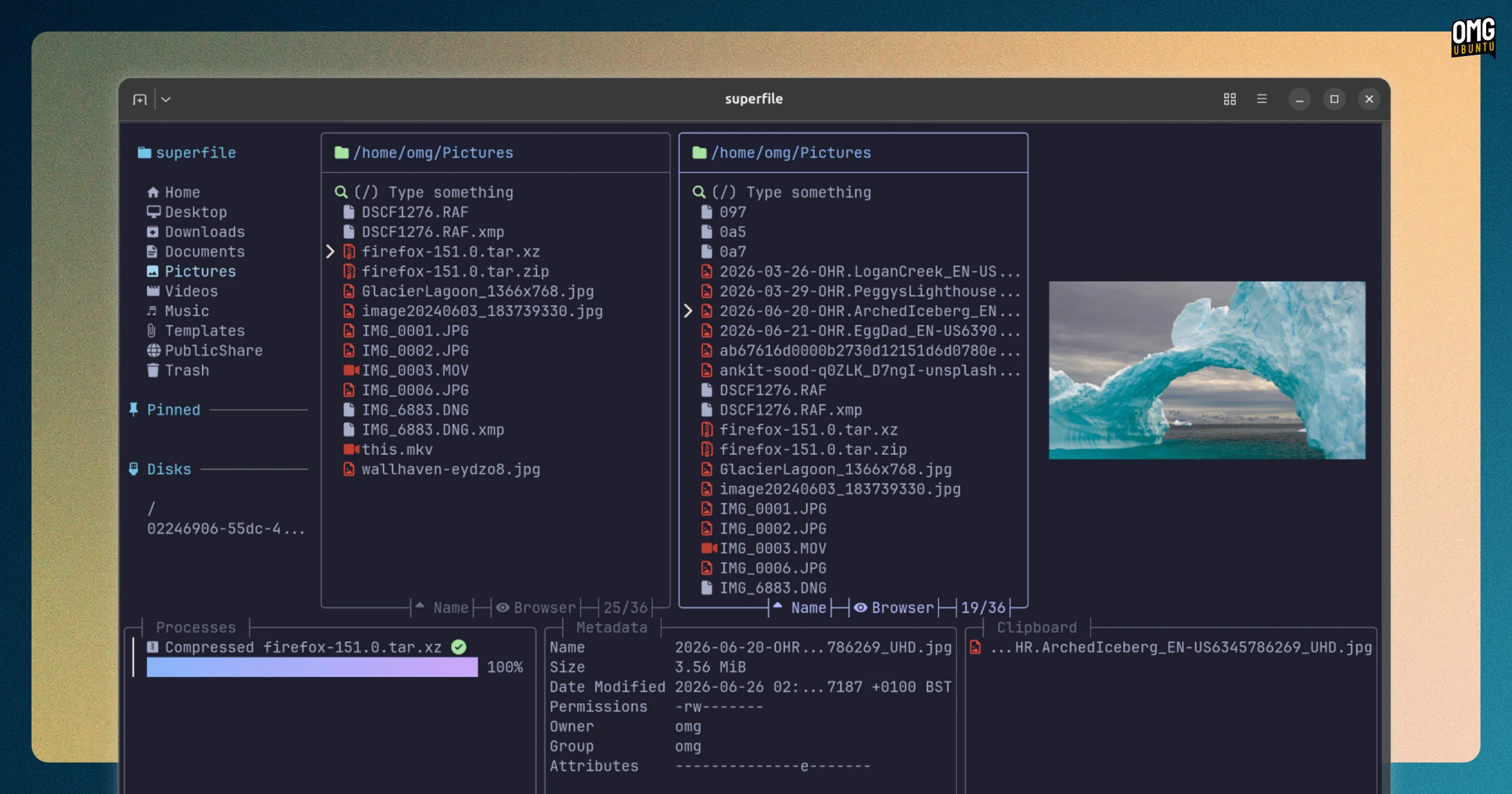
SuperFile, a terminal file manager we’ve covered before, released version 1.6.0 last month.
Notably, sidebar sections can now be hidden or reordered via a config file, so the folders or drives that matter most are in reach. File previews were made reliable too, thanks to a switch to the Bubble Tea v2 library.
The metadata panel now shows decoded inode flags for files on Linux and adds file type byte to the permissions column. SuperFile can now detect binary architecture for ELF, PE and Mach-O executables. Error messages for failed operations convey more detail also.
A new split_file_panel key function (default key N) can be used to open an additional file panel in the same directory. This adds to other navigation fixes, like keeping focus on the current directory when you jump to its parent.
SuperFile also has a new logo and a redesigned website.
Get SuperFile 1.6.0 from the project’s GitHub releases page.
Shotcut brought back external monitor support
Open-source video editor Shotcut added external monitor support in its latest stable release, v26.6.25. The feature, accessed via the Player > External Monitor menu, allows editors to show a video preview on a secondary screen.
This version also introduces experimental support for OpenFX and VST2/LV2 plugins. The integration is barebones for now: no custom plugin UI, everything runs on the CPU and no compatible plugins are bundled in by default.
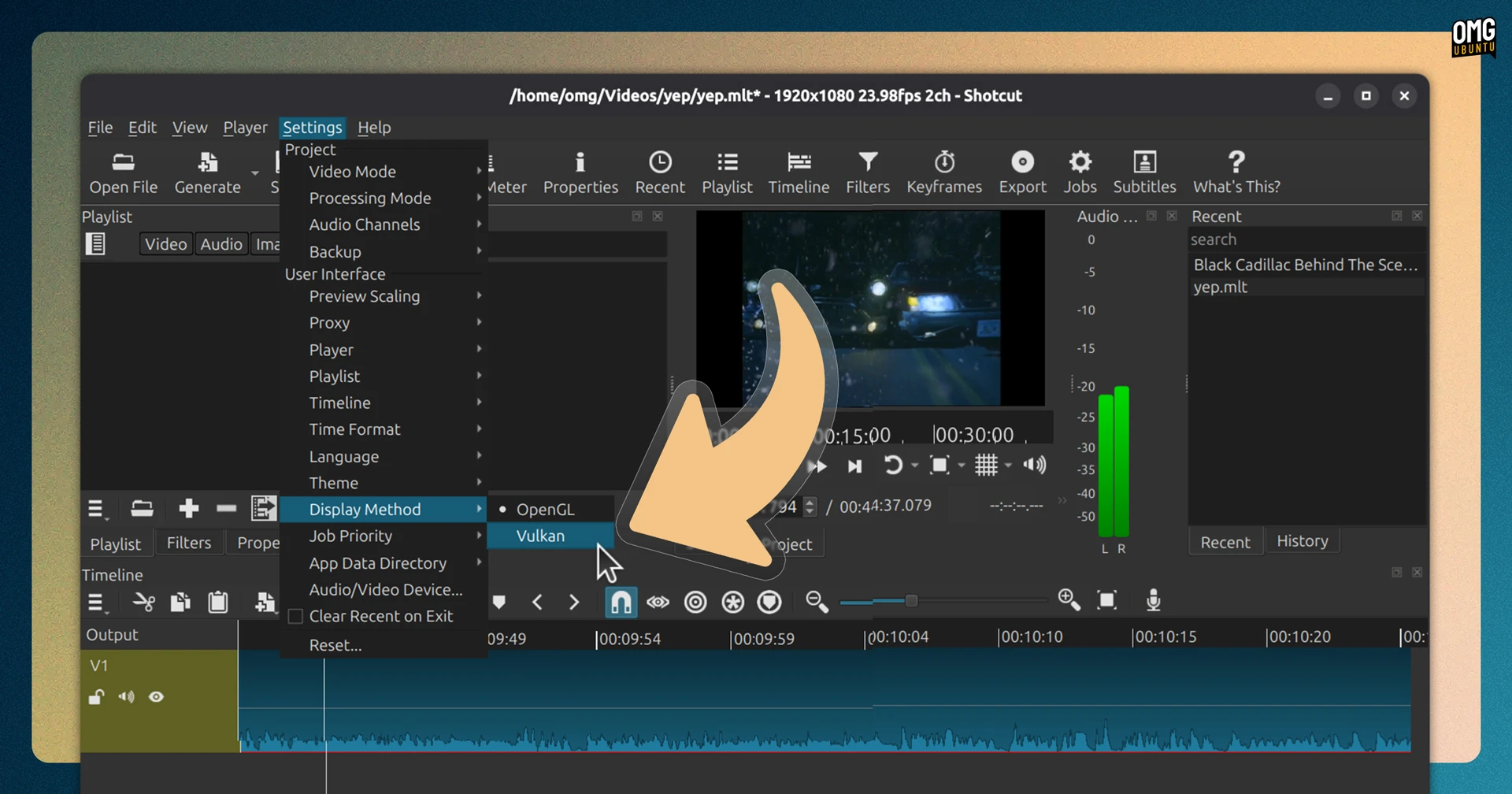
Linux users can access a new Settings > Display Method > Vulkan option. This requires an app restart to take effect but, on compatible systems, may improve performance. Additionally, the Shotcut Snap package now use Ubuntu’s native file chooser instead of a Qt one.
Finally, while the official release notes highlight a new HDR preview window feature, this does not work on Linux (or Windows ARM) at present.
Shotcut 26.6 is available now from shotcut.org, or get it from the Snap Store.
Plank Reloaded added trash emptying sound effects
Plank Reloaded, the forked (but still Wayland-unfriendly) revival of the classic Plank dock, put out a pair of minor releases in June.
The quirkier of them adds sound effects to the Trash docklet. When you empty the trash or drag a file into it, you’ll hear a sound (rather like macOS). This only works if event sounds are enabled in your desktop settings, but it’s a cute little touch.
The Clock docklet’s calendar popup no longer throws a GTK critical warning when closed, and localises the AM/PM marker for non-English locales. The dock no longer steals focus when running under focus-follows-mouse settings.
Plank Reloaded is available now from the project’s GitHub releases page.
Bazaar set out its stall (still slick)

Bazaar, the slick GTK4/libadwaita frontend for managing Flatpaks and browsing Flathub, gained some small but appreciable UI tweaks in the latest release.
A new mobile search filter makes it easier to find software that plays nice at narrower widths (as useful for window tiling setups as it is actual smartphones), while the storefront offers new Network subcategories.
The list of links shown on app listing pages has been converted to a dual-pane view, and those pages no longer shows tag chips (which the main website added for SEO purposes, not much use in a desktop client).
You can find the latest version of Bazaar on Flathub.
Calibre made its content server a web app
An update to Calibre, the open-source e-book manager, converter, reader and a few other things besides, landed last month.
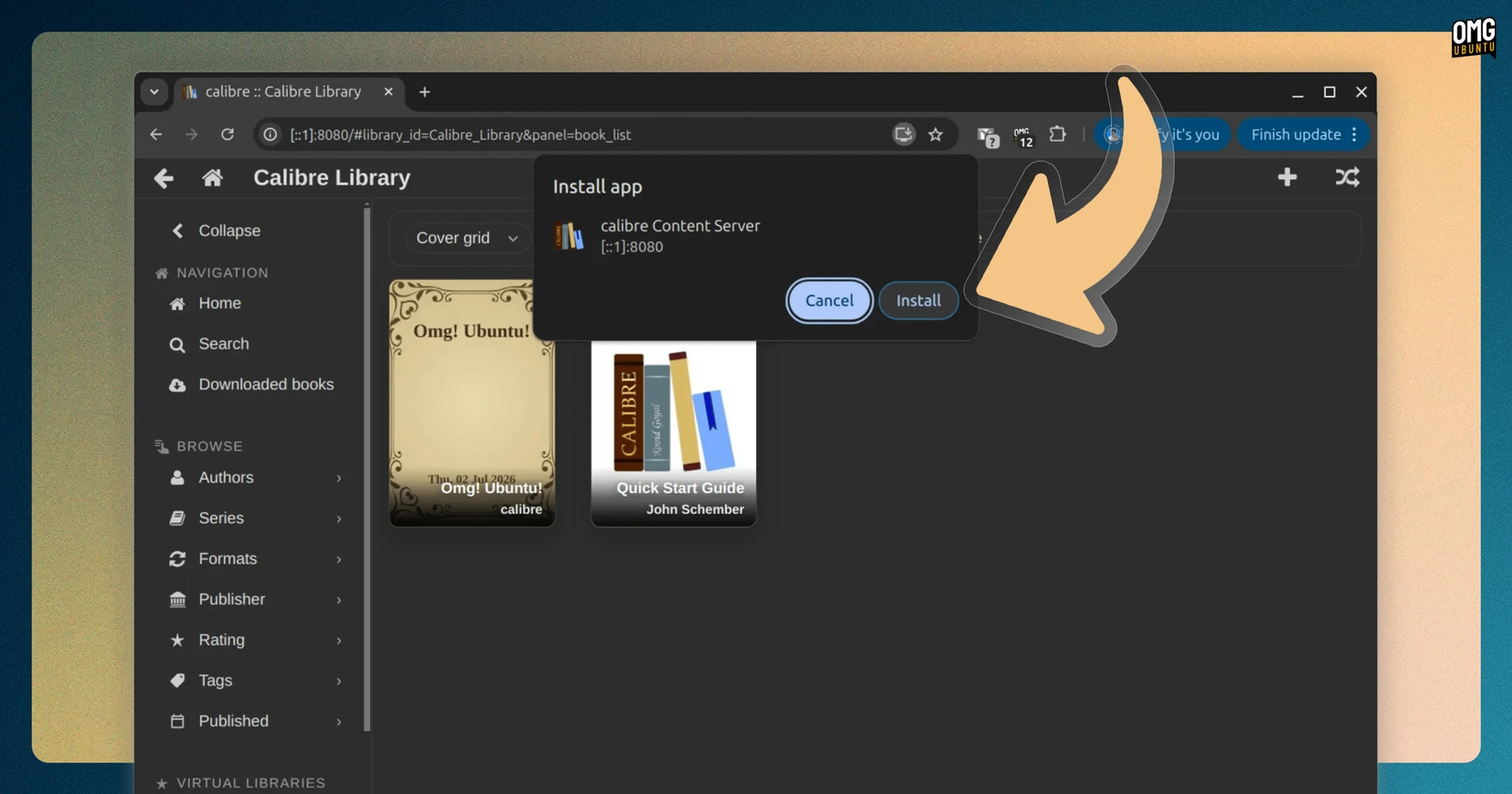
It biggest changes affects the Calibre Content Server, which lets you browse your ebook library from any device over the web (think Plex, but books). It gains a sidebar for easier navigation and can be installed as Progressive Web App (PWA) on phones, tablets, etc.
Inside the app, Calibre’s CSS parser now supports CSS Level 4 selectors, there’s an option to convert PNG images to JPEG or WebP when compressing books, and you can filter your saved searches by keyword.
If none of the above has you reaching to upgrade, this might: a security flaw, CVE-2026-53511, was patched in Calibre 9.10.0 to, apparently1, prevent malicious book metadata from running Python code. If you checkout ebooks from unusual libraries, worth updating – just incase.
Calibre 9.10 is available now from calibre-ebook.com.
qBittorrent massaged its WebUI
A minor maintenance release landed for popular open-source BitTorrent client qBittorrent.
qBittorrent 5.2.2 improves D-Bus integration on Linux so users can open a completed file’s folder and actually see that folder open. The built-in RSS reader also resolves a regression with “RSS Smart Episode Filter” regex matching.
The qBittorrent WebUI also got fixes, including a session cookie switch to handle cross-site login bugs, bringing back the missing properties panel expand/collapse button and resolving a performance quirk that occurred when toggling the global checkbox.
Sound good? You can download the latest version from qbittorrent.org.
Bleachbit added AI cleaners and an AppImage
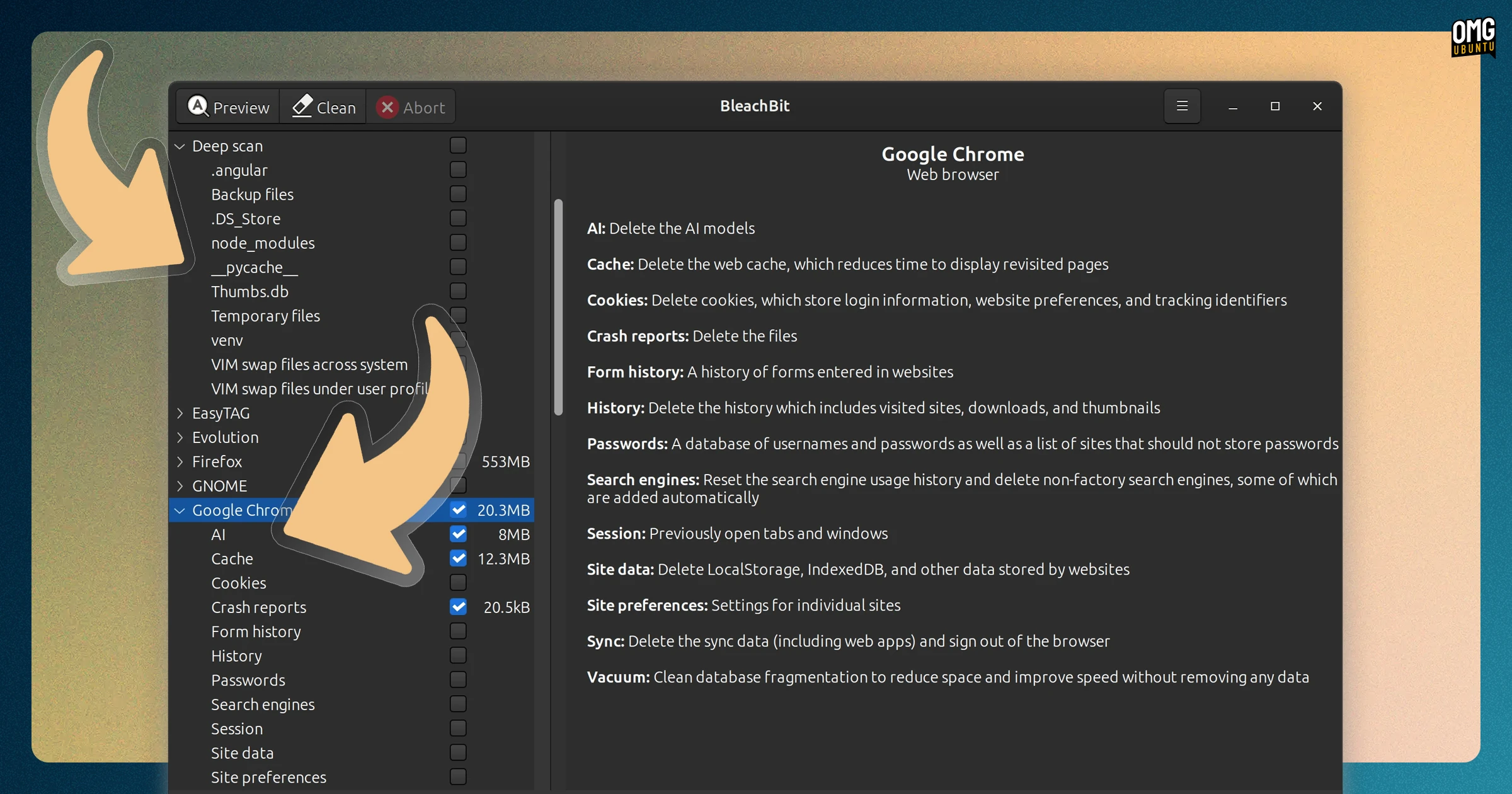
The BleachBit 6.0.1 beta is out for testing – emphasis on testing – building on the features added in the BleachBit 6.0.0 stable release in May 2026.
Of note, BleachBit is now equipped to clean up cruft left by Claude Code, and sweep away Google Chrome’s 4GB AI model, which many users have found was dowloaded in the background whether they made use of the browsers AI tools or not.
Deep scan has gotten faster, and is able to probe node_modules, venv and .angular folders. That should please avid developers who tire of cleaning up after themselves manually.
File shredding is reported to leave fewer recoverable remnants behind, and a new DNS cache cleaner has been added on Windows and Linux (on Linux, run resolvectl statistics afterwards to confirm the cache emptied).
Data cleaners expand to support multiple Google Chrome and Microsoft Edge profiles rather than just the default one. The tool also adjusts how it clears out old Apache OpenOffice data.
On Linux, there are cleaners for Visual Studio Code and Codium, Profanity (a chat client), and the tool can detect and delete data in LibreWolf DEB and Transmission Flatpak builds. This beta also fixes the CLI failing to run as root on Linux with Wayland.
BleachBit 6.0.1 beta is available from download.bleachbit.org – now offering an AppImage.
Praise chorus of music player updates
As June 2026 was particularly heavy on music player updates I’m breaking the Linux App Release Roundup format to grouping them together, tersely. You’d be scrolling for the rest of the afternoon if I didn’t.
High Tide, a GTK4/libadwaita Tidal client for Linux, pushed out v1.5.0. The login page now clarifies that the “Page not found” redirect is expected. It also resolves an issue where the top 5 songs on artists’ pages were duplicated.
Cantata, the Qt-based MPD client, rolled out a minor update. Among changes in v3.5.0 is an update to FontAwesome 7 (used for in-app icons), a fix for dynamic playlists in its Flatpak build and a new Turkish translation.
DeadBeeF, the versatile MPD client, issued v1.10.3 with an updated mpg123 library to patch a CVE. The flaw could allow a malicious audio file to execute code by overwriting memory outside its allocated buffer during playback.
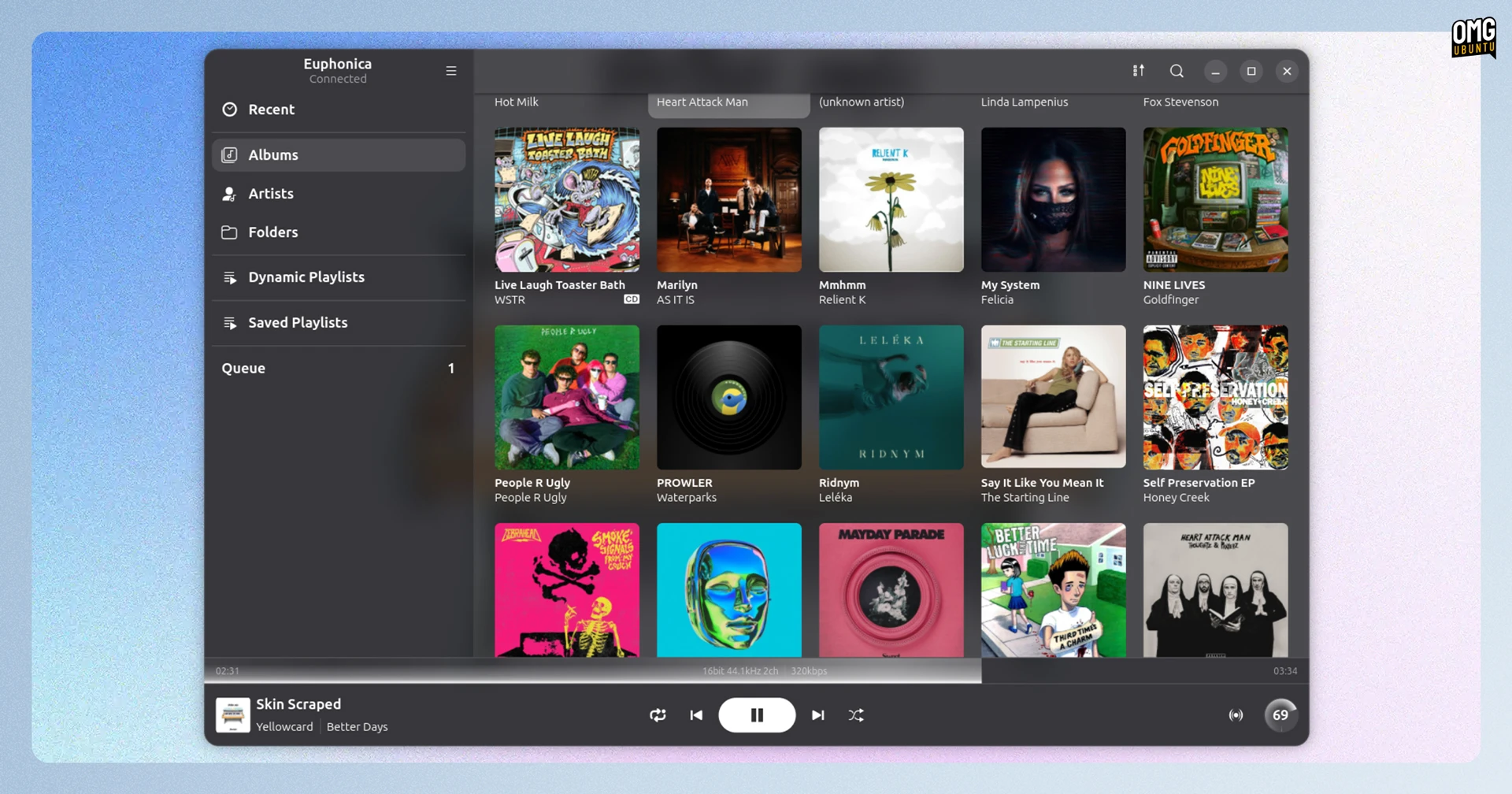
Euphonica, a flashy MPD client, saw speedups in album and artist grid loading times in its v9.99.5 beta – 3k albums now load in less than 3s! Plus, Parallelised decoding of images has improved cold-start artwork population.
Amarok’s new v3.3.3 release fixes system suspend inhibition during playback, irons out issues saving applet layouts and updates the Wikipedia applet to cope with recent formatting changes on the site.
Audacious v4.6.1 uses the XDG cache directory to store temp files, better handles embedded lyrics in files and adds a Georgian translation. Source code now builds on systems using musltoo.
Other updates of note
Alongside those picks, the Zen web browser (a Firefox fork) saw several stable bumps to deliver upstream changes and bug fixes. It also added an improvement of its own: right-click on a pinned tab to define the URL for it.
So too of LibreWolf, another popular Firefox fork. Among its changes, DRM now uses a per-site permission, rather working on all requested sites when DRM is enabled. It’s developed have also held off on rolling out Firefox 152’s settings revamp for now.
Ignition, a neat GUI tool to add and a control startup apps, scripts and services on Linux, now lets you open a script to fill in the ‘command’ or ‘script’ paths rather than typing out their file locations.
That’s our look at June’s notable open-source drops. As we launch into the second half of the year – already! – be sure to drop me a line via the contact form of you see or share any Linux app releases you think merit a shoutout next time.
- Calibre is cross-linked to the CVE on SUSE but the CVE itself is ‘reserved’ with no detail showing publicly, so I’m going by what Calibre has said it was about. ↩︎