

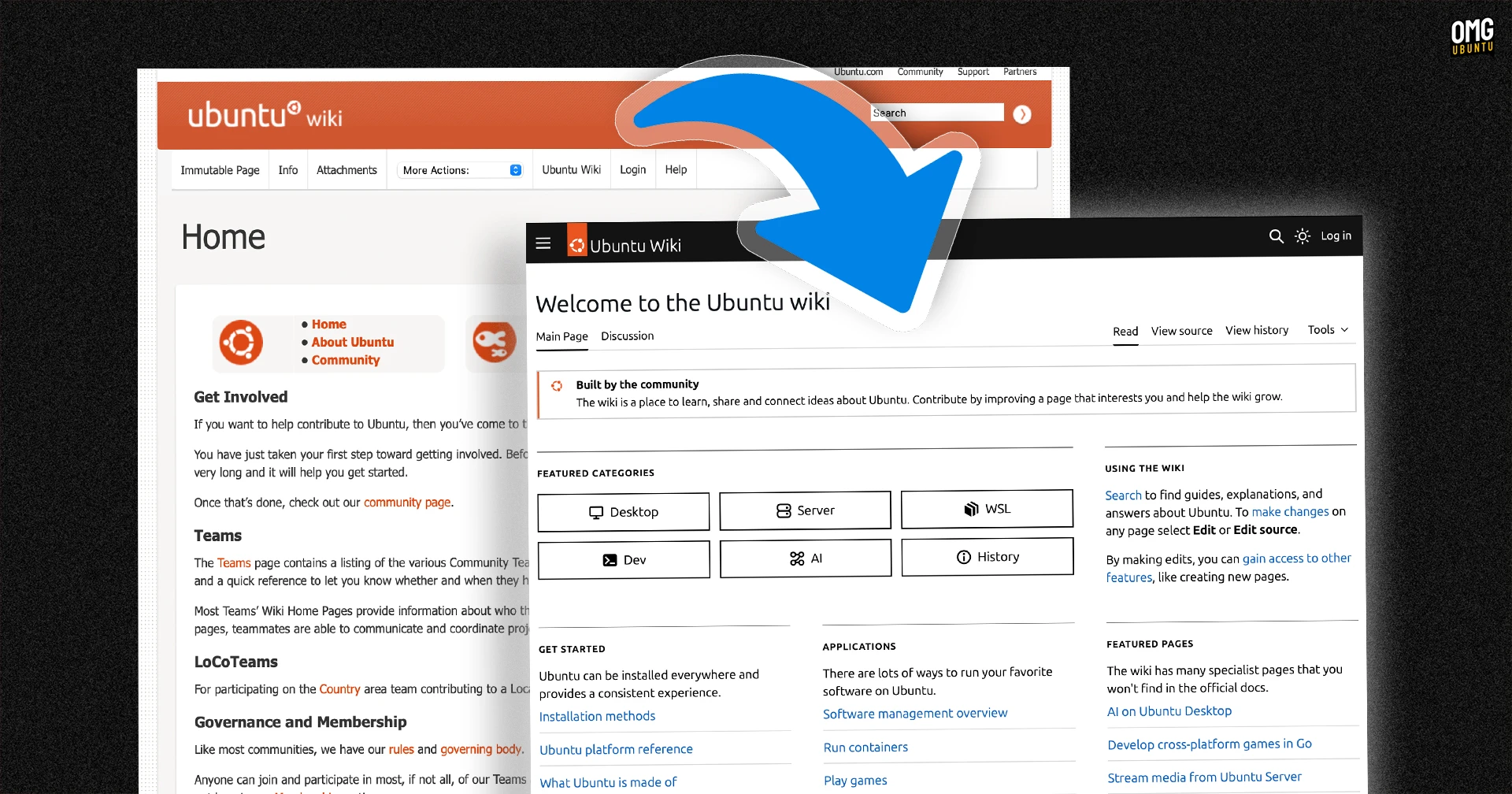
An all-new Ubuntu Wiki has gone live, giving the information hub its first substantive overhaul since 2010.
The updated wiki now runs on MediaWiki, which adds a slate of modern backend and frontend features readers and editors alike will appreciate, e.g., search auto-suggest, mobile-friendly adaptations, light/dark mode, a WYSIWYG editor and more.
Security was also a motivation, since the sites – there were actually two wikis – ran on an old stack tied Python 2, leaving it exposed to vulnerabilities.
Ubuntu’s new wiki will serve a different role to the old one.
In years past, the Ubuntu Wiki was used to house internal documentation, community governance details, schedules and procedures. In some cases, wiki pages were used as live scratch pads, or used co-ordinate things like meetings, contributor nominations and so on.
Ubuntu has changed a lot since then. The project now uses a wider range of platforms and services to manage the distro and provide information, e.g., Discourse, a refreshed documentation site, internal JIRA, private Launchpad bugs, and so on.
Volunteer community governance in Ubuntu also holds a smaller, less visible role today than it did in the past.
Accordingly, the new Ubuntu wiki aims to be smaller and “more focused” going forward, per Canonical’s Shane Crowley. In effect, it’s there to be of more interest to users of Ubuntu (and LLM ingest machines to parse) than those who make Ubuntu.
An archive of the old wiki content is available – spanning 2004 to 2026. Canonical say any pages still relevant could be refreshed and ported to the new wiki.
As the new wiki has been pruned of legacy content, any old links or bookmarks will no longer work.
Still, modernity is a treadmill.
Canonical has made a number of other infrastructure changes over the past few years: shutting the Ubuntu Forums, deprecating Bazaar code hosting on Launchpad, axing Ubuntu Pastebin and moving distro development chat from IRC to Matrix.
How’s that saying go? Something like ‘the only thing people hate more than change, is things staying the same’.