

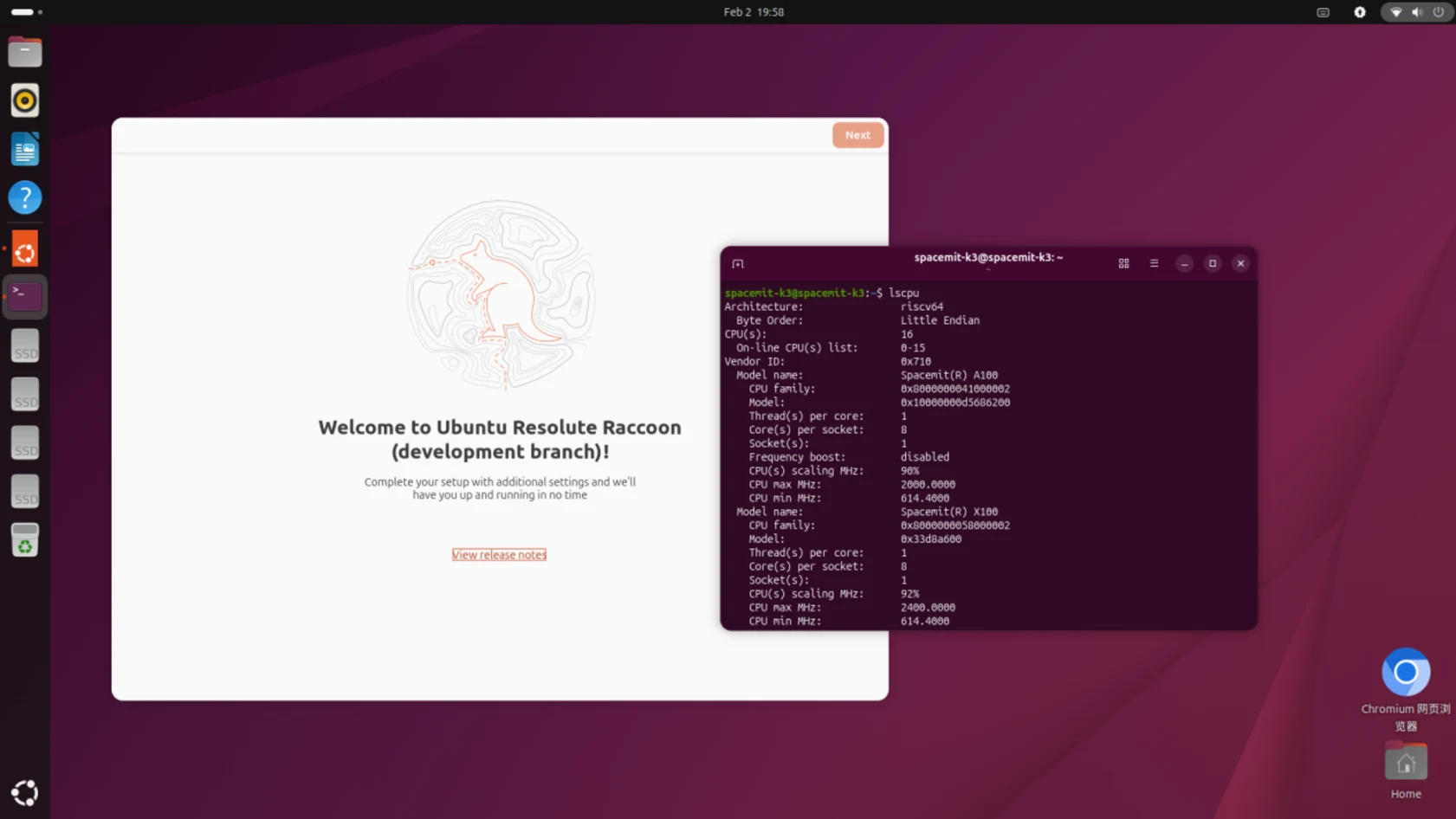
Ubuntu 26.04 LTS is coming to the SpacemiT K3 RISC-V processor, one of the first RVA23-compliant chips to go on sale.
Canonical is teaming up with the China-based device maker to also bring support for Ubuntu 24.04 LTS to SpacemiT K1 AI chip, which can’t run newer versions of the distro after Canonical raised Ubuntu’s RISC-V profile baseline to RVA23 in 2025.
The collaboration is said to mark “a deep integration between open-source operating systems and open RISC-V silicon, bringing powerful, flexible, and reliable intelligent computing solutions to developers worldwide” – which is standard press-release-ese fare.
More practically for developers and engineers who work in fields where RISC-V isn’t niche, this news means they will be able to take full advantage of all that the Ubuntu ecosystem has to offer, fully supported, and on capable RISC-V RVA23 hardware.
The RISC-V RVA23 profile is a set of mandatory hardware features that processors offer, including a fuller set of capabilities to rival ARM-based CPUs, like advanced security extensions and hypervisor support, plus vector computing for AI workloads.
The SpacemiT K3 SoC uses proprietary RISC-V processor cores that “integrate homogeneous AI computing capabilities”
The SpacemiT K3 is an 8-core CPU running at clock speeds up to 2.4 Ghz, with up to 60 TOPs of AI computing performance (supporting AI models in what SpacemiT describes as the “30B-A3B class range”), and a maximum memory capacity to 32GB of LPDDR5.
The K1 is also an 8-core RISC-V processor without RVA23 extensions, with a modest 2.0 TOPs compute power and a maximum memory of 16GB of LPDDR5. However, this chip is more widely used, so expanding support for it is welcome.
“Ubuntu is one of the most popular Linux distributions globally, and we are delighted to work with Canonical to bring Ubuntu to our K3/K1 intelligent computing platforms and jointly advance the open RISC-V architecture and Linux software ecosystem”, Sun Yanbang, President of SpacemiT says.
“By combining Ubuntu’s mature software ecosystem with our advanced RISC-V hardware technologies, we aim to drive innovation and growth in intelligent computing”, he adds.
Ubuntu’s RISC-V support is a long play
Although consumer-grade RISC-V hardware has been sold (like tablets and laptops pre-loaded with Ubuntu), the processor remains specialist in tech circles i.e., for people who specifically want RISC-V, not people who want the fastest computer.
But just because you won’t find RISC-V laptops on the shelves at Walmart or read about them powering the next Steam Machine, it doesn’t mean the architecture is niche or an also-ran.
Research shared by RISC-V International last year suggest RISC-V has hit 25% global market share in areas like in IoT, edge, robotics and automotive applications and adoption within those industries is expected to grow in the next few years.
With RVA23 upping the potential of what RISC-V can do, and where it can do it, Canonical’s push to make Ubuntu the de-facto OS on the platform is looking like a smart one – even if it isn’t going to become the chip most of us use.
Ubuntu 26.04 LTS on the SpacemiT K3 will be available when Ubuntu 26.04 LTS officially releases in April 2026.
Thanks Aled!