
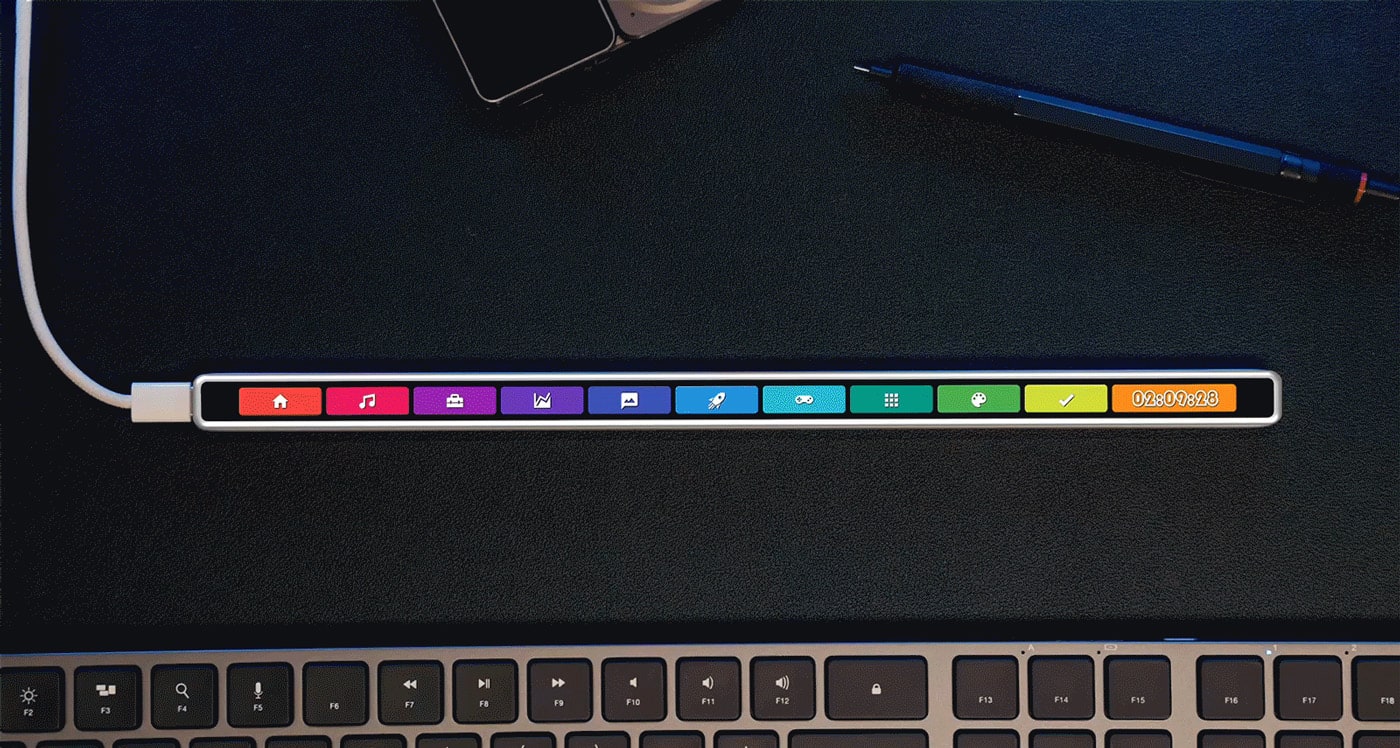

A new crowdfunding project aims to revive Apple’s (oft-derided) Touch Bar, but not as part of a laptop but a standalone USB device that work with Windows, macOS and Linux.
It’s called Flexbar, and it’s currently seeking cash through Kickstarter.
I’ll admit upfront that I don’t like writing about crowdfunding projects. When I do, it’s because they offer something novel, or it’s from a team with a track record of delivering. Flexbar is novel, though the campaign has a few things that make me iffy on it.
If you don’t know your Apple from your Orange Pi, the Touch Bar was a context-aware display strip embedded inside of MacBook Pro laptops, replacing traditional function keys.
Apple dropped Touch Bar from the MacBook Pro line last year, a decision championed by those who welcomed the return of physical function keys — and that underscores the main reason Touch Bar was unpopular: it wasn’t optional.
ENIAC, a company based in Hong Kong, is convinced there’s merit in the idea of having a thin, touch-enabled display connected to the computer, able to surface shortcuts and provide interactive features from software to help users be more productive.
They’re crowdfunding to resurrect the concept of Touch Bar, under a slogan of: “inspired by the best, built to be better”.
Let’s hope Apple don’t mind, eh! ;)
Flexbar: Apple’s Touch Bar Set Free
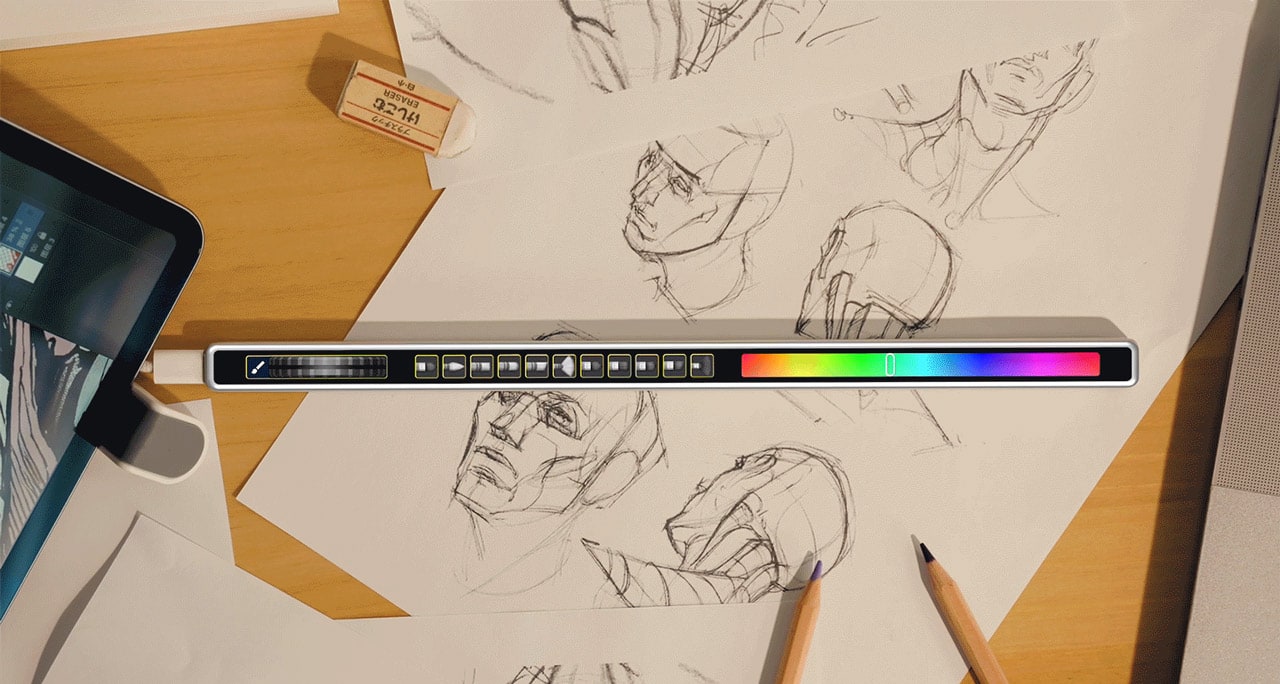
The Flexbar connects via USB to desktop operating systems, according to the campaign. It ships with pre-configured shortcuts and integration with major desktop software like OBS, Streamlabs, Twitch, Adobe Creative Suite, Microsoft Office, and more.
Users will be able to access a JavaScript-based tool (FlexbarDesigner) to create their own button graphics, shortcuts, and record macros. A bespoke plugin marketplace is planned for launch next year to expand support options.
Initially, Flexbar will support Windows and macOS, and function as a standard HID device on iOS.
So what about Linux?
In a reply to a query from a backer on their Kickstarter they say:
We’ve noticed a lot of inquiries about Linux, and we’ll be officially adding it to our support plan, Please be patient.
ENIAC
Linux support would be cool, and having a novel device like this integrated with pro-level tools like Krita, Kdenlive, and Audacity would be even cooler.
Assuming the device ever actually gets made, of course.
Can’t put my finger on why this feels off
The Flexbar Kickstarter campaign is already live, and it mets its goal within hours of going live — don’t be overly impressed by that fact: the target goal was an alarmingly anaemic £2,003 ($2,569).
Now, I’m not a manufacturing expert by any stretch, but that… sounds insufficient?
Think about it: they have to build an entirely new computing device, source a uniquely-sized 2K OLED touch display (and other components), get a case machined from aluminium. They also have to pay for factory time, assembly, packaging, and cover software costs.
If they can bootstrap this for such little money, amazing — more likely, they already have the cash, and this crowdfunding exercise is a means to simply market it, generate hype, and leverage the Kickstarter platform for payments.
It would explain how the company has been able to demonstrate the Flexbar’s mortal-plane existence in a series of slick (but not too slick1) videos.
Elgato’s Stream Deck is a nifty device popular with a lot of Linux creatives despite no official Linux app (a solid GTK one is on Flathub in Boatswain). The newer Elgato Stream Deck+ has a touch panel but remains more passive than the idea on offer here.
Personally, if I was an investor on Dragons’ Den (the franchise known as Shark Tank in other countries) and this pitch was in front of me? I’d squint politely, wrap the elastic back around my notepad, wish them the best of luck, but utter the iconic line:
But you?
If the Flexbar has taken your fancy, you can back it from now until January 2, 2025. Early-bird tiers start at £95/$119 – just keep in mind that as it’s already met its initial goal, if you back it, and you don’t cancel before January 2, you will be charged.
Let me know what you think of this concept (if not the execution) down in the comments. Also, share any crowdfunding red-flags you look for when assessing projects to back as it can be a minefield…
- Most “too good to be true” tech crowdfunders rely on CGI concepts or AI slop superimposing screens on devices – to know there is a real working Flexbar is mildly reassuring. ↩︎