

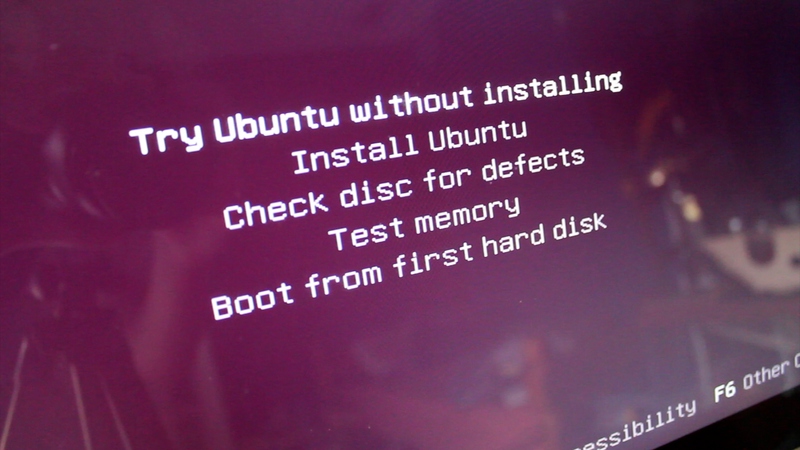
If you were hoping to download and install a 32-bit version of the upcoming Ubuntu 17.10 release, we’ve some bad news to share.
Ubuntu is dropping 32-bit builds of Ubuntu desktop, entirely, as of Ubuntu 17.10
Canonical’s Dimitri John Ledkov has asked the Ubuntu release team to “action” a proposal he put forth earlier in the development cycle. In it, he argued that i386 builds of Ubuntu desktop (aka 32-bit builds) should no longer be produced.
“Please action the below and remove Ubuntu Desktop i386 daily-live images from the release manifest for Beta and Final milestones of 17.10 and therefore do not ship ubuntu-desktop-i386.iso artifact for 17.10,” he writes.
“There is no longer any effective qa or testing of the desktop product on actual i386 hardware (explicitly non x86_64 CPUs).”
What this change doesn’t mean
This doesn’t mean Ubuntu won’t run on 32-bit PCs, simply that you can’t download a 32-bit installer for it
No changes are being made to other builds of Ubuntu 17.10, such as minimal install ISOs or the net install option.
Dropping 32-bit ISOs is not the same as dropping support for 32-bit PCs and laptops, however.
This change does not mean Ubuntu 17.10 will not run on x86 devices, simply that you won’t be able to download a live desktop installer image (ISO) of it.
So, don’t panic if you’re not yet on a 64-bit device. You can install Ubuntu desktop on 32-bit machines, but you will have to use a different ISO to do it.
The 32-bit Ubuntu archive is also not going anywhere yet. If you currently use a 32-bit version of Ubuntu you can continue to upgrade to the new release without issue.
Ubuntu flavours such as Xubuntu, Ubuntu MATE Ubuntu Budgie, et al are not affected. They’ll be free to make their own decisions about what architectures they do and don’t want to support.
And if a live image is important, there’s always Ubuntu 16.04 LTS. It is supported until 2021, and is readily available as a 32-bit image.
‘Change of scope and target market for i386’
Why drop 32-bit Ubuntu? Well, it seems like no-one really uses it. Those who do likely use a lighter, trimmer version of the distro, such as Xubuntu or Ubuntu MATE, as their resource requirements are lower.
The Ubuntu website has not offered 32-bit downloads for some time — not for desktop, server, or cloud. Other Linux distributions and operating systems are also distributed as 64-bit only images.
Last year we ran a poll asking how which version of Ubuntu you use: 32-bit or 64-bit. The results of that poll revealed that 92% run Ubuntu 64-bit already.
While not a total slam dunk, those results suggest that while this is a significant sounding change it is one that will have little practical impact for the majority of users.