

Linus Torvalds has announced the release of Linux kernel 7.1 with a rewritten NTFS filesystem driver, battery reporting for Apple Silicon devices and a Steam Deck OLED audio fix.
Other notable changes include better power-management switching on AMD CPUs and performance gains on Intel Arc Battlemage GPUs. Unusually, this update saw a huge set of legacy hardware revamps, with more than 140,000 lines of code dropped.
Losing legacy hardware drivers has a purpose as a leaner kernel is a more maintainable kernel. Developers no longer carry the burden of needing to fix, review and tackle security flaws in obsolete drivers, for hardware new people use.
With more security issues being detected by, and code to fix them, by AI tools, pruning keeps things manageable – for now.
But for more detail on what’s been added, and less on what’s been junked, here’s an overview of the biggest changes in the new kernel release.
Linux 7.1: What’s New?
A new NTFS driver
Linux has had NTFS drivers for an age. The original was read-only, then ntfs3, contributed by Paragon in Linux 5.15, added write support. Paragon’s interest has tailed off and despite a flurry of improvements in Linux 7.0, it isn’t where it needs to be.
Enter. a new, optional NTFS driver in Linux 7.1, created by Namjae Jeon, the developer behind the kernel’s exFAT driver. The old read-only NTFS driver was rebuilt, gaining write support, iomap-based file operations and even new tools to help fix corrupted drives.
While ntfs3 remains in the kernel as the default NTFS driver, it might not be there for long. You can use the new NTFS driver in Linux 7.1 using a Kconfig switch. If you dual-boot with Windows or regularly mount Windows-formatted drives, it might be worth trying.
AMD CPUs get smarter power management
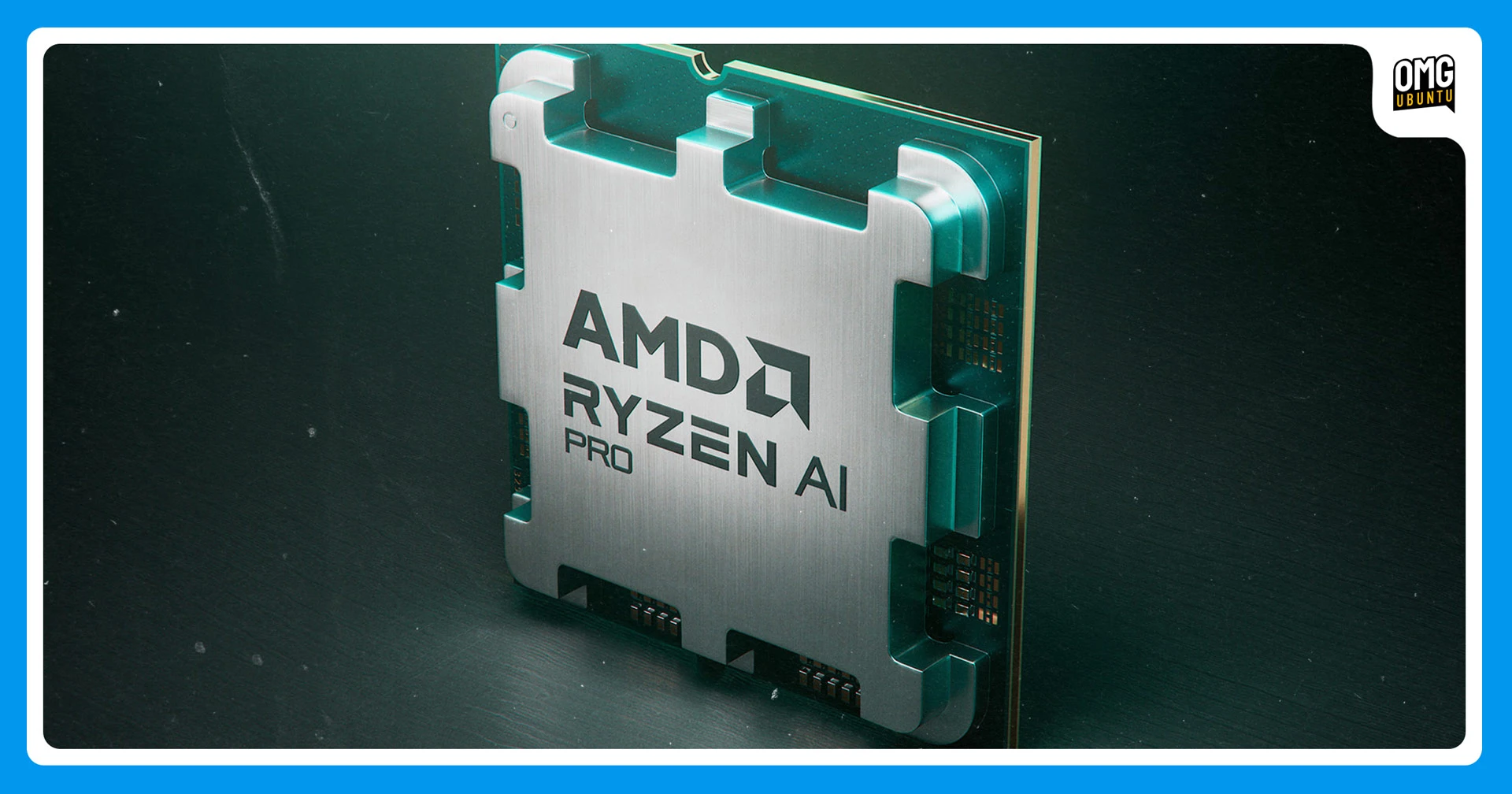
The AMD amd-pstate driver supports Dynamic EPP (Energy Performance Preference) in Linux 7.1, allowing the driver to automatically switch the CPU’s performance profile depending on whether the laptop is plugged in or running on battery.
Ergo, on AC power, the CPU targets performance mode. On battery, it drops to balance_performance, reducing power draw without going all the way to a sluggish efficiency profile.
Previously, this feature was handled by either a desktop environment power profile tool or manual intervention, but in 7.1 it can work automatically – though it’s not currently enabled by default. Pass amd_pstate.dynamic_epp=1 at boot to enable it.
On a related AMD note, Linux 7.1 kernel improves support for the Ryzen AI NPU (Neural Processing Unit) in the AMDXDNA driver, with memory usage queries for keeping tabs on NPU memory resources and power estimate reporting, relaying consumption estimates.
Intel FRED enabled by default
Intel’s Flexible Return and Event Delivery (aka FRED) is enabled in Linux 7.1 (on hardware that supports it), having debuted way back in Linux 6.9, albeit disabled by default – until now.
What does FRED do? Your CPU is constantly switching between different privilege levels as it’s doing what you need and what the kernel needs, be that writing to disk or handling network packets or responding to a key being pressed, or whatever.
FRED makes the transition handoffs faster and less ‘wasteful’, resulting in modest performance improvements.
In request-heavy workloads, like audio production, this appears to show to a pronounced benefit on newer Intel chips – up to 4-7% improvement in DAW benchmarks. But this is not Intel-specific; FRED is set to work with upcoming AMD Zen 6 processors.
Apple Silicon MacBook battery reporting
Running a mainline Linux kernel on an Apple Silicon MacBook gets another step closer to standard usability as the Apple SMC (System Management Controller) that handles battery reporting and voltage information is now included in Linux 7.1.
The new macsmc-power driver, developed by Hector Martin for Asahi Linux and refactored for upstream inclusion, exposes AC adapter status, battery charging status, voltage, current, temperature and battery health to the kernel – i.e., stuff TLP or cpufreq can use.
The driver also supports modifying charging behaviour, opening the door to allowing desktop environments and distros to hook into battery charge limiting to help extend/improve battery life.
Elsewhere, audio on Apple Silicon MacBooks gains a (minor) boost with support for the six-codec speaker setup, where pairs of drivers push dual woofers and a tweeter on each side. While full speaker support doesn’t arrive, this sets the stage for future audio drivers.
Filesystems and file operations

EXT4 is Ubuntu’s default filesystem so it’s always worth checking what changed. In Linux 7.1 the answer is: not a lot that you’ll notice directly.
This cycle’s EXT4 work mainly focused on bug fixes and the prep needed to switch EXT4’s buffered write path to iomap internally (the same approach the new NTFS driver uses). The switch will take place in a future release, but everything starts somewhere.
The exFAT driver picks up fragmentation reduction in 7.1.
exFAT drives tend to fragment over time as files get written and deleted, which can impact sequential write performance. New pre-allocation support via fallocate() means apps can claim contiguous space upfront, avoiding fragmentation in the first place.
BPF support (finally) lands in io_uring in 7.1, with any apps doing a lot of file I/O (package managers, backup tools, databases, sync utilities, etc) benefiting; while the ublk user-space block driver adds zero-copy I/O support, reducing CPU and latency on I/O operations.
Finally, the Btrfs shutdown operation added in 6.19 as an experimental feature graduates to stable in 7.1, so it should be safe(r) to call in scripts and integrate into system tools.
Laptops, input devices & hardware drivers
I focus on the tangible hardware buffs in each kernel release rather than fawning over bringup for Intel CPUs and AMD GPUs that are years away from being available to buy. Each kernel packs in plenty of changes to improve and expand hardware already available.
Take the Steam Deck OLED model. Audio has been broken in mainline kernel builds for a few years, but Linux 7.1 fixes it. That’s great news for those wanting to run distros that use something other than the patched Valve’s kernel.
Linux 7.1 adds a new Lenovo Yoga fan driver for fan control and monitoring on Yoga, Legion, Flex, Slim and IdeaPad laptops. The company’s Legion Go and Go S controllers are supported with a new driver covering rumble, haptics, LEDs and configuration.
The Bitland MIFS WMI driver brings keyboard backlight and platform profile support for a slew of Chinese-market laptops, and TUXEDO and Uniwill laptop support expands further. A fix for a ThinkPad Trackpoint doubletap issue also lands.
More ASUS motherboard models can now report temperatures, voltages and other system health data to user space (i.e, where desktop and apps can glean it). If you run lm_sensors on an ASUS board and some readings were previously missing, so 7.1 may now report ’em.
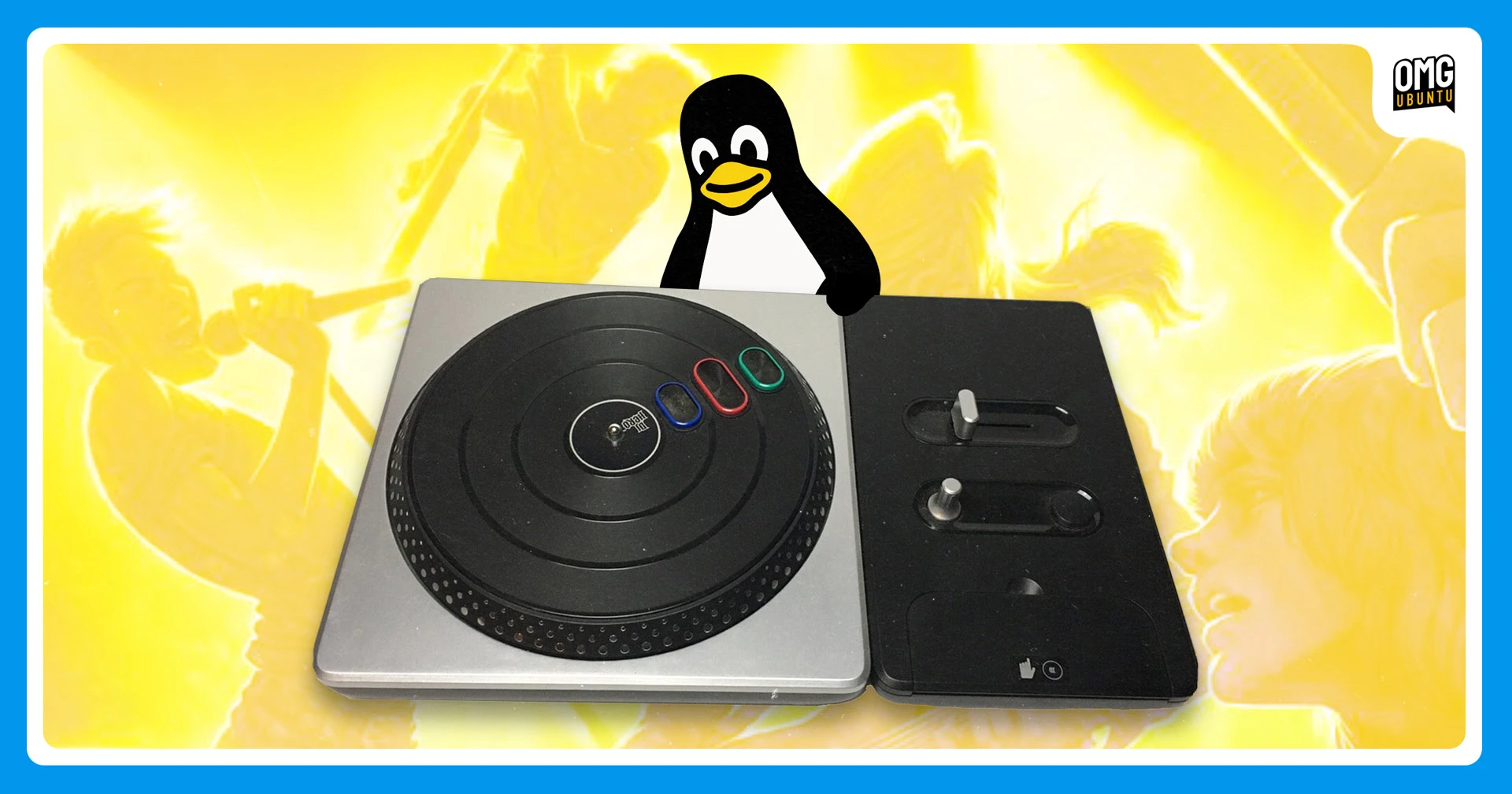
Linux 7.0 added Rock Band 4 Bluetooth guitar support, but Linux 7.1 adds support for Rock Band 1, 2 and 3 instruments for Wii and PS3, Rock Band 3 Pro instruments and the DJ Hero Turntable. If you’ve got any of those sitting in a cupboard… Jam session?
If you have a Winwing 15E or 15EX throttle, you’ll be pleased to hear rumble and force feedback effects now work.
Elsewhere in audio, the internal mic array in 2022-era Ryzen 6000 series laptops (AMD Raphael DMIC) gains support, as does the Cirrus Logic CS42L43B codec used in some Intel Panther Lake systems and recent Dell laptops, covering headphone output and headset mic input.
Graphics cards
Linux 7.1 sees more old AMD APUs move to the modern amdgpu driver, this time A-Series and E-Series chips circa 2013-14, found in budget laptops and small desktops (Kaveri parts like the A10-7850K and A8-7600) of the era.
This means better (comparative) performance on older devices with iGPUs, and Vulkan support via RADV enabled out of the box. Decades old GPUs getting better performance in modern kernels is the kinda stuff that makes Linux so awesome.
Linux 7.1 introduces a new DRM-RAS, (Reliability, Availability, and Serviceability). This is a standardised framework that lets GPU and accelerator drivers expose hardware error counters and reliability logs to user space allowing for a unified way to monitor hardware health.
Intel Xe graphics driver gains a user-space interface for managing video memory pressure, which should reduce crashes or out-of-memory failures under heavy workloads when VRAM fills up.
140,000 lines of legacy code removed…
As mentioned in the opening, the Linux 7.1 kernel drops a load of code.
Over 140,000 lines of code in total is gone, including legacy features like ISDN support, ham radio (AX.25) networking, UDP-Lite, the old CAIF protocol, Bluetooth CMTP, and older networking drivers.
An uptick in AI-generated bug reports against unmaintained drivers that nobody uses on hardware few people now own was causing headaches for maintainers. Ditching the code dials down the noise and reduces the kernel’s attack surface.
Bus mouse support is gone too, sob.
…Intel 486 support on the way out
Linux 7.1 begins phasing out Intel 486 CPU support. Build configuration options for the M486, M486SX and ELAN sub-architectures gone, although the code to support them still exists (for now). If you’re running Linux on a 486 – and if so, how? – be aware: the end is nigh.
Other changes in Linux 7.1
The high-resolution timer (HRTIMER) subsystem was reworked to eliminate the overhead of the HRTICK scheduler timer. HRTICK is what lets the kernel preempt tasks at the right time, rather than waiting for the next clock tick.
The swap map was removed in 7.1, rounding off a modernising memory effort that began in Linux 6.18. The nitty-gritty matters less than the upside: under memory pressure (too many tabs and not enough RAM), swap operations can run concurrently.
Linux 7.1 brings a notable security boost. In earlier kernels, any process with sufficient privilege could look at or modify another running process’s memory via /proc/PID/mem. Now an active debugging relationship between the two processes is required.
Other notable changes include:
- sched_ext gains early sub-scheduler support
- IPv6 can no longer be built as a module it’s either compiled in or off
- Minimum Rust version raised to 1.85.0
- Intel QAT Zstd compression hardware acceleration
- New clone3() flags that make subprocess cleanup automatic
- 32-bit ARM now supports real-time kernel builds
For a deeper dive into all changes, LWN’s merge window recaps (part one and part two) are the most thorough reference, with links to detailed reporting on many of the bigger changes.
Get Linux 7.1
Linux 7.1 is out now. Ubuntu 26.10 daily builds will, in the coming weeks, receive this kernel as part of the distro’s newer kernel tracking approach. The final stable release of Ubuntu 26.10 in October will ship with Linux 7.2, which enters development today.
You can install Linux 7.1 in Ubuntu at your own risk using Canonical’s mainline kernel builds, but – an important but – these are not recommended for end-users. If your system works well, don’t change out your kernel for the sake of it.