

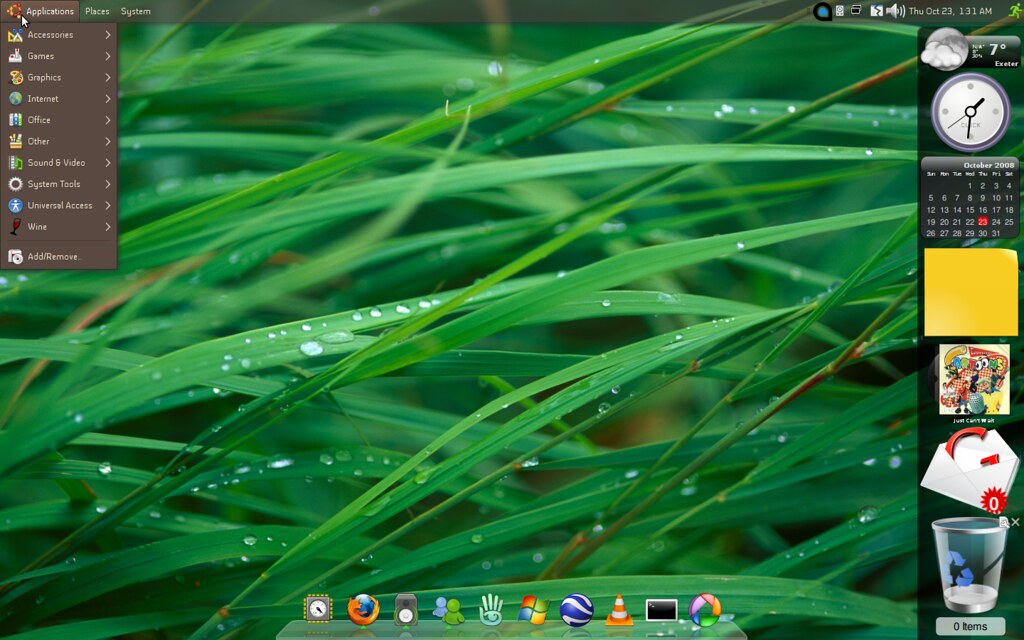
In some respects, had I never discovered Linux I would probably not be that enthused about software or technology.
That’s not to say I wouldn’t be using tech—obviously, I would; we’re ever-more connected and reliant on tech in our day-to-day lives (and that dependency will only get deeper in years to come).
But I’d have far less awareness and appreciation of the sheer choice that’s available (and the human ingenuity it’s made from: yes, software isn’t made by code, but by people making code).
I wouldn’t have built my own PC, I’d be running Windows (and only Windows), and I’d probably use my computer to do things, rather than do things to my computer.
Perhaps you can relate as I reinforce a trope by saying that the amount of ‘technical’ detail, know-how and ephemera you pick up simply trying to use Linux full time… Well, it adds up! Knowledge by osmosis (or, at least, from trying to find out why hardware accelerated compositing isn’t working so you can wobbly your windows like all the l33t kids).
Which is why Linux has led me to view my computer and the way I interact with my computer differently.
It made the ‘personal computer’ truly personal – like a dispassionate tool I use and more an extension of me. No longer am I merely a passive user of whatever software comes provided, but an active chooser in what I use, because I want to use it.
—I know; hardly a stunning revelation: boy picks software he likes!
But it’s part of the conditioning of Windows, where your experience is tightly chaperoned. Being able to pick choose, swap and set my own software, desktop, window manager, even kernel modules. It’s empowering on many levels — it encourages me to critically evaluate my own needs, assumptions, and tasks, and then gives me to the means to action them.
Not that I wasn’t predisposed to ending up this way.
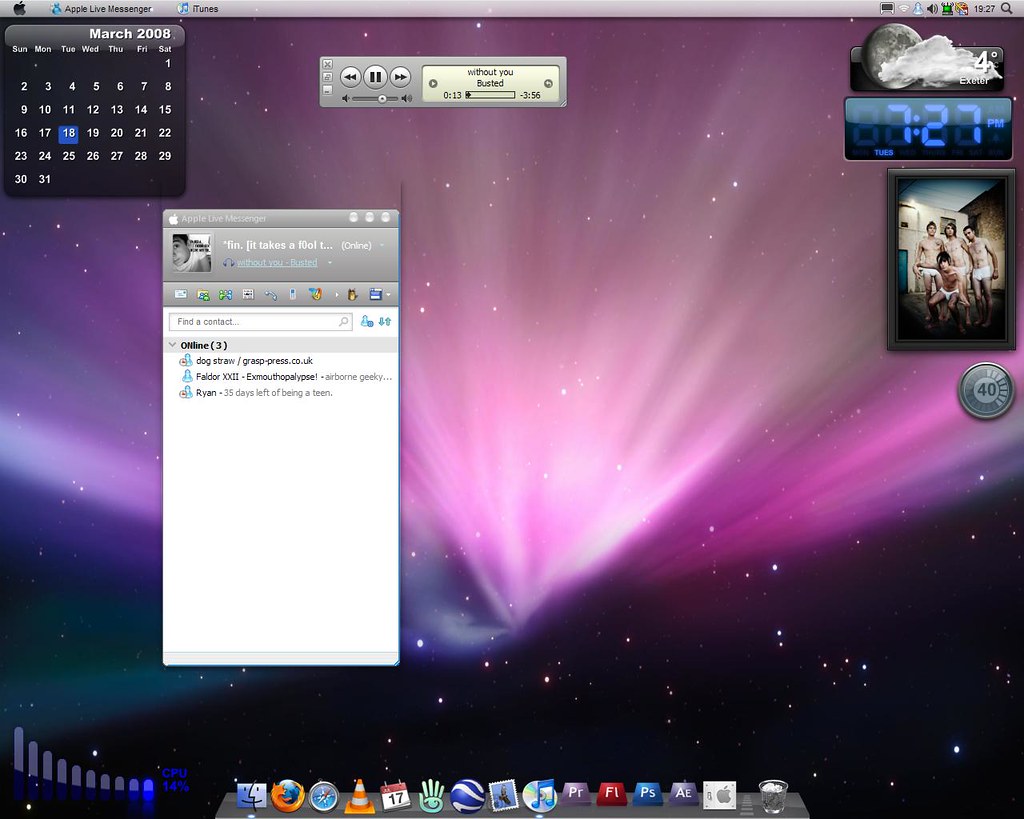
I was a bit of a geek in my Windows XP monogamy (just under a year ago, that’s all it’s been).
I was into visual customisations (I skinned Windows XP to look like Mac OS X), and aware of “open source” because of Mozilla Firefox and VL.
But I wasn’t as appreciative of how much work and choice there is out there for end users, on Windows as much as Linux. Part of that was because finding alternative software on Windows requires payment, or taking a risk (lots of viruses in ‘freeware’).
Since discovering Linux, I switched to using OpenOffice on all of the operating systems I now run (Ubuntu, Windows Vista, OpenSolaris and Mac OS X 10.4). Like others, I had made do with Microsoft’s no-frills WordPad prior, oblivious to breadth of open-source.
Ironically, I never had a window on that world using Windows — it was Linux that let me see it.
I’m going off tangent a bit, but my point is that for many people there is no difference between computer and OS, and ‘software’ is simple whatever is provided on it when they buy it. The engagement begins and ends there: the rest is out of view.
While many will say ‘windows does all i need’ — maybe it does — until one actually tries an alternative, there’s no way to know if it ‘does all you need’. There’s as much choice in computing as there is in anything else so settling on Windows or, say, Windows Media Player, because it came on the thing you paid for money for would be like buying your first album and deciding “this album provides all the music I need”.
If it wasn’t for Linux’s comparative instability at times (for example, the system failing to boot after some .config file is accidentally overwritten by an update) then I’d likely answer the self-comforting instance of ‘I don’t need to use Linux because Windows does everything I need’ with a ‘Yeah, but Linux might do it better.’
Because it certainly does for me.
So if you’re on the fence about trying Linux, frame a switch less about specific bells and whistles and more about goals and opportunities. You, as I did, might find Linux has a more profound effect on your technological outlook.