


Ubuntu doesn’t run Android apps and games natively, but Waydroid is an open-source effort that lets you use them – and it’s now really easy to setup on Ubuntu.
Earlier this year, Waydroid was packaged in Debian. That put it a simple apt install away on Ubuntu 26.04 LTS and later. No need to add a PPA, find a third-party package or run scripts from Reddit threads.
Waydroid runs a containerised version of Android (LineageOS). Since it’s not a VM, apps run side-by-side alongside Linux ones, and integrate with the underlying system hardware.
It’s designed for Wayland-based desktops, like GNOME, and how well it works will depends largely on your hardware and, as importantly, what else you run alongside it since you have two OSes using one system’s resources.
Installing Waydroid on Ubuntu
On Ubuntu 26.04 LTS (and later), you can install Waydroid from the archives.
Open your terminal and run:
sudo apt install waydroid
It will pull in the Waydroid 0.63 and a bunch of dependencies it needs to run. Once unpacked, open Waydroid from the applications grid.
On first launch, you are asked to pick an Android image to download and use. If want to to use Google Play and related features, you need to select the image with that.
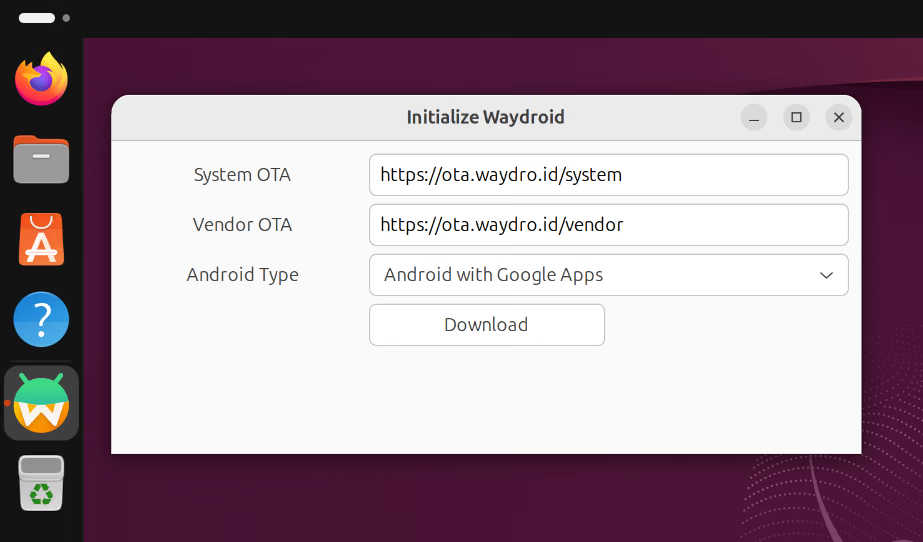
The actual image download isn’t huge, around 1.1GB or so, and on my sister (with a few simple games installed) the Waydroid environment used around ~4GB of disk space in total.
Android setup is done in Android, so signing in with your Google account, installing apps, and so on. Some app shortcuts, including Settings, apple in Ubuntu’s application grid, can be pinned to the Dock, etc for easier management.
Clipboard is bi-directional, so you can copy/paste to and from Android apps and regular Linux ones, and apps notifications appear in GNOME, which is neat. Everything else is passed through, though my Bluetooth gamepad input was not. Not sure why.
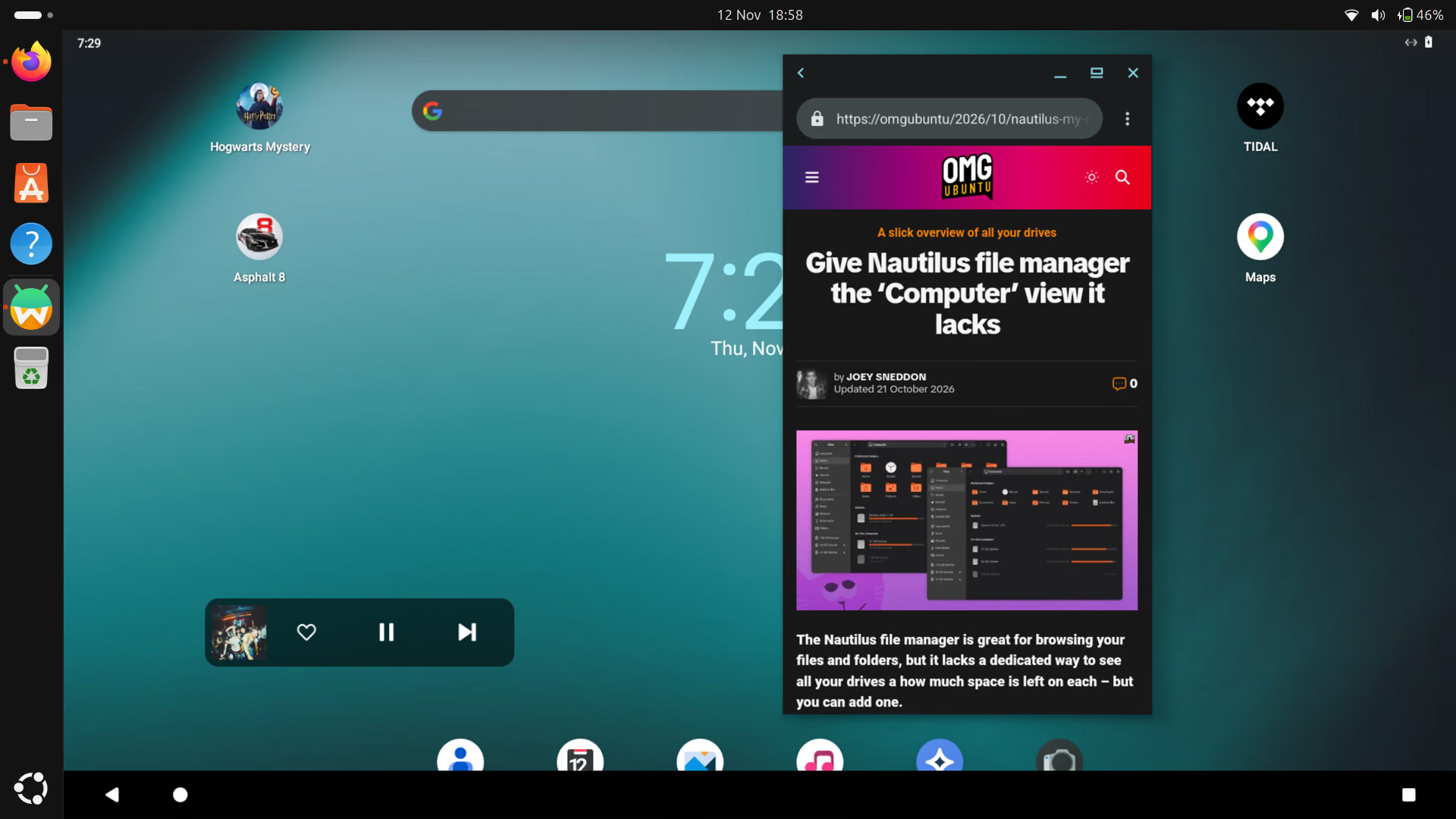
Configuring Waydroid is done from the command line. If you want to change display scaling or enable multi-window mode you’ll need to run commands to do that – the official documentation has details.
I reduced the scale (original value was 225, but things were too large, so I reduced it):
sudo waydroid prop set persist.waydroid.dpi 180
And to enable multi-window mode (so apps float on the desktop with window controls/borders), I ran:
sudo waydroid prop set persist.waydroid.multi_windows true
After running these the Waydroid session must be restarted for changes to take effect. Right-click the Waydroid icon to get a context menu with an options to stop.
I also disabled the on-screen keyboard (OSK), since it pops-up when a text field is selected, b going to to Settings > System > Languages & input > Physical keyboard and sliding the toggle to off.
Depending on what you plan to do with Waydroid on Ubuntu, you may want to set up a shared folder to easy file passing. If you want, you can even create a dedicated Waydroid session to login to a full-screen Android experience.
Can I use Google Play on Waydroid ?
If you install the “Android with Google Apps” image during setup, Google Play is available. You’ll need to log-in with a valid Google account (or set one up) to install things.
If you hit issues with Google Play Protect seeing your device as not verified, the app walks though how to resolve that.
What’s the performance like?
I was mildly curious to try Waydroid on Ubuntu now it’s in the archive. I recall trying it in the past and… It was a bit of a finicky fudge. The effort has matured a lot, and I dare say it’s good enough for what most people would need it for.
Performance is better than a virtual machine as there’s less overhead. Android’s core UI, apps and so on were nippy on my laptop (similar to running Android apps on a Chromebook), but the way mouse input feels in the UI makes things feel clunky.
Waydroid say GPU acceleration works OOTB with Intel and AMD GPUs, but NVIDIA users should instead enable software rendering. My test laptop uses integrated AMD and it was used from the get go.
My GPU was continually active when apps and games were running (along with the rest of Ubuntu, obviously), though my hardware isn’t exactly “rig” material (an older AMD Ryzen 2500U with integrated AMD Vega 8 graphics).
Devices with discrete graphics would cope much better. I’m not a gamer, but I installed a few games listed in Google Play’s free chart and they ran well, with audio. A racing game I tried showed occasional screen tears and dropped frames. Nothing dramatic though.
Screen colours, input and other features appeared to work fine, including the keyboard. I run this on a device with a touchscreen. Most Android apps and UI elements expect touch input, so you’ll need to get used to click and drag using a mouse.
Overall performance is limited by the hardware you’re running on, your GPU choice and the obvious fact Android is being run alongside a desktop OS and any apps that are running (cough, web browser with 117 tabs, cough) on it.
Closing apps don’t exit Waydroid
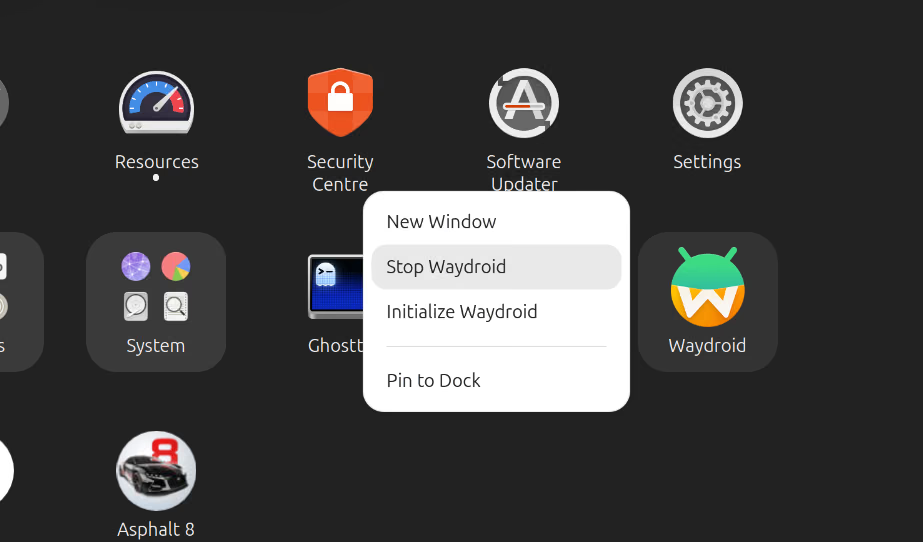
One important thing to note if you do plan to play around with Waydroid, is that you must explicitly stop the Waydroid service (right-click on its icon and choose ‘Stop Waydroid’) when you don’t need it.
Otherwise, even after you close all Android apps, Android and its subsystems continue ticking away in the background. That leaves fewer resources for the software you are using, and runs your battery down.
Waydroid is one way to run Android apps
Other efforts at running Android apps on Linux are around. I don’t know how well Waydroid would cope running multiple demanding apps atop a full Linux desktop environment, but I’d image most people only need to run something, now and then.
For that use-case, it’s pretty close to what you’d want: no-fuss setup that works from the get-go, with system integration, notifications and windowed apps.