


Every operating systems needs somewhere to put the files you delete (and give you chance to rummage through to find the ones you want to keep).
But, if you’re a Brit using Ubuntu, the name of that place varies based on where you look.
It seems Ubuntu’s UK English translation team don’t agree on what to call a bin. The dock hover label says Trash. That opens a Rubbish Bin in the file manager, and that show an action bar button to Empty Wastebasket…
Right-click on a file in the tr… Er, file holding area, and you have the choice to Delete From Wastebasket… or Restore From Rubbish Bin – both in the same menu.
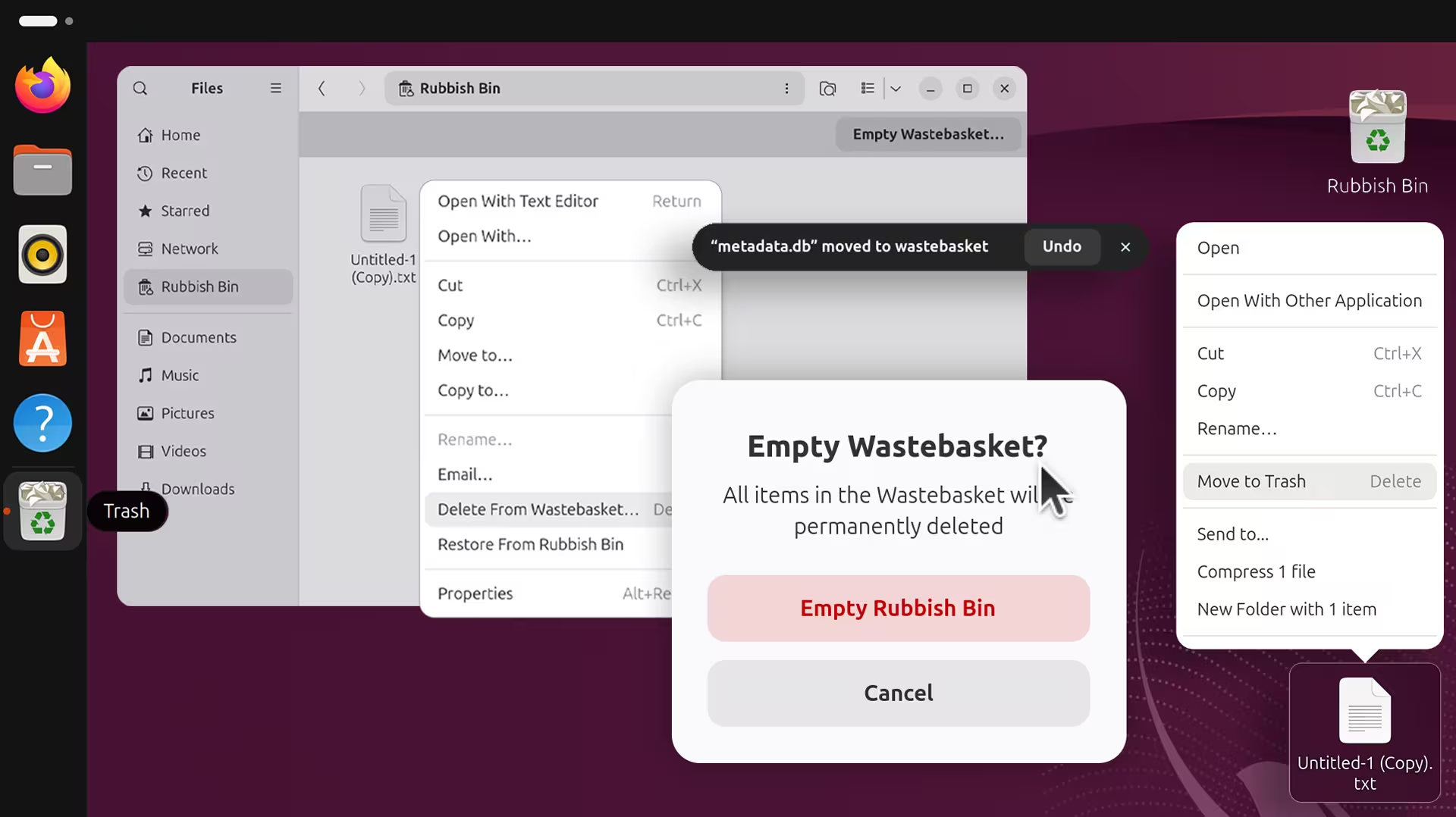
If you delete to clear out the cruft, the confirmation dialog is headed ‘Empty Wastebasket?’ with the affirmative action being ‘Empty Rubbish Bin’.
At least no-ones calling it a Recycle Bin, I guess!
It seems the identity crisis is solely in the British English terminology, as Ubuntu’s US translations are consistent in calling trash Trash (pronounced Traaash, in your best American drawl accent).
GNOME’s own British English translation guidance says “Trash should be translated to Wastebasket”, so that’s where that term comes from (though ‘wastebasket’ still reads as American to me1).
Lost in translation
Consistency in interface language matters (the same way it does in icons and controls). While the various UK labels are obvious as to what they are, the changing terminology adds a bit of unnecessary friction since your eyes will scan for the shape of the word you expect.
Not a major papercut, and with Ubuntu’s translations split across GNOME, third-party extensions and its own integrations, each maintained by different teams, it’s not surprising there are some locale quirks.
But if the US locale can use one term, can’t the UK bin the ones it doesn’t need?
- We call that a waste-paper basket, darling. ↩︎