

You may have noticed OMG! Ubuntu looking a little cleaner lately. Earlier this month, Sam and I finally rolled out a refreshed site backend, along with some changes to the bits you look at when you come here.
Boring stuff to read about, I know. But a few of the changes were done because readers asked for them, so I wanted to quickly mention them.
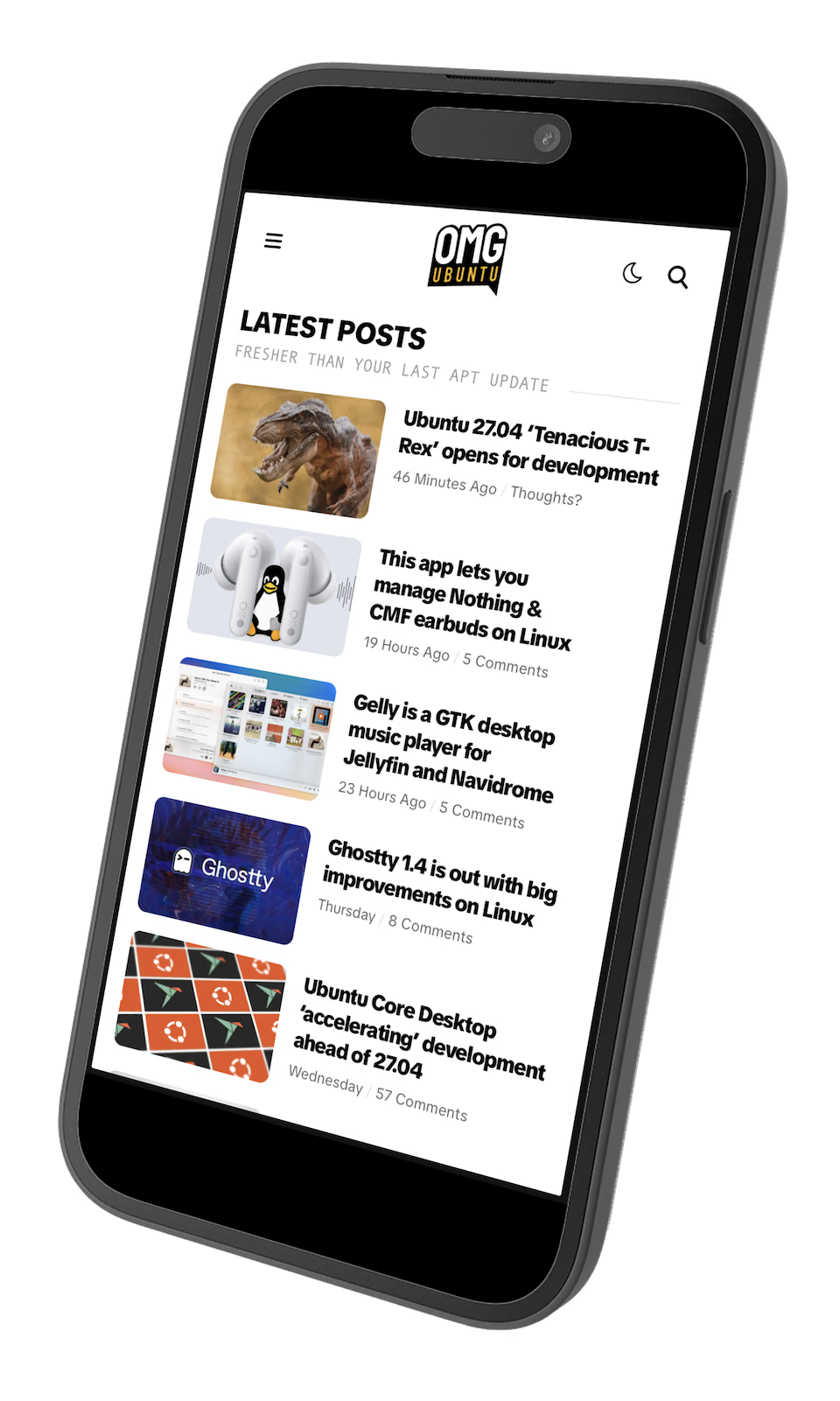
Firstly, the mobile homepage is now more info-dense.
Recent posts appear in a compact list, so you can see more of the latest articles at a glance rather than needing to scroll (and scroll, and scroll, etc) large thumbnails.
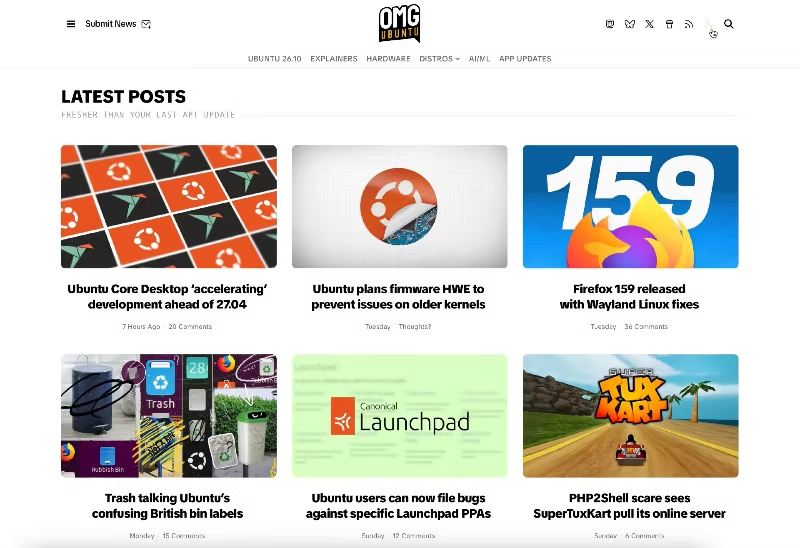
Secondly, there’s a manual dark mode toggle in the masthead. The site still follows your OS dark mode preference automatically, but you can override with this simple two-state switch: light or dark mode.
Thirdly, we updated the code blocks with a simple “copy” button to help newbies screw up their system faster make copying terminal commands easier than selecting text manually:
This has a copy button -->
The rest of the changes? Minor fluff.
A mix of things that are a bit different (new meta bar treatment, new ‘accent’ font, reworked mobile breakpoints) or just better (faster homepage cache loading, page transitions, AVIF for images1 and no more satsuma header background).
Work isn’t done. If you’re especially keen-eyed you’ll see further refinements in the coming weeks. There are still a few rough edges to iron out and plan to revisit components, like the sidebar widgets, that haven’t changed in years.
I’m not generally one for talking about the site on the site. But I don’t use it in quite the same way you use do, so your feedback helps me know what’s working, what’s not and, if we’re honest, where I’ve made a typo.
- I don’t plan to go back and convert old images in old posts, or images in the archive. Newer posts may continue to have WebP images if I’m using something from the archive. If you have a website, AVIF is worth considering. The quality:size savings are impressive. Most of my WebP files go from ~400kb to <100kb, with no noticeable drop in quality (screenshots often have a lot of text, which can suffer most from compression). ↩︎