

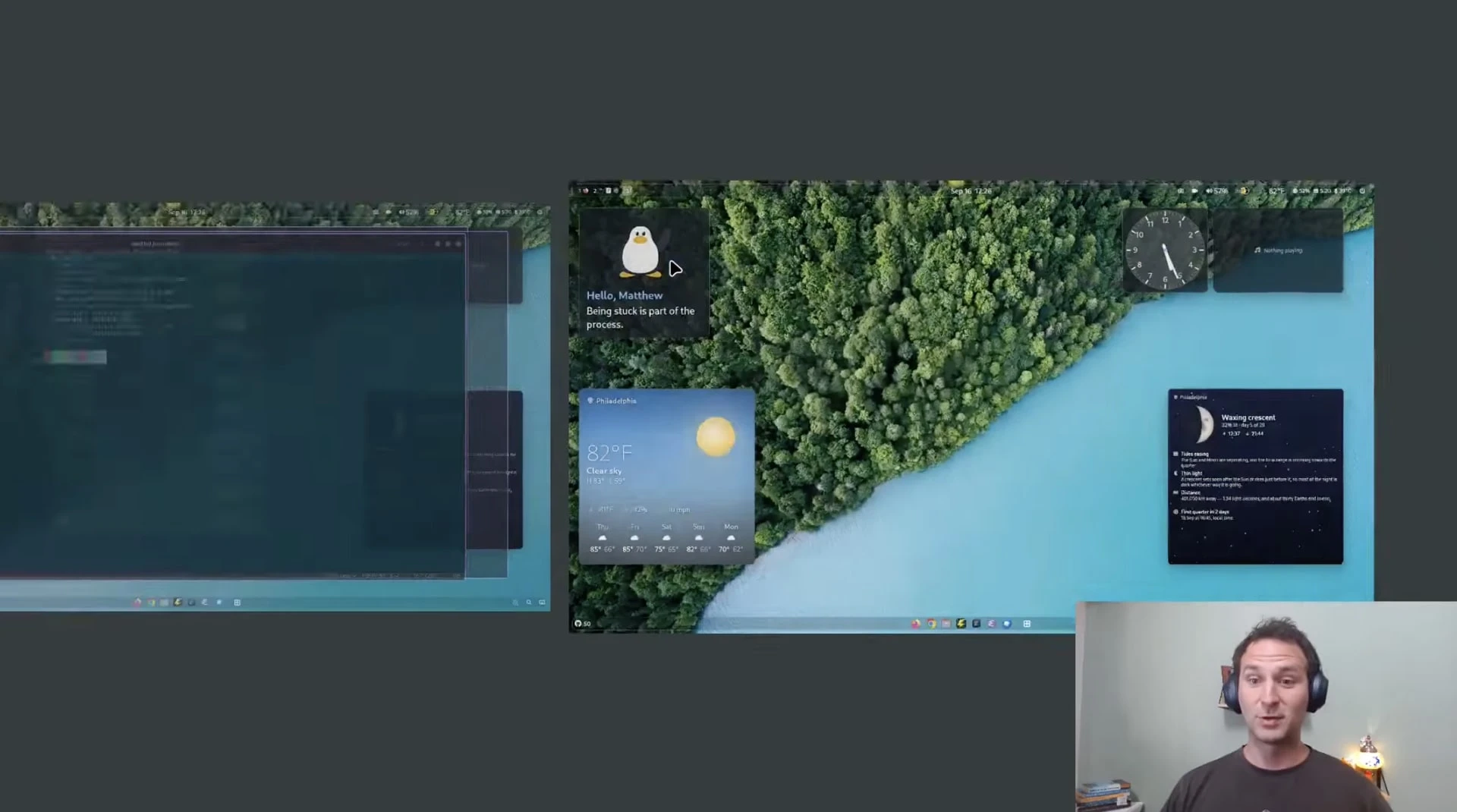
Miracle-wm v0.11.0 gains a fancy new overview mode inspired by GNOME Shell.
For those unfamiliar with miracle-wm, it’s a tiling window manager built around the Wayland compositor Mir, created to be a “hackable and flashy” alternative to other tiling WMs, like hyprland and sway.
The overview mode gives users an easy way to select windows and workspaces. One tap of the action key (configured in the config file) enters a window selector, while a double tap of the action key will enter a workspace selector.
Once open, windows and workspaces can be navigated using keyboard shortcuts, mouse scroll wheel or direct clicks.
Users can also now set a custom GL clear colour for the background. This is useful since the new overview mode has the background visible behind workspace cards.
Miracle-wm v0.11 supports screen sharing too
Miracle v0.11 adds the GET_KEYBINDS command to the Inter-Process Communication (IPC) system. This lists all keybindings active in a miracle session, giving users a “shortcuts cheatsheet” of sorts.
Support for window urgency was also added. This enables status bars like Waybar to indicate to users if a window on a non-focused workspace needs attention.
Plugins – added in v9.0 back in April – can now publish IPC events and handle IPC commands.
Mir protocol support was expanded in this update to include:
ext_image_copy_capture_manager_v1ext_output_image_capture_source_manager_v1ext_foreign_toplevel_list_v1ext_data_control_manager_v1ext_input_trigger_action_manager_v1ext_input_rigger_registration_manager_v1
And, image-copy-capture allows screen sharing and image streaming software (like xdg-desktop-portal-wlr) to work out-of-the-box under miracle.
As ever, Canonical’s Matthew Kosarek, the creator of miracle-wm, demoed the many new features – including that ‘flashy’ new overview – in a video posted on his YouTube channel:
For more details on the changes, and how to use or configure them, refer to the updated miracle-wm documentation.
Install miracle on Ubuntu
Miracle-wm is free, open-source software. Get the latest release from GitHub, install it from the Snap Store (sudo snap install miracle-wm --classic) or use Deb builds available in the miracle-wm PPA for Ubuntu 26.04 LTS (the PPA is often behind in updates, FYI).
If you decide to try it out, keep in mind Miracle is window manager, not a desktop environment. Pick the miracle-wm session via the cog menu at the login screen.
But you won’t see much on login: you must create a configuration file in a text editor to specify the tools, utilities and apps you want to use alongside it. If you login and nothing loads, you can log out of miracle-wm using super + shift + e .