

Is Ubuntu the unassuming trendsetter behind some of today’s most common software naming conventions? From Windows to Android, the distro’s influence could reach further than we think.
Earlier today, reader Abu A. pinged us with some insight he had on Ubuntu’s possible contributions to the wider software ecosystem.
Musing on the possibility of this (admittedly anecdotal) observation, it isn’t easy to pin down exactly where inspiration comes from (much less who). Yet some interesting patterns emerge if you dig a little deeper.
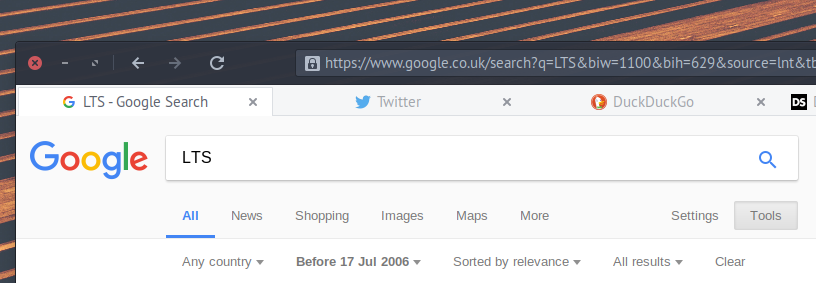
Take the term “LTS” (which stands for Long Term Support). Perform a quick Google search for “LTS” with results filtered to before Ubuntu 6.06 LTS’s release in early 2006, and you’ll few if any references to the term – it’s practically non-existent in software circles.
Could it be that Ubuntu popularised the use of this label?
Without being all Ancient Aliens about it: some Ubuntu enthusiasts believe so.
“Wikipedia has a table of many projects that adopted the LTS name which Ubuntu has pioneered,” Abu points out. “[This includes] Linux Kernel, Windows, Firefox, Joomla, and Node.js.”
The dot connecting doesn’t stop there. It’s just the beginning. Further down the rabbit hole is where things get really interesting:
Abu noticed that versioning for Microsoft Windows 10 now follows a year/month syntax, e.g., 1507, 1511, 1607, 1703, 1709 that’s suspiciously similar to Ubuntu’s longstanding release format.
And Android’s alphabetical ditzy dessert-based release names? Those may have been inspired by Ubuntu popularising the cute codename mascot motif first.
Now, we’re not saying Ubuntu definitely inspired these naming conventions, but it’s fascinating to see how the patterns align. Design or accident? Who knows – but it gives us a different way of looking at Ubuntu’s impact and influence on the world beyond marketshare.
Is Ubuntu unconsciously influencing software naming conventions? Or is this simply seeing patterns in static? Before I put my tinfoil hat back on why not drop a comment below to let me know what you think.