

Claude now lets users install artifacts, the small interactive tools the LLM can create during chats, as standalone(ish) desktop apps.
The new ‘artifact apps’ (sic) run in their own window and get their own desktop shortcut and icon. They show notifications and add panel applets, use system APIs and be granted system permissions, including full access to the filesystem.
The feature is in beta but available to users on all plans, including free tiers, but is only available in the latest version of the Windows and macOS desktop app (as of 24 November 2026). The feature is not available on Linux, where Claude is in beta.
Anthropic’s Claude Help Center notes that Linux isn’t supported at launch. That may mean the feature will come in time, as other Claude features have. There’s underlying commonality between major Linux distros to allow them to run.
Not a given, admittedly.
Claudeware showcase
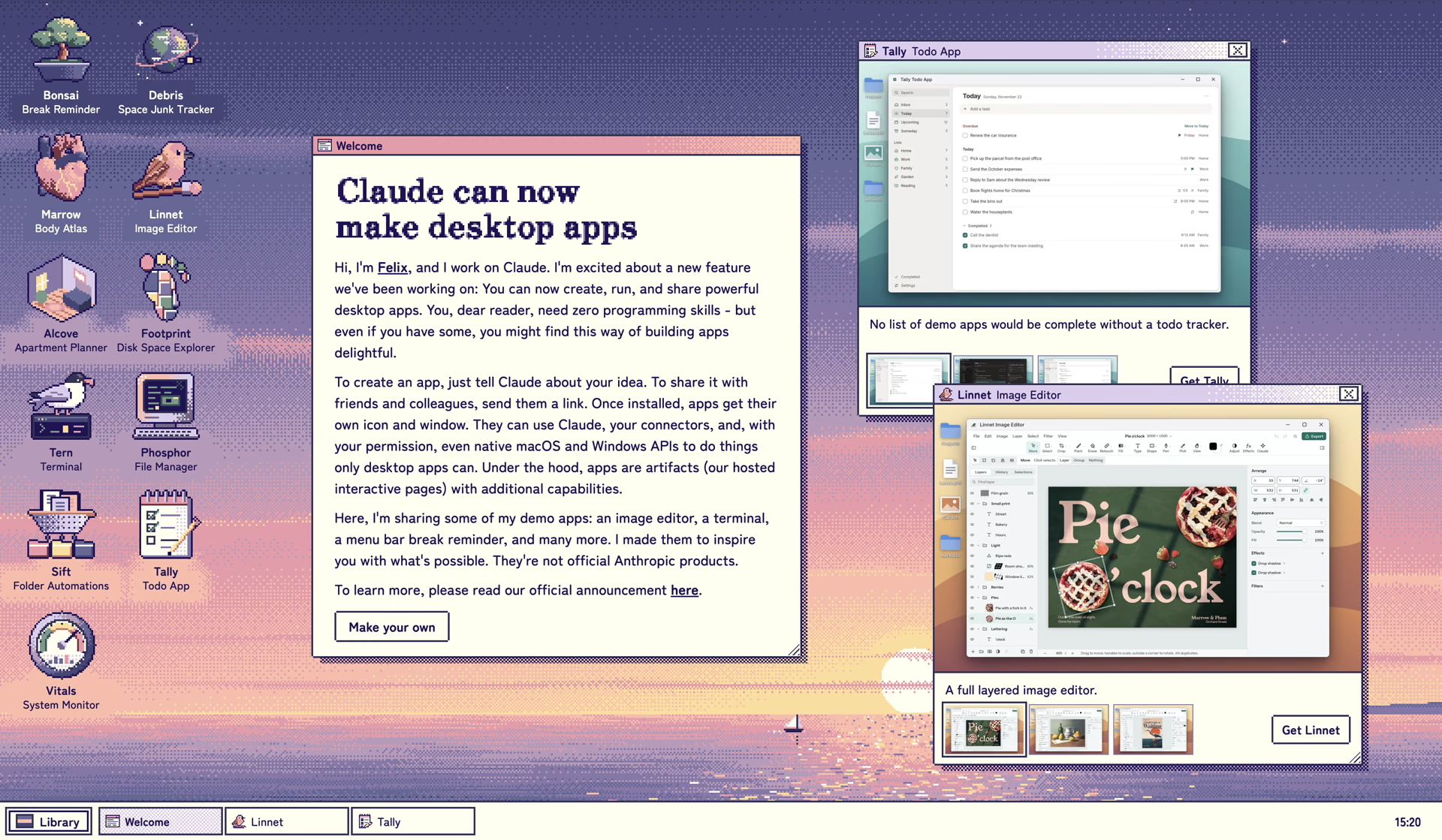
To demonstrate what these apps can do, a set of demo apps are available (accessed through an annoyingly cool mock desktop, as shown in the screenshot above).
Among the apps is a fully-featured multi-layer image editor called Linnet. a terminal (uses the the underlying system shell) and a file manager described as looking like it was ‘made for a movie set’ (a low-budget one, perhaps).
There’s also a disk usage analyser and system monitor, a room planner, mediative gardening simulation and a todo app that ought to do more (get it) to stand out.
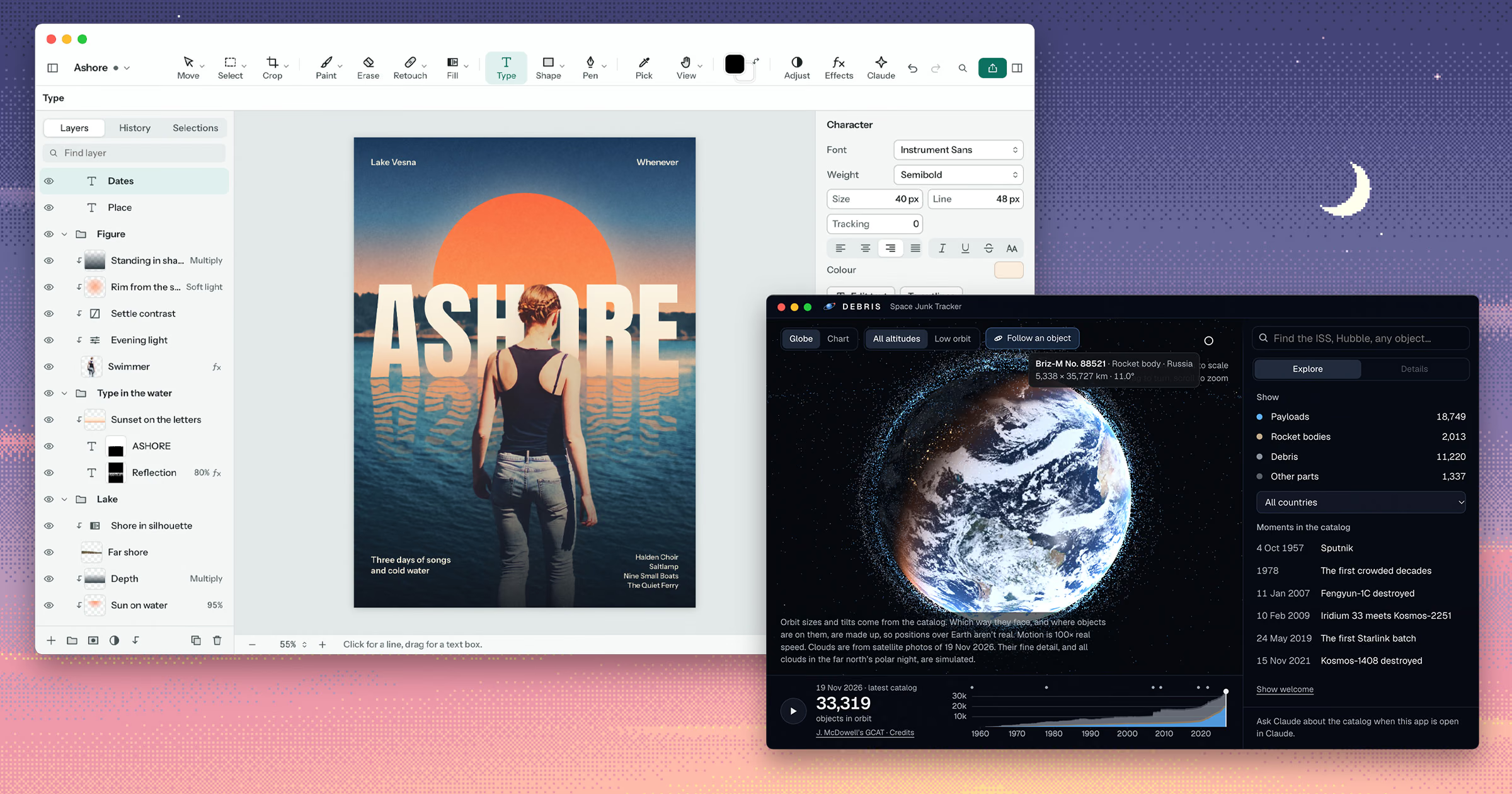
Marrow is a body atlas that gives me 2000s educational CD-ROM pack-in vibes. I did find the interactive map for examining space junk inspiriting – ‘Claude, remake this app, but plot the infection rate of the ChatGPT flyer pandemic’.
These apps all run independently of the main Claude desktop tool but can’t be used without it. They also won’t without being logged into a Claude account, or work offline. These apps can be shared with others, providing they use Claude and have an account too.
Sound like a walled garden? Here’s hoping.
I wouldn’t mind whim-ware being confined to a proprietary silo. Then again, I’m tired of AI agents emailing me daily about someone’s latest GitHub guff, the actual function of which is obscured by layers of superlatives (and a subscription fee on top).
But it does feed into that oft-stated theory that AI companies will, gradually, make us dependant on renting access to an increasingly limited concept of what “computing” is.
After all, we are selfish for wanting RAM in our computers.