


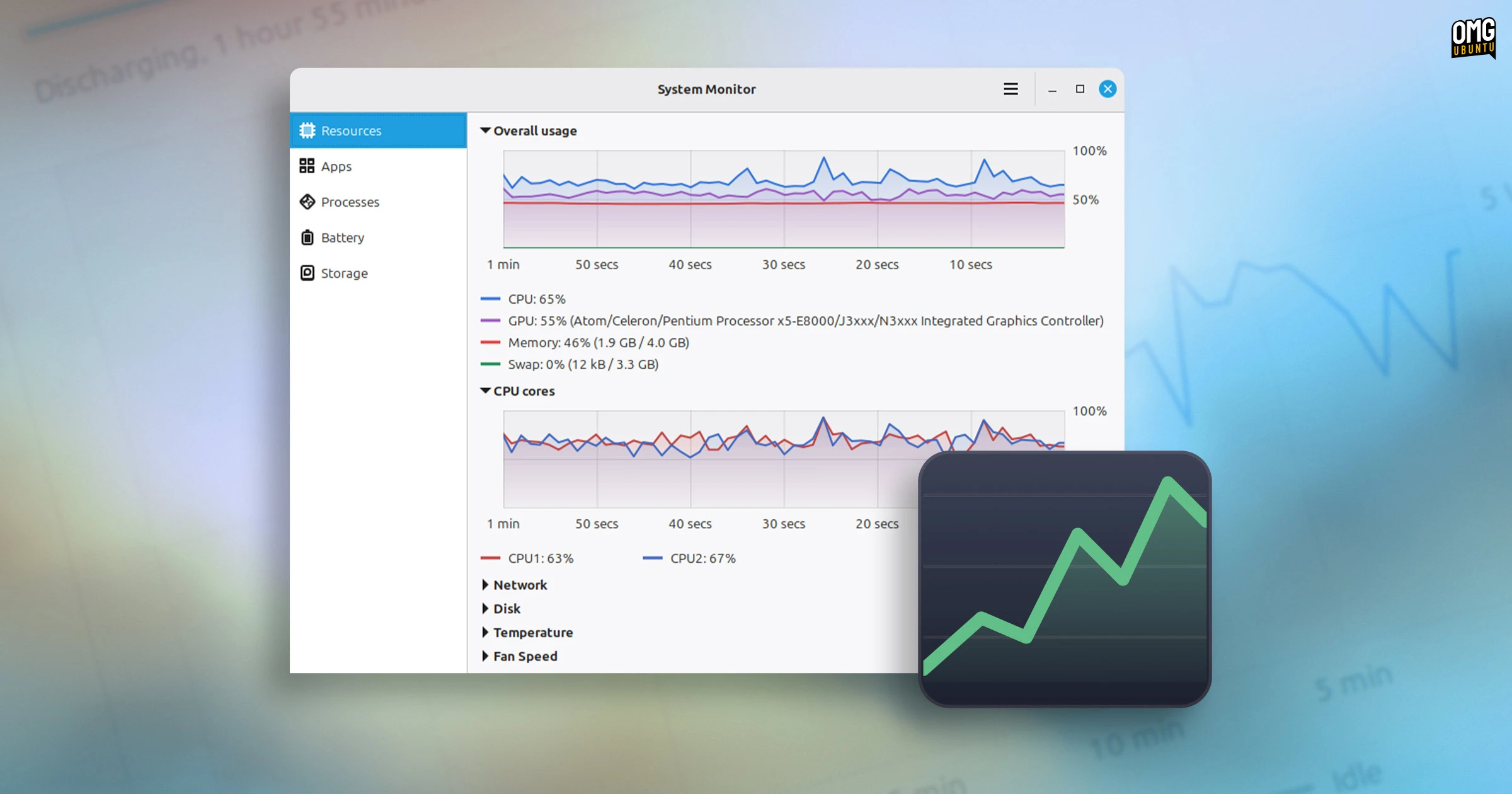
December’s Linux Mint 27 release will include a brand new system monitor tool preinstalled.
The app is called Superlight (well, that’s the project and package name; the user-facing label is just System Monitor). It shows hardware, app and process usage, relays battery stats and has an interactive storage page to find out what files and folders are using the most space.
It’s still under active development, but I took it for a spin to see how it fares and what it offers. Keep in mind that more features may be added or changed between now and when it gets its first stable release.
Linux Mint’s Superlight is super nice

Superlight shows the Resources page each time you open it.
At the top is an “overall usage” graph. This plots CPU, GPU, RAM and Swap usage over the past 60 seconds on the same chart. Having a unified view makes it trivial to see what the machine is doing as a whole, at a glance.
It also has separate graphs tracking CPU core usage and network and storage activity, as well as ones for system temperature(s) and fan speed(s). Graphs are collapsible; when only one graph is visible, it’s larger.

There are separate views for viewing running apps and their respective process count, CPU usage and memory. Click a column header to sort items by value, or dragged to reposition them into an order you prefer.
Both the Apps and Processes pages have a search bar to filter by name. The Processes page also lets you filter by all, user, or system processes, and show them in a tree to reveal the parent–child relationships.
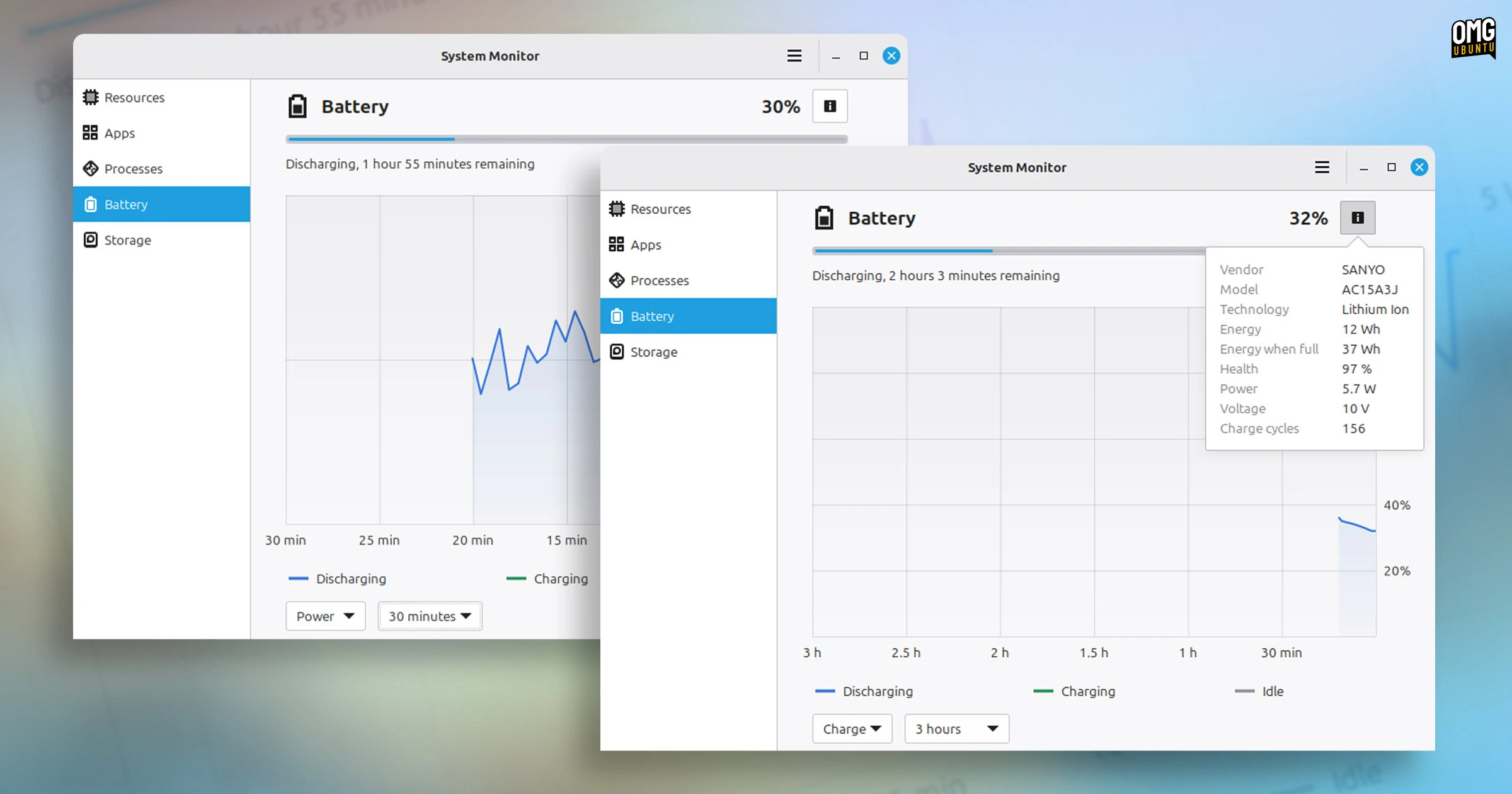
On laptops, Mint’s new system monitor app surfaces battery and power usage on a graph, along with estimated charging/discharging time and info, including make, model, technology, capacity, charge cycles and overall battery health.
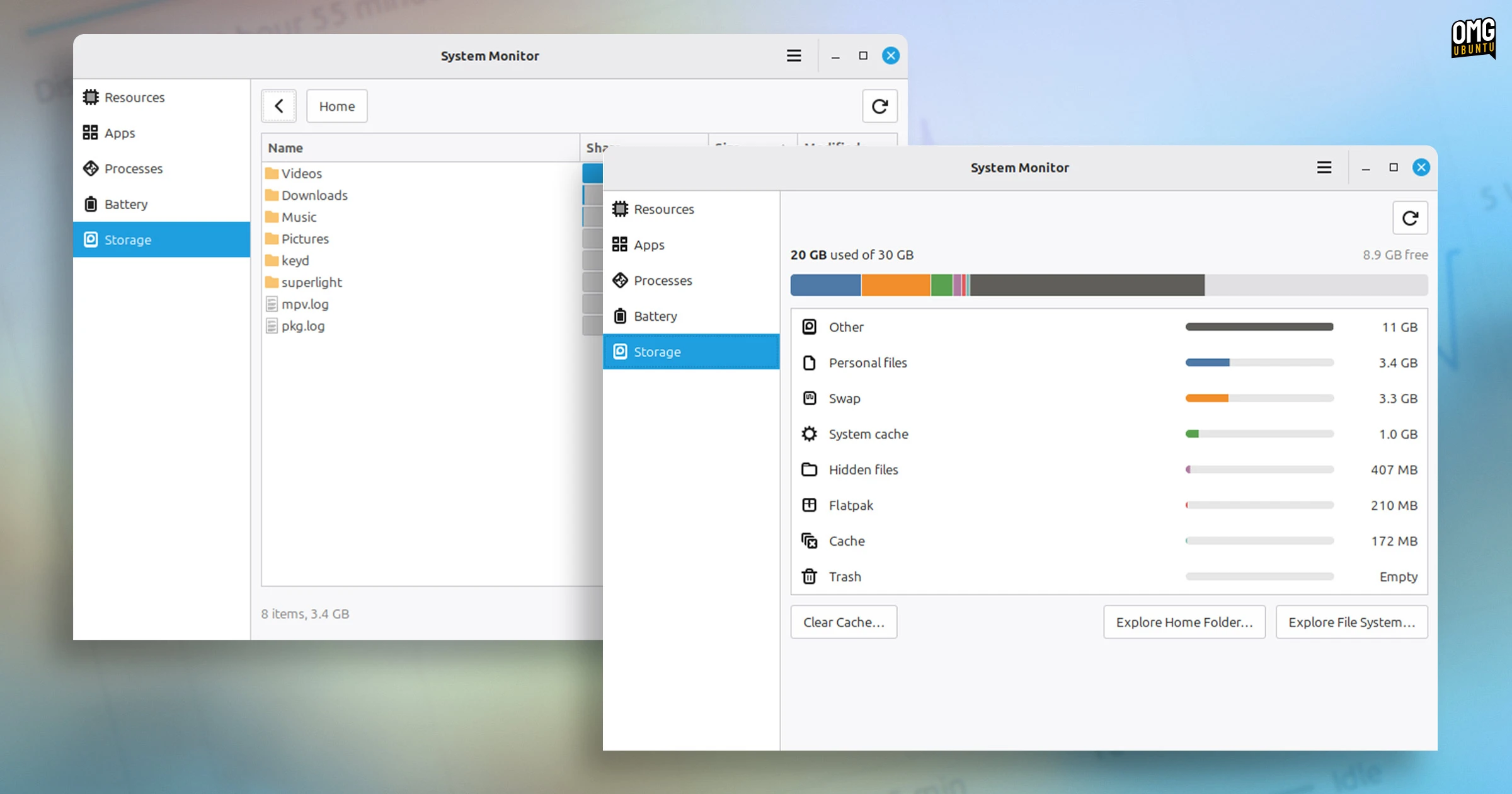
The Storage page is something I didn’t expect to see in this app but, truth be told, it’ll be the one page I use the most as like a faster and more intuitive Disk Usage Analyser, making it easier to see what’s eating up space on a disk – local or external.
Storage also doubles up as a simple system cleaning tool. The “clear cache” button freed up 900MB of cruft on my test device’s internal 32GB eMMC (it’s a converted Chromebook).
Performance is good
In my test with the current development version, Superlight didn’t feel noticeably heavier than the out-going GNOME System Monitor in what it does1, though when the Resources page is in view with lots of graphs visible, they do spike upward.
It’s a promising start.
GNOME System Monitor is functional, but looks somewhat anachronistic among newer, modern-looking apps. Ubuntu chose to replace it with Resources, and other desktop environments have user-friendly offerings too – even COSMIC has its own.
Linux Mint’s option is promising.
Mint has plans to add viewing system logs to its new system monitor too, and there’s clearly scope to add some basic configuration options (interval times, being a main one).
One thing this app doesn’t do – yet – that other modern system monitors like Resources and Mission Center do is list component detail, e.g., CPU model, socket, instruction sets or memory timings, banks, and so on.
But as some hardware spec minutiae is surfaced in Linux Mint’s System Information tool, there’s an argument for keeping things focused here.
New terminal, archive and calendar apps coming
Superlight is not the only brand new app Linux Mint is working on. A new calendar and clock utility, ebook reader and archive manager are in the mix. And Velocitty is Linux Mint’s new terminal emulator, inspired by Ghostty and Pytxis2.
All of Mint’s new software is developed as part of the XApp Project. Other apps, like Pix, Thingy and Library are part of this. The aim is to develop a set of software that works well across any Linux desktop environment, not just Cinnamon.