



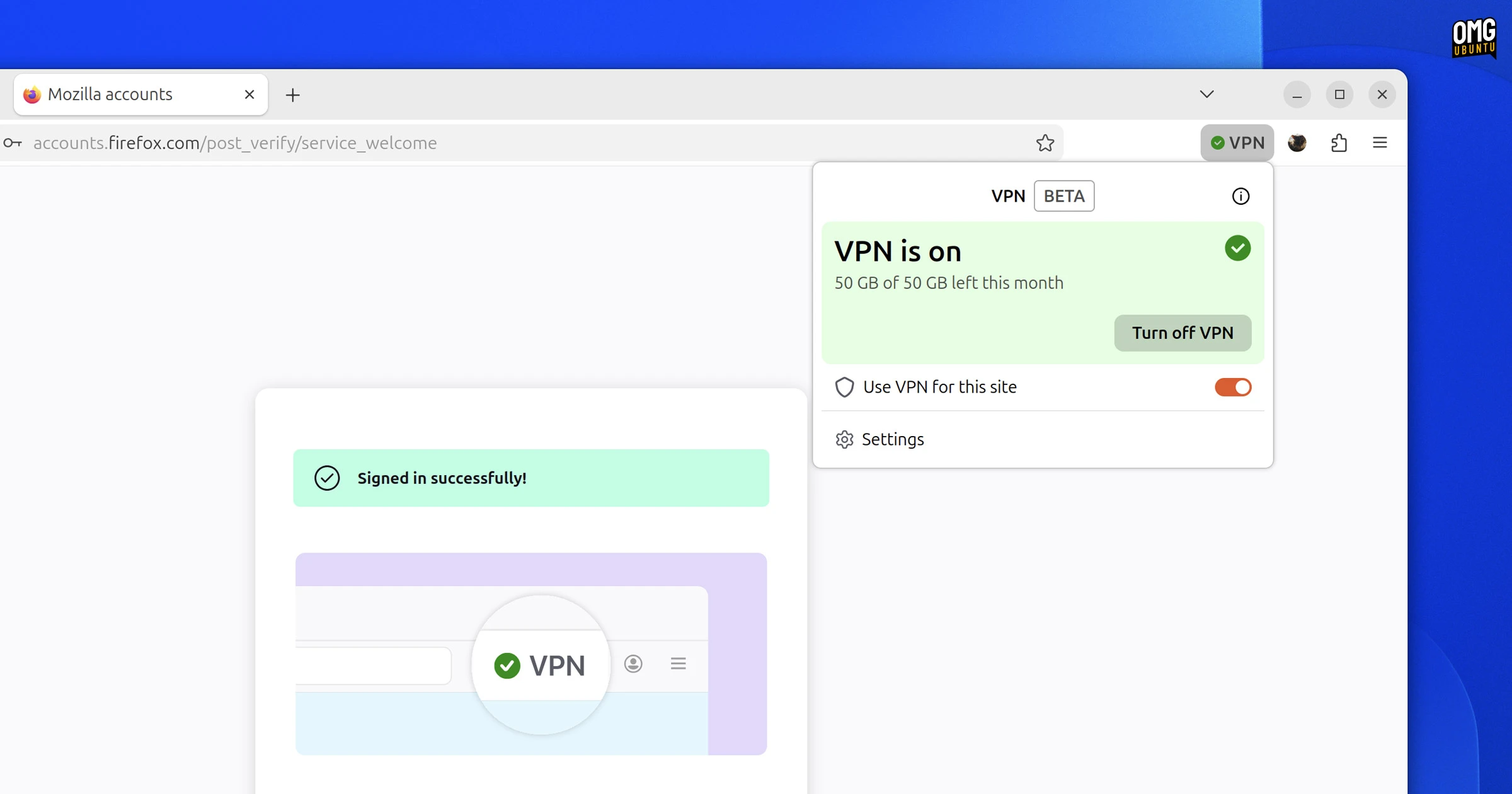
Mozilla has attracted kudos since it added a free built-in VPN to its Firefox web browser, not least because of the generous 50 GB a month usage limit.
Now it’s set to add another sweetener: server location choice.
Mozilla began rolling out VPN integration in Firefox 149 for Windows, macOS and Linux to users in the UK, USA, France and Germany as a privacy shield: it hides your real IP address when browsing by routing traffic through a secure proxy server hosted by Fastly.
Canada was added to that list with Firefox 150.
The only hard requirement is that users must be signed in to a Mozilla account (which is free to sign up for). Mozilla says it receives data volume from its proxy provider for each account (to monitor the 50 GB data allowance per month) but that it can’t see which sites a user visits.
Currently, Firefox selects a proxy server automatically, based on proximity, without the option to choose one manually, a feature most of the best paid VPNs offer, including Mozilla’s own which lets you choose from more than 30 countries).
Now a report by Soren Hentzschel (German) says the upcoming Firefox 151 release on 19 May will support server selection in Firefox VPN, letting you pick a location from any of the feature’s supported server locations, currently USA, UK, France, Canada and Germany.
Currently, Mozilla selects the server automatically based on proximity. In my own hands-on, that meant a Fastly proxy in London (I’m based in the UK). Firefox 151 will let you override that and pick a location manually.
Progressively slow rollout
Not everyone using Firefox 150 in a supported location has access to the VPN yet so it remains to be seen how or if this additional option will roll out.
Anyone wanting more features and immediate access can upgrade to Mozilla VPN (or another paid VPN service) at any time, which will also provide system-level protection since Firefox VPN only protects traffic inside of the browser, not network activity from your OS as a whole.
Mozilla plans to add free VPN integration to Firefox for Android. No firm date for when, but this will offer the same features found in the desktop version: in-browser VPN (only; not system-wide), 50 GB data limit and, now, support for choosing a server location.