


Claude now lets users install artifacts, small interactive tools the LLM can create inside of chats, as standalone(ish) desktop apps.
When added via the ‘Install as app’, artifacts run in their own window with their own icon. They can also send desktop notifications, register keyboard shortcuts and add applets to the panel. Full system permissions can be granted, letting apps read, edit and delete files.
The new feature is in beta but available to users on all plans, including free tiers, in the latest version of the Claude desktop apps for Windows and macOS (as of 24 November 2026).
However, the feature is not available on Linux, where Claude is in beta.
Anthropic’s Claude Help Center notes that Linux isn’t supported at launch. That might mean ever, or that it’ll come in time. Other Claude features have. I’m sure there’s enough underlying commonality between the major Linux distros to support them.
Even so, Linux support isn’t a given at this stage.
Claudeware showcase
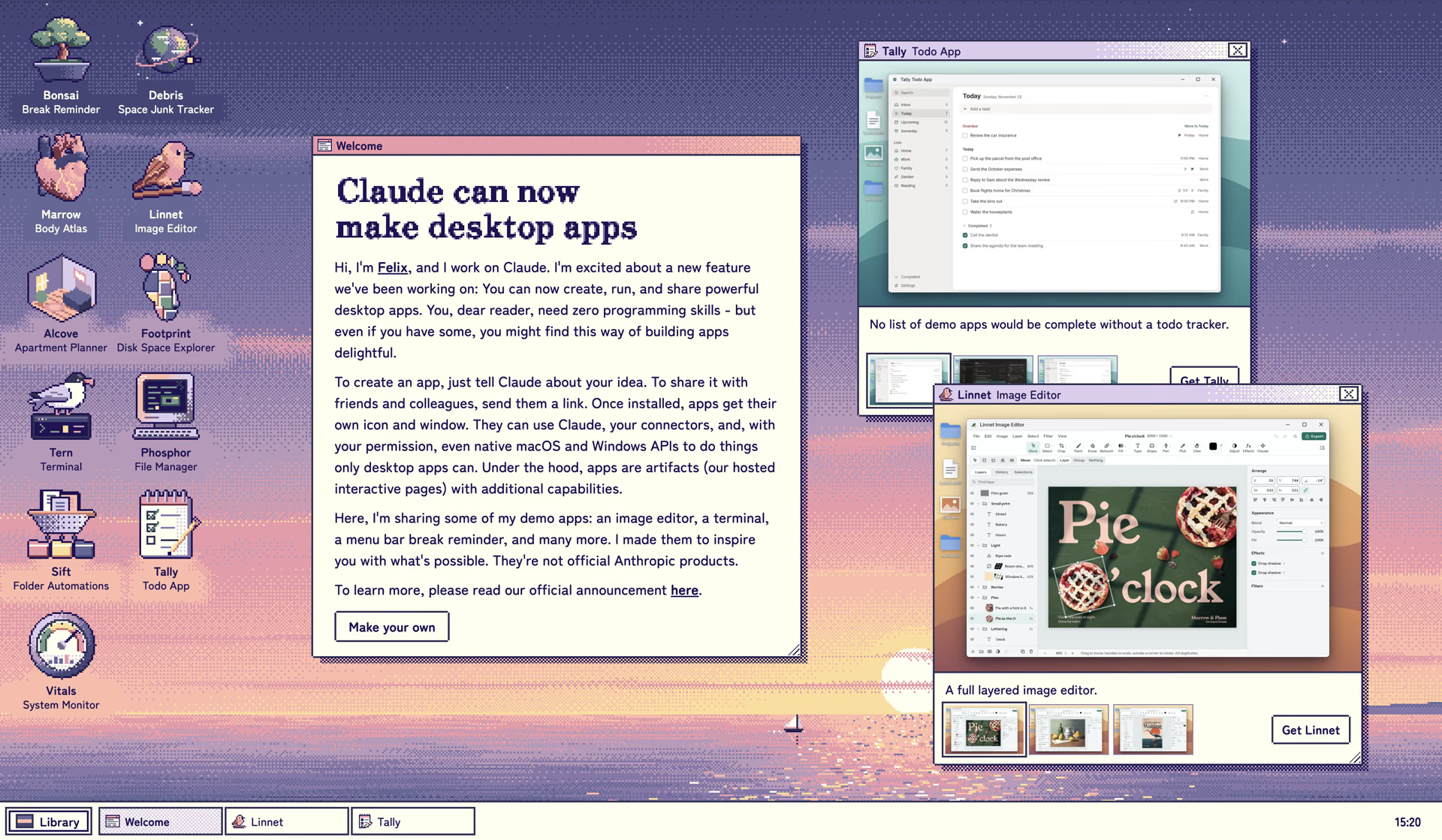
To demonstrate what these apps can do, a set of demo apps are available (accessed through an annoyingly cool mock desktop, as shown in the screenshot above).
Among the apps is a fully-featured multi-layer image editor called Linnet. a terminal (uses the the underlying system shell) and a file manager described as looking like it was ‘made for a movie set’ (a low-budget one, perhaps).
There’s also a disk usage analyser and system monitor, a room planner, mediative gardening simulation and a todo app that ought to do more (get it) to stand out.
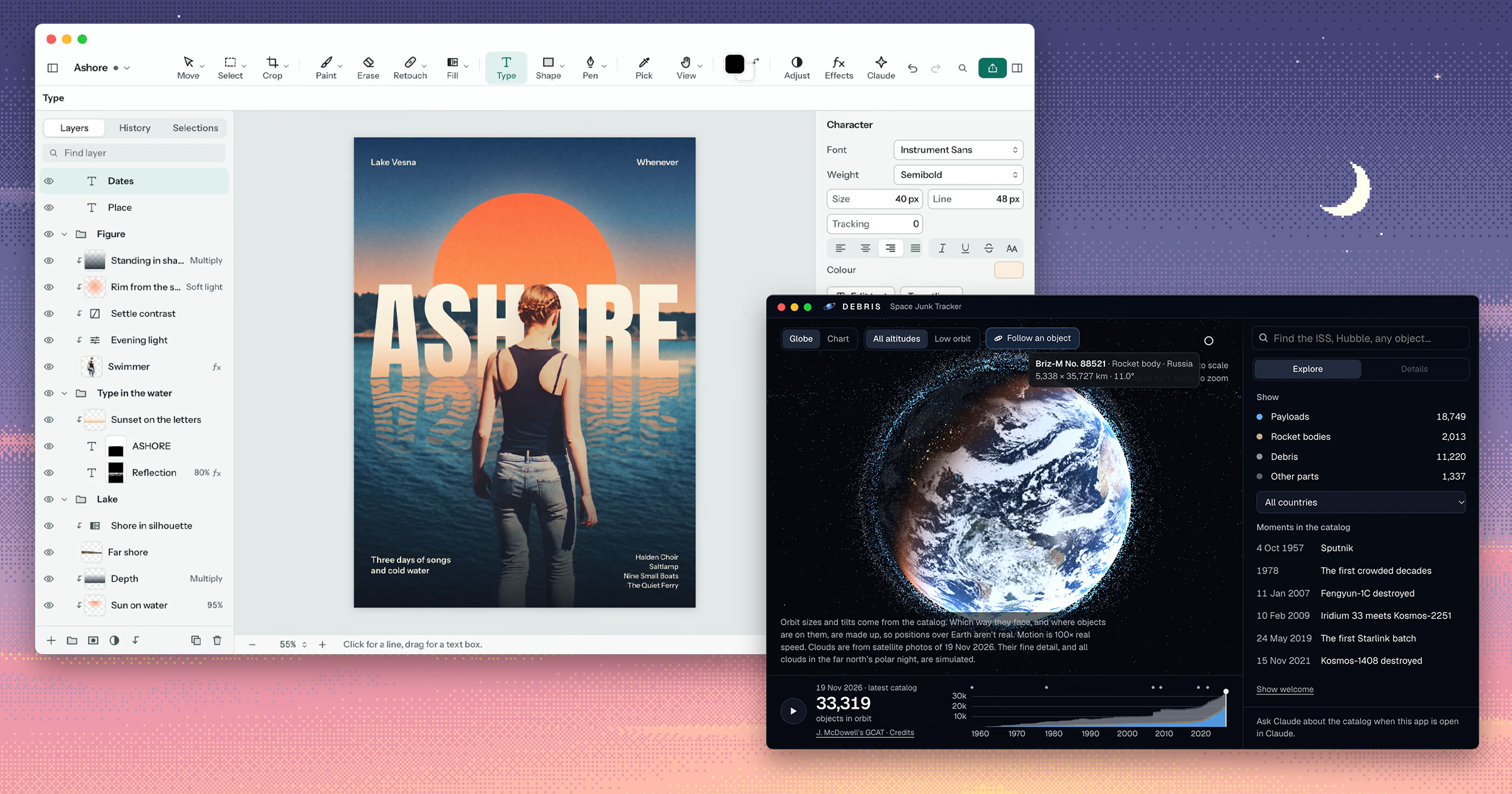
Marrow is a body atlas that gives me 2000s educational CD-ROM pack-in vibes. I did find the interactive map for examining space junk inspiriting – ‘Claude, remake this app, but plot the infection rate of the ChatGPT flyer pandemic’.
These apps all run independently of the main Claude desktop tool but can’t be used without it. They also won’t without being logged into a Claude account, or work offline. These apps can be shared with others, providing they use Claude and have an account too.
Sound like a walled garden? Here’s hoping.
I wouldn’t mind whim-ware being confined to a proprietary silo. Then again, I’m tired of AI agents emailing me daily about someone’s latest GitHub guff, the actual function of which is obscured by layers of superlatives (and a subscription fee on top).
But it does feed into that oft-stated theory that AI companies will, gradually, make us dependant on renting access to an increasingly limited concept of what “computing” is.
After all, we are selfish for wanting RAM in our computers.