




You can now install an official Google Chrome build on Arm64 Linux devices, including the Raspberry Pi.
Back in March, Google promised Chrome for Arm64 Linux in “Q2 2026”, so that users of SBCs, AI desktops and a growing-fleet of Snapdragon laptops retro-fitted with Linux could use their flagship browser and benefit from the feature it has than a vanilla Chromium build doesn’t.
Only, the search giant hasn’t said a whole lot about the effort since.
So I was surprised to hear – thanks for the tip Steven H – that Arm64 builds of Chrome were recently (quietly) added to Google’s official Linux repos for Debian and RPM-based Linux distributions.
The Chrome download page doesn’t yet link to these builds, though. I visited the official download page from a Raspberry Pi 5 running Ubuntu 26.04 LTS and the website still defaults to serving a standard x86-64 .deb installer.
So I edited the download URL, replacing amd64 with arm64, and it did the trick: a native Arm64 version began downloading.

The Google Chrome Arm64 Deb package installed without any issues through apt on Ubuntu, netting me a aarch64 build of Google Chrome v150 (stable channel).
Plus, installing via the Deb adds Google’s repo as part of the installation so that future updates come through normally, alongside other system updates.
I haven’t tested the RPM, so if you’re on Fedora and the RPM version that’s also available works fine there, let me know in the comments.
Google Chrome on Raspberry Pi 5 – does it work?

Chromium, the open-source version of Chrome, is already available on Arm64 devices, as are scores of Chromium-based web browsers, including Vivaldi.
That means Google Chrome proper showing up is, arguably, a bit of a non-event, at least to long-time Arm users who’ve managed without it for years.
What is more interesting is what else is tags along for the ride.
See, Chromium lacks Google account sync, but Chrome proper has that. It worked fine in my testing. I signed in with my Google account and it pulled in my extensions, bookmarks, password and settings. For those moving between devices often, sync is a boon.
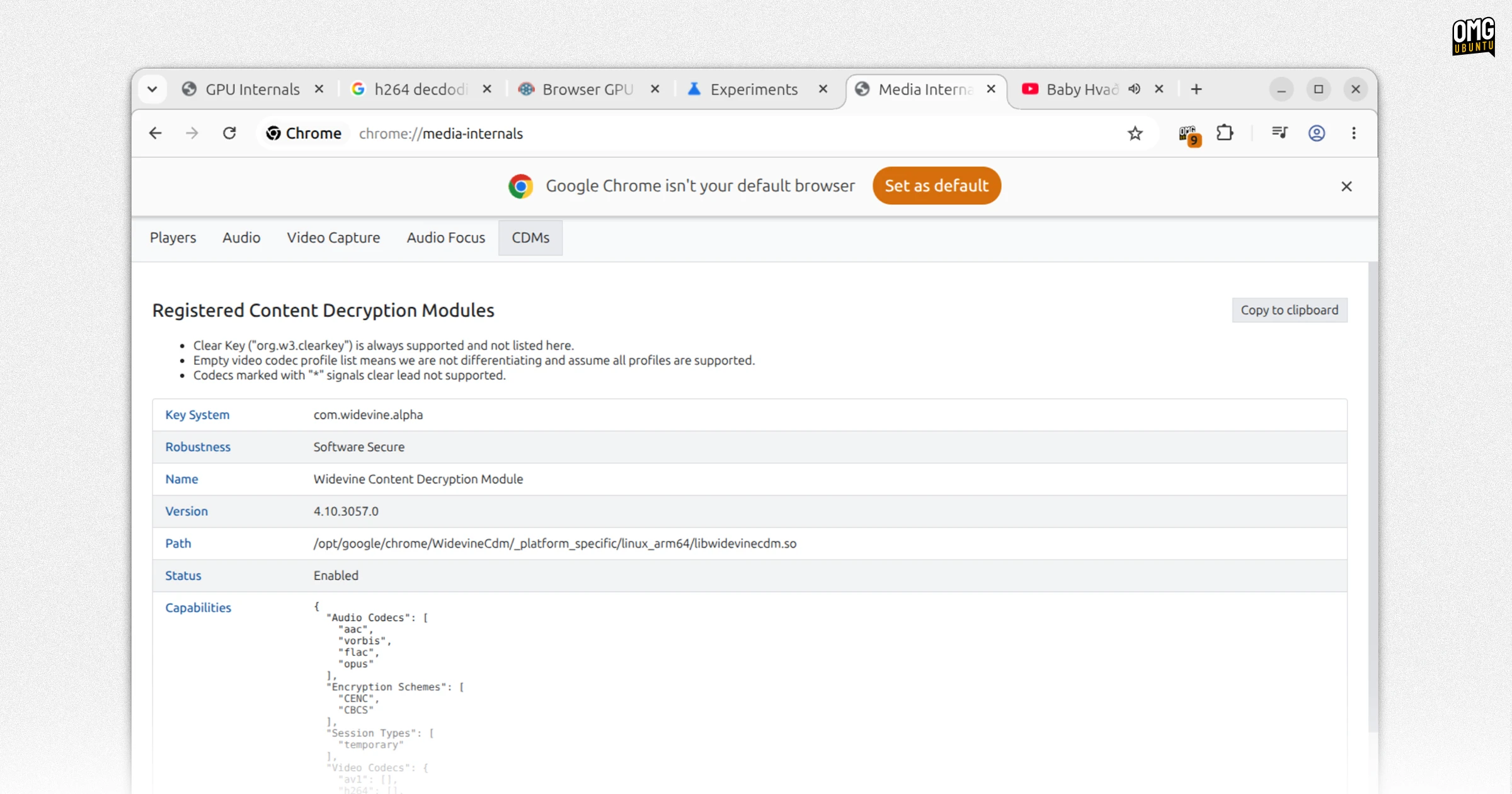
Chrome’s Arm64 build also includes DRM playback via Widevine.
Historically, running Widevine on Arm Linux outside of ChromeOS has relied on workarounds extracting a 64-bit aarch64 binary from ChromeOS, often needing third-party scripts to resolve integration quirks.
Here, Chrome’s chrome://media-internals page reports a Widevine module at /opt/google/chrome/WidevineCdm/_platform_specific/linux_arm64/. That suggests it’s a native aarch64 build bundled inside, not a compatibility layer.
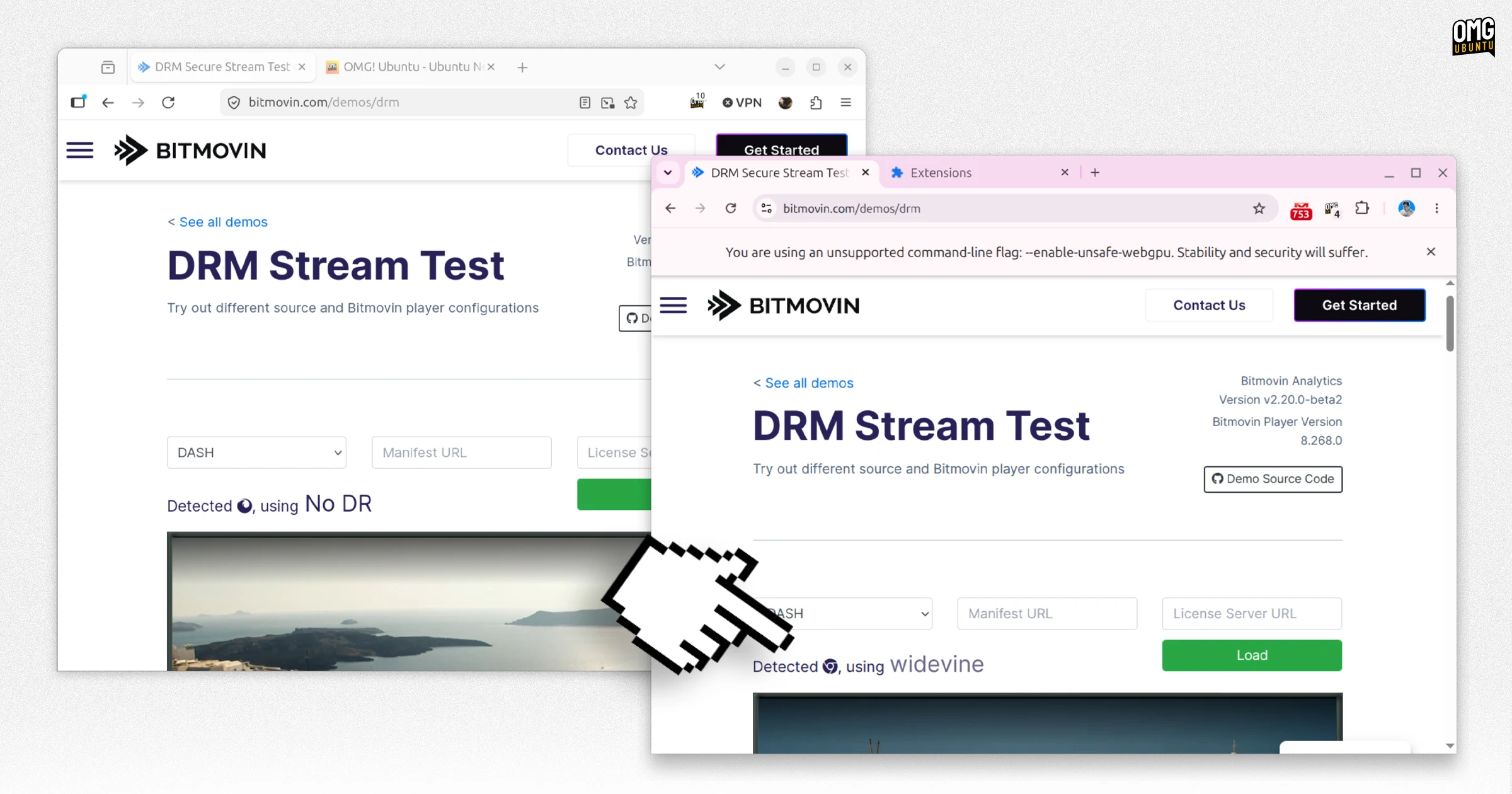
However, on Linux it’s likely to still be limited “Software Secure”, a software-based DRM that caps Netflix and other content on Linux at 720p or 1080p, meaning no 4K or HDR streams because of a lack of hardware-backed TEE chains.
Annoying, but it’s the same situation on Intel/AMD.
On the plus side, with this being a native 64-bit module overall reliability and, potentially, system performance when active, should be better.

In media in general, BBC iPlayer on its highest setting played smoothly on my Raspberry Pi 5 – a contrast with performance in Ubuntu’s Firefox Snap for Arm64 which struggles to play anything on iPlayer smoothly at higher bitrates.
YouTube performance was better. Sure, 4K YouTube delivered dropped frames and stutters aplenty, but the Pi hardware is the bottleneck there, not Chrome. But 1080p and even 2K YouTube content played buttery smooth – I only had a couple of tabs open, mind.
Download Google Chrome for Arm64 Linux

If you’ve got an Arm64 device – this isn’t limited to single-board computers; it’ll work on a PineBook Pro, Snapdragon X laptop or expensive Arm PCs like System76 Thelio and the NVIDIA DGX Spark – download it from the Chrome website:
- https://dl.google.com/linux/direct/google-chrome-stable_current_arm64.deb
I can’t find an official ‘announcement’ that Aarch64 builds are ready for use (or test). The Chrome support pages also don’t mention that Arm64 Linux is supported. Update: August 16: the support pages formally list support for Linux ARM.
Google will likely update the Chrome website download link to serve an Arm64 build directly to users visiting from an Arm64 distro in the coming weeks.
Whether Arm64 Linux users are clamouring for Google Chrome is by-the-by. by making this available after so many years of not, Google is doing good. Arm laptops are increasingly capable, and Linux support for them is maturing.
The more native Arm software for Linux, the better.